Photo Agnieszka Kwiecień, Nova, CC BY-SA 4.0, Wikimedia Commons
Botanical gardenWrocław, Lower Silesia
Wrocław Botanical Garden with children: what to see, map and route
University of Wrocław Botanical Garden. In the Turi app, the same map shows your position, guides you from point to point and lets you tick off the places you’ve visited.
The walk starts at the entrance from Sienkiewicza Street; the second entrance is from Kanonia Street, on the Ostrów Tumski side. Entry is paid, tickets are sold at the ticket office or online, and children under 3 go in free. The garden is open from April to the end of October. The greenhouses, aquariums and the Panorama of Nature have shorter hours than the garden. If you are already inside, Turi will guide you from the nearest point.
At home, open the place in Turi and tap “Save for offline”: the map, descriptions and photos will work without signal.
Visit the farthest points first, while you still have energy.
Tick things off as you go, and by the exit you’ll know what’s left.
Wrocław Botanical Garden in the Turi app
Live position, a route from point to point, descriptions to read and listen to. Free, no account, and in English, German and Ukrainian too.
The same map as in the app. Tap a point to see its photo and description; in Turi you’ll see yourselves on it too.
1recommended, in route orderother pointsWCtoilets, food, tickets
Map: OpenStreetMap (ODbL) and BDOT10k GUGiK, checked against aerial photos. Descriptions and photos: Turi and Wikimedia Commons. Something not right? Report it in the app at that point.
Worth seeing
The University of Wrocław Botanical Garden was founded in 1811 right next to Ostrów Tumski, on land left by the city fortifications and a filled-in branch of the Oder. It is the second oldest botanical garden in Poland. On the walk you will see the wooden footbridge over the pond, the rock garden with a geological profile from 1856, a petrified trunk 300 million years old, the water lily pool, the arboretum and Wrocław dwarfs, and indoors the aquariums, greenhouses and the huge painting of the Panorama of Nature.
Photo ElaineLat, CC BY-SA 3.0 pl, Wikimedia Commons1
Attraction
Entrance from Sienkiewicza Street
This is where you start. The garden was founded in 1811 on land left after the city fortifications were pulled down and a branch of the Oder was filled in. It is the second oldest botanical garden in Poland, after the one in Kraków. About 7,500 plant species grow on 7.4 hectares, and close to 11,500 if you count varieties. In 1945, during the siege of Festung Breslau, the garden was almost completely destroyed; visitors came back in 1950.
Photo Aw58, CC BY 3.0, Wikimedia Commons2
Plants
Linnaeus bust and the plant systematics section
In this section plants are arranged by kinship, following the system of Adolf Engler, director of the garden from 1884 to 1889. It covers about 2 hectares in the middle of the garden and holds 146 plant families. Arrows and numbered signs mark the path between the rows. In the centre stands a bust of Carl Linnaeus, who gave plants their scientific names: the monument was unveiled in 1871, and in 2001 the sandstone original was moved indoors and replaced with a copy.
Photo User:Julo, Public domain, Wikimedia Commons3
Plants
Water lily pool and ornamental plants
The pool was built in 1967 specially for water lilies. More than 100 varieties grow here, the largest collection in Poland of water lilies that winter outdoors. In summer you will see gunnera by the water: its leaves are up to 2 metres across. All around lies the ornamental plants section, 2 hectares of perennials, shrubs and flowers with the national peony collection, and above the trees rise the towers of the cathedral on Ostrów Tumski.
Photo Agnieszka Kwiecień, Nova, CC BY-SA 4.0, Wikimedia Commons4
Attraction
Wooden footbridge over the pond
The pond is what remains of an old branch of the Oder, filled in during the 19th century. After the war a sizeable arsenal of ammunition was found at its bottom, and in 1958 army sappers cleaned the pond and built an arched wooden footbridge over it. It became the symbol of the garden and one of the most photographed spots in Wrocław. In 1992 it was taken down and rebuilt in exactly the same shape.
Photo No machine-readable author provided. Julo assumed (based…, Public domain, Wikimedia Commons5
Plants
Rock garden and geological profile
About 2,000 species and varieties of mountain plants from Europe, Asia, the Caucasus, the Americas and New Zealand grow in the rock garden. Its newer part was laid out between 1989 and 1992 from limestone, granite and serpentinite from Lower Silesian quarries. The oldest feature is the geological profile from 1856: a model of the rocks near Wałbrzych where you can see layers of coal, sandstone and shale, imprints of ferns from 300 million years ago and petrified trunks.
Photo Agnieszka Kwiecień, Nova, CC BY-SA 4.0, Wikimedia Commons6
Plants
Arboretum
The eastern part of the garden is a park of trees and shrubs: more than 3,000 species and varieties. Here grow swamp cypresses, giant sequoias and dawn redwoods, over 300 kinds of rhododendron and more than 470 hydrangeas that flower in summer. Across the garden, 27 trees are protected natural monuments, among them oaks, yews, ginkgos, beeches and plane trees. Until the 1930s part of this area was an old cemetery.
Photo Siliesiac, CC BY-SA 3.0, Wikimedia Commons7
Attraction
Petrified trunk
This stone pillar was once a tree. The petrified trunk of Dadoxylon, a relative of early conifers, is 3.4 metres tall and about 300 million years old. It grew in the forests of the age when coal seams formed, like the ones in the geological profile in the rock garden. It is a protected natural monument, so look without touching.
All points (13)
Grouped as in the map legend. A star marks recommended points.
Attraction 6
Entrance from Sienkiewicza Street ★This is where you start. The garden was founded in 1811 on land left after the city fortifications were pulled down and a branch of the Oder was filled in. It is the second oldest botanical garden in Poland, after the one in Kraków. About 7,500 plant species grow on 7.4 hectares, and close to 11,500 if you count varieties. In 1945, during the siege of Festung Breslau, the garden was almost completely destroyed; visitors came back in 1950.
Wooden footbridge over the pond ★The pond is what remains of an old branch of the Oder, filled in during the 19th century. After the war a sizeable arsenal of ammunition was found at its bottom, and in 1958 army sappers cleaned the pond and built an arched wooden footbridge over it. It became the symbol of the garden and one of the most photographed spots in Wrocław. In 1992 it was taken down and rebuilt in exactly the same shape.
Petrified trunk ★This stone pillar was once a tree. The petrified trunk of Dadoxylon, a relative of early conifers, is 3.4 metres tall and about 300 million years old. It grew in the forests of the age when coal seams formed, like the ones in the geological profile in the rock garden. It is a protected natural monument, so look without touching.
Göppert monument and the gardener dwarfsThe bust shows Heinrich Robert Göppert, director of the garden from 1852 to 1884. He enlarged the collection to 12,000 species and varieties, founded the Botanical Museum and in 1856 built the geological profile you will see in the rock garden. Right next to it, look for two Wrocław dwarfs: the Gardener pushes a wheelbarrow carrying the Manager, squashed under a huge onion.
Joseph von Eichendorff monumentJoseph von Eichendorff was a German Romantic poet born in Upper Silesia. His monument was put up in 1911 in Szczytnicki Park and disappeared after 1945. What you see is a faithful copy unveiled in 2012: the poet dressed as a wanderer, with reliefs on the plinth showing scenes from his story Memoirs of a Good-for-Nothing.
Botanist the dwarfBotanist, one of the Wrocław dwarfs, sits on a boulder and plays a trumpet made from a flower. Dwarfs stand all over the city, and several of them live in this garden. Count how many you can find by the end of the walk.
Plants 5
Linnaeus bust and the plant systematics section ★In this section plants are arranged by kinship, following the system of Adolf Engler, director of the garden from 1884 to 1889. It covers about 2 hectares in the middle of the garden and holds 146 plant families. Arrows and numbered signs mark the path between the rows. In the centre stands a bust of Carl Linnaeus, who gave plants their scientific names: the monument was unveiled in 1871, and in 2001 the sandstone original was moved indoors and replaced with a copy.
Water lily pool and ornamental plants ★The pool was built in 1967 specially for water lilies. More than 100 varieties grow here, the largest collection in Poland of water lilies that winter outdoors. In summer you will see gunnera by the water: its leaves are up to 2 metres across. All around lies the ornamental plants section, 2 hectares of perennials, shrubs and flowers with the national peony collection, and above the trees rise the towers of the cathedral on Ostrów Tumski.
Rock garden and geological profile ★About 2,000 species and varieties of mountain plants from Europe, Asia, the Caucasus, the Americas and New Zealand grow in the rock garden. Its newer part was laid out between 1989 and 1992 from limestone, granite and serpentinite from Lower Silesian quarries. The oldest feature is the geological profile from 1856: a model of the rocks near Wałbrzych where you can see layers of coal, sandstone and shale, imprints of ferns from 300 million years ago and petrified trunks.
Arboretum ★The eastern part of the garden is a park of trees and shrubs: more than 3,000 species and varieties. Here grow swamp cypresses, giant sequoias and dawn redwoods, over 300 kinds of rhododendron and more than 470 hydrangeas that flower in summer. Across the garden, 27 trees are protected natural monuments, among them oaks, yews, ginkgos, beeches and plane trees. Until the 1930s part of this area was an old cemetery.
Plant morphology and climbersThis section is an open-air botany lesson: the plants show how flowers are built and pollinated, what kinds of fruit there are and how plants spread their seeds. To the south, by the fence, grows the climbing plants collection set up in 1998, one of the largest in Europe: almost 500 plants, about 220 of which winter outdoors, most of them clematis. Look at how differently plants climb: some twine their stems, others cling with tendrils or roots.
Building / monument 1
Greenhouses, aquariums and the Panorama of NatureThis group of buildings holds greenhouses with cacti and other succulents, tropical plants and the national collection of bromeliads, relatives of the pineapple. Tropical water plants grow in 29 aquariums of 1,200 litres each, and in one of them swim piranhas from the Wrocław zoo. The Panorama of Nature is a 36-metre painting by Janusz Merkel showing the development of life on Earth, from the Cambrian to the Quaternary. The buildings close earlier than the garden, so it is worth coming here first.

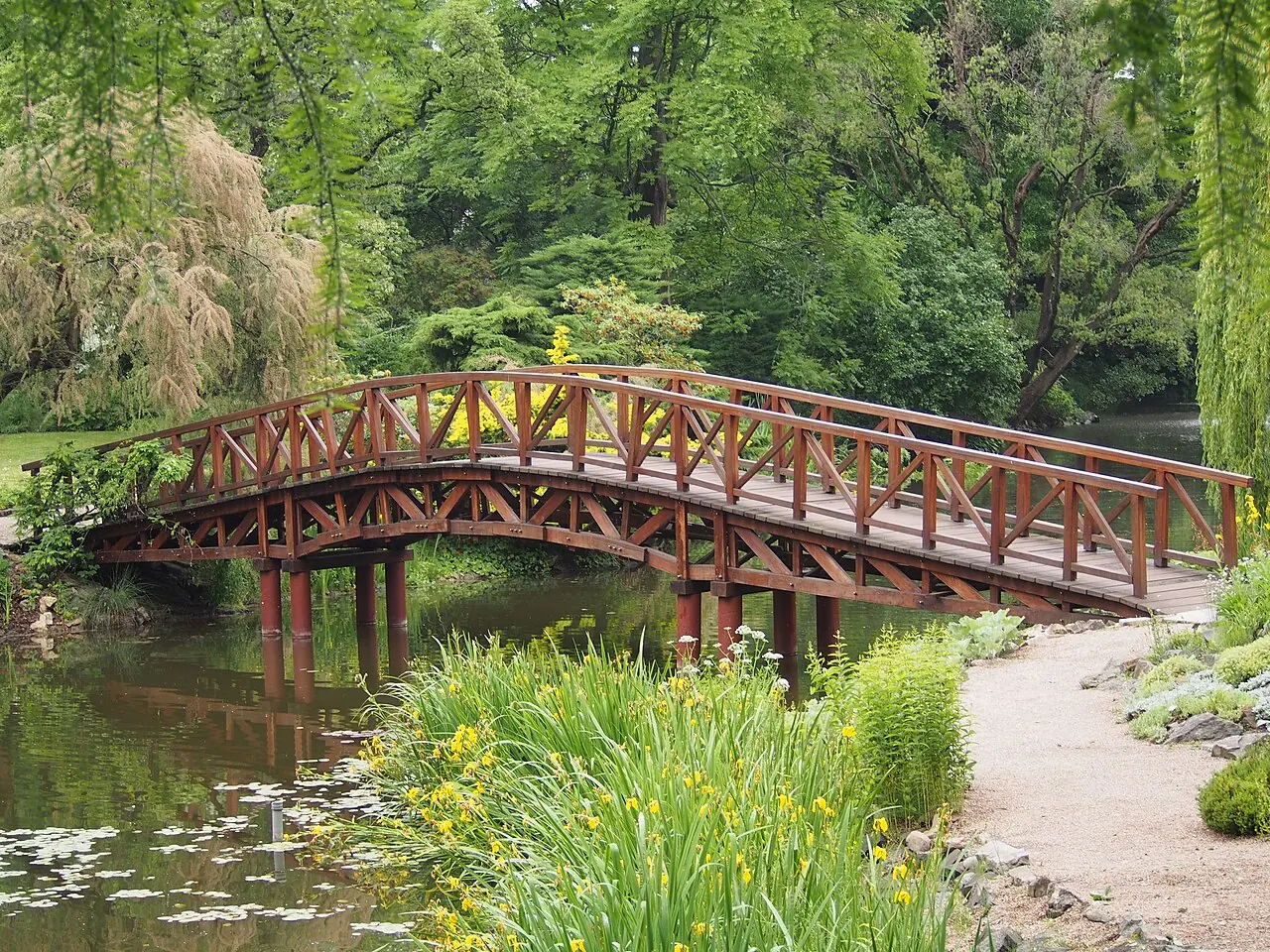 Photo Agnieszka Kwiecień, Nova, CC BY-SA 4.0, Wikimedia Commons

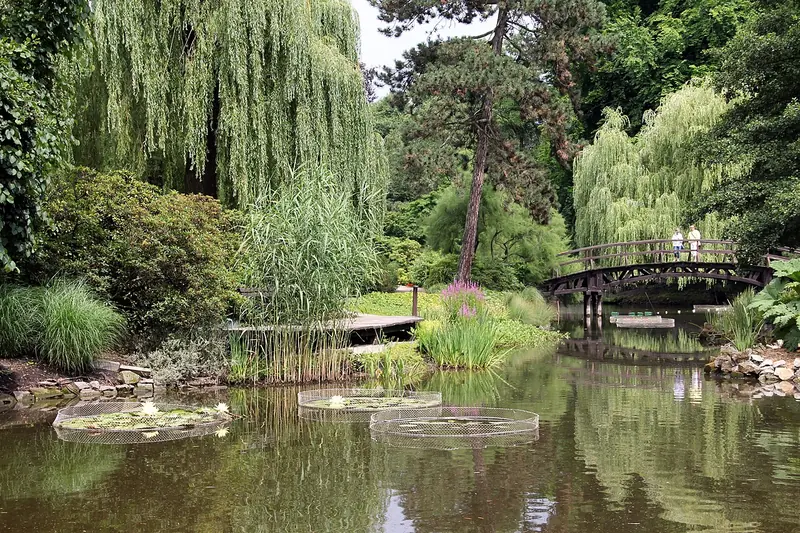 Photo ElaineLat, CC BY-SA 3.0 pl, Wikimedia Commons1
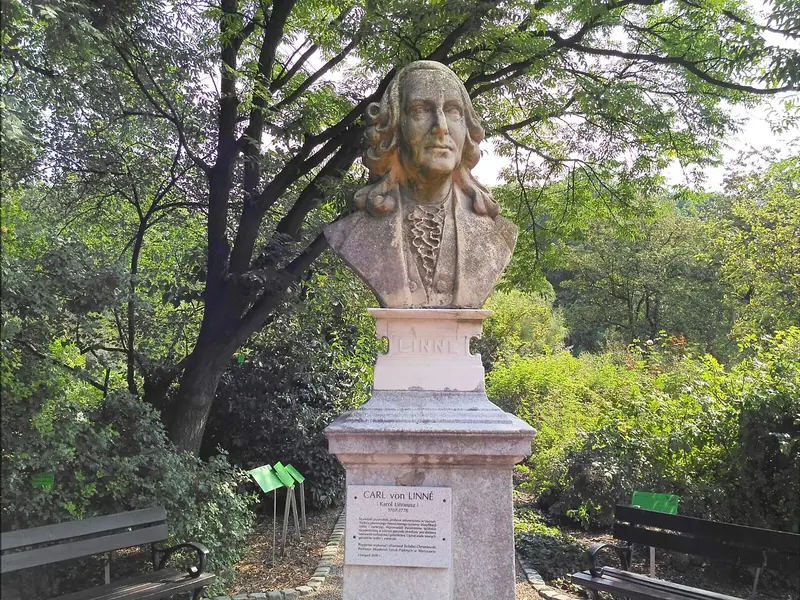 Photo Aw58, CC BY 3.0, Wikimedia Commons
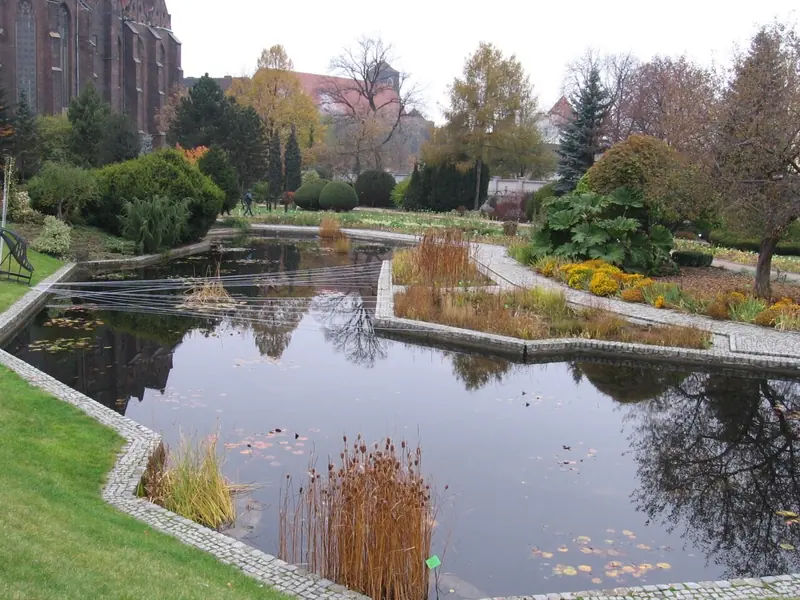 Photo User:Julo, Public domain, Wikimedia Commons
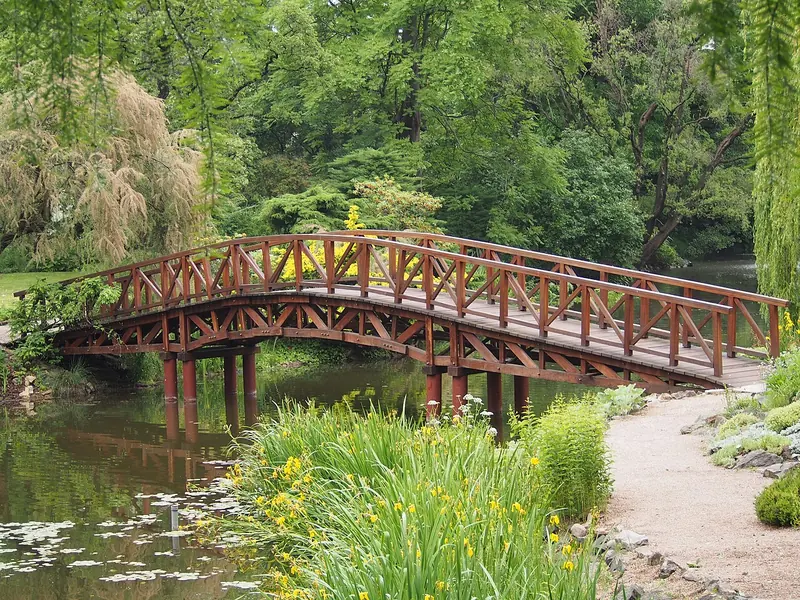 Photo Agnieszka Kwiecień, Nova, CC BY-SA 4.0, Wikimedia Commons
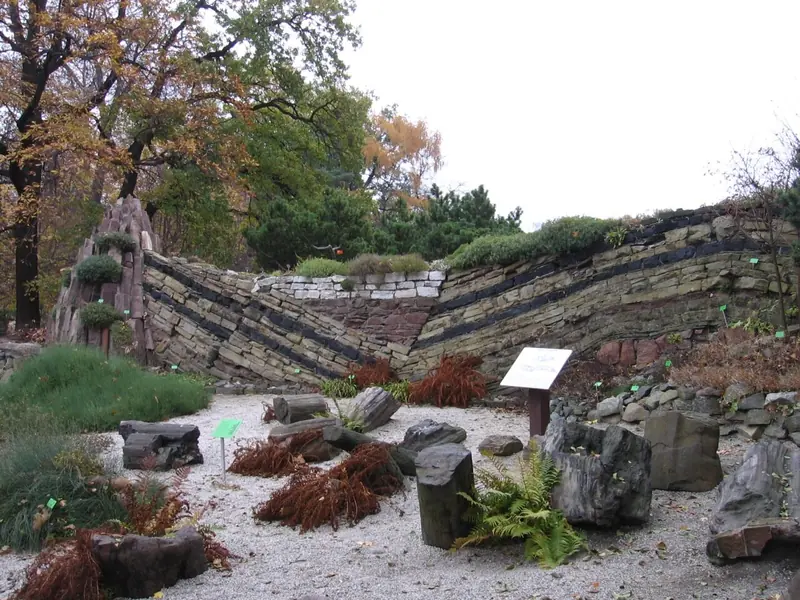 Photo No machine-readable author provided. Julo assumed (based…, Public domain, Wikimedia Commons
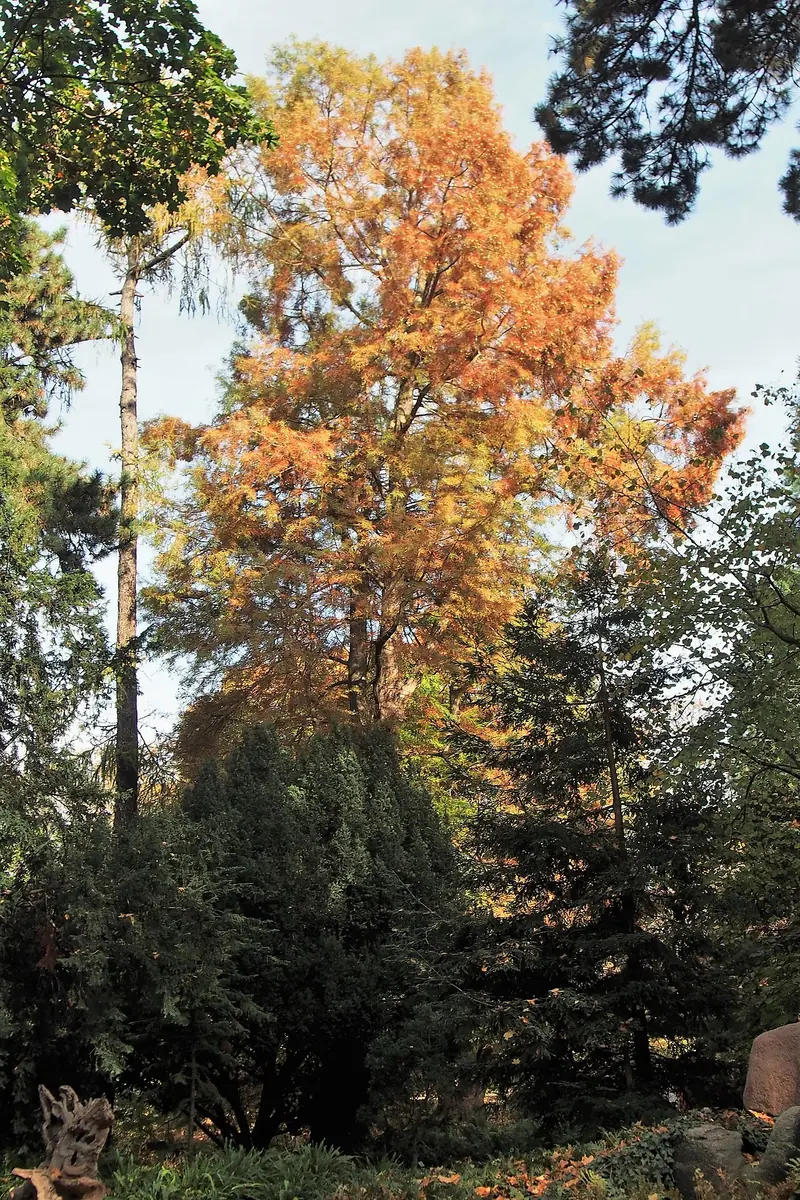 Photo Agnieszka Kwiecień, Nova, CC BY-SA 4.0, Wikimedia Commons
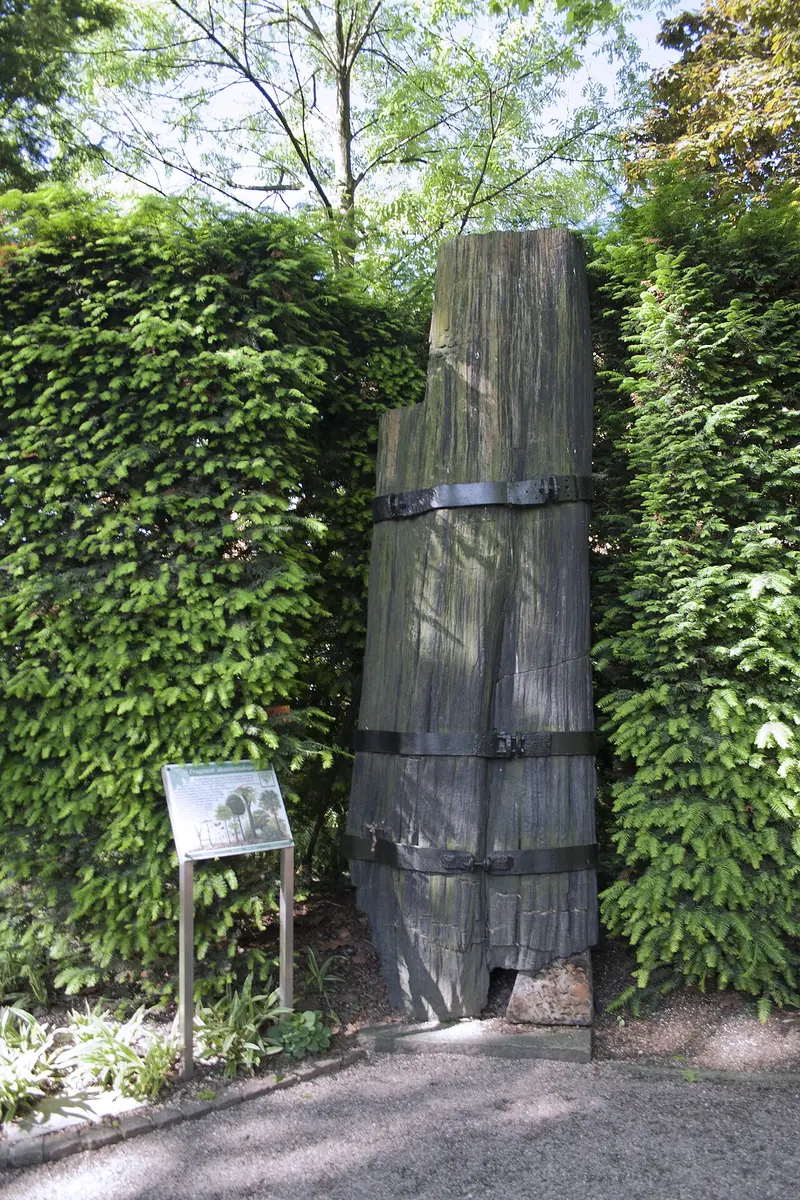 Photo Siliesiac, CC BY-SA 3.0, Wikimedia Commons
 Photo Dawid Galus, CC BY-SA 3.0 pl, Wikimedia Commons
 Photo Koroniec, CC BY-SA 4.0, Wikimedia Commons
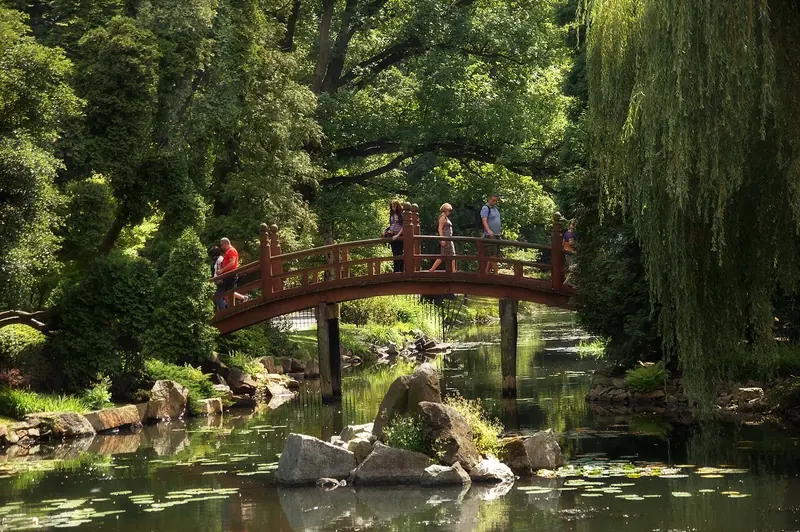 Photo Barbara Maliszewska, CC BY-SA 3.0 pl, Wikimedia Commons