Photo Barbara Maliszewska, CC BY-SA 3.0 pl, Wikimedia Commons
ParkWrocław, Lower Silesia

Szczytnicki Park with children: what to see, map and route

Szczytnicki Park with Centennial Hall and Japanese Garden. In the Turi app, the same map shows your position, guides you from point to point and lets you tick off the places you’ve visited.

10points to see
6on the recommended route
approx. 3 hvisiting with children

Before you go

approx. 3 hat an easy pace, with breaks
2toilets on the map
nonebring your own food
The walk starts at the Diana monument, next to the Hala Stulecia tram stop and the zoo entrance. The park is open and free. The Japanese Garden charges an entry fee and is open from 1 April to 31 October; out of season, leave its points out when you set up your visit plan. The fountain plays in season from spring to autumn. If you are already in the park, Turi will guide you from the nearest point.
  • At home, open the place in Turi and tap “Save for offline”: the map, descriptions and photos will work without signal.
  • Visit the farthest points first, while you still have energy.
  • Tick things off as you go, and by the exit you’ll know what’s left.

Szczytnicki Park in the Turi app

Live position, a route from point to point, descriptions to read and listen to. Free, no account, and in English, German and Ukrainian too.

Get it for Android

Map of the place

The same map as in the app. Tap a point to see its photo and description; in Turi you’ll see yourselves on it too.

Map: Szczytnicki Park
1recommended, in route orderother pointsWCtoilets, food, tickets

Map: OpenStreetMap (ODbL) and BDOT10k GUGiK, checked against aerial photos. Descriptions and photos: Turi and Wikimedia Commons. Something not right? Report it in the app at that point.

Worth seeing

Szczytnicki Park is one of the oldest English-style parks on the continent, founded in 1783. On its edge stands the Centennial Hall from 1913, a UNESCO World Heritage site, and next to it the Four Domes Pavilion, the Spire and the Pergola with Poland's largest multimedia fountain. The walk also leads through the Japanese Garden with its bridges, cascades and koi carp, and to a wooden church more than 400 years old.

Diana monumentPhoto Aw58, CC BY 3.0, Wikimedia Commons1
Attraction

Diana monument

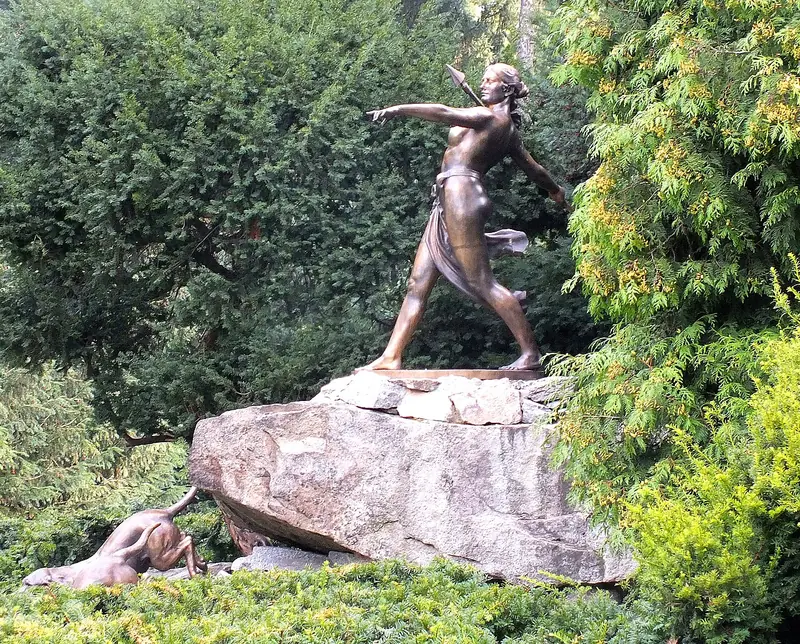
This is where you start, at the edge of Szczytnicki Park. It is one of the largest parks in Wrocław, about 100 hectares; in 1783 Prince Friedrich Ludwig zu Hohenlohe-Ingelfingen laid out one of the first English-style parks on the continent here. The first statue of the goddess of the hunt with two hounds stood in the park from 1898 and disappeared in 1945. The people of Wrocław raised 290,000 zloty to recreate her, and the copy was unveiled in 2015.

Centennial HallPhoto Jar.ciurus, CC BY-SA 3.0 pl, Wikimedia Commons2
Building / monument

Centennial Hall

The hall was built from 1911 to 1913 to a design by Max Berg, for the centenary of the Prussian king's call to fight Napoleon. Its dome is 67 metres across and the hall 42 metres high: when it was built, it was the widest reinforced concrete roof in the world. Since 2006 the hall has been on the UNESCO World Heritage list. It hosts concerts and events, and a visitor centre exhibition tells the story of the building.

Pergola and multimedia fountainPhoto Barbara Maliszewska, CC BY-SA 3.0 pl, Wikimedia Commons3
Attraction

Pergola and multimedia fountain

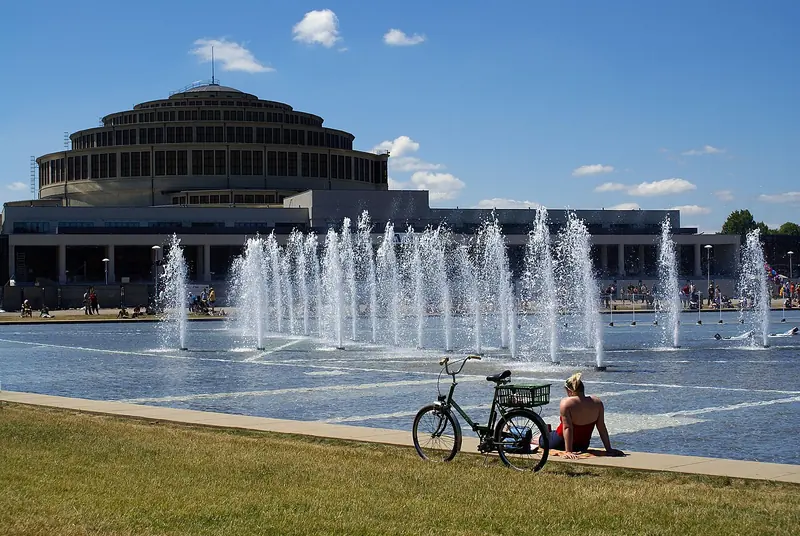
The Pergola was designed by Hans Poelzig for the Centennial Exhibition: a half ellipse of 750 concrete columns, 640 metres long and covered with vines, around a pond dug in February 1913. In 2009 the largest fountain in Poland opened on the pond: almost 300 jets, hundreds of underwater lamps and a geyser in the middle that shoots water 40 metres high. Shows with music run in season from spring to autumn, and they are most beautiful in the evening.

Taiko Bashi bridge and Azumaya pavilionPhoto Barbara Maliszewska, CC BY-SA 3.0 pl, Wikimedia Commons4
Attraction

Taiko Bashi bridge and Azumaya pavilion

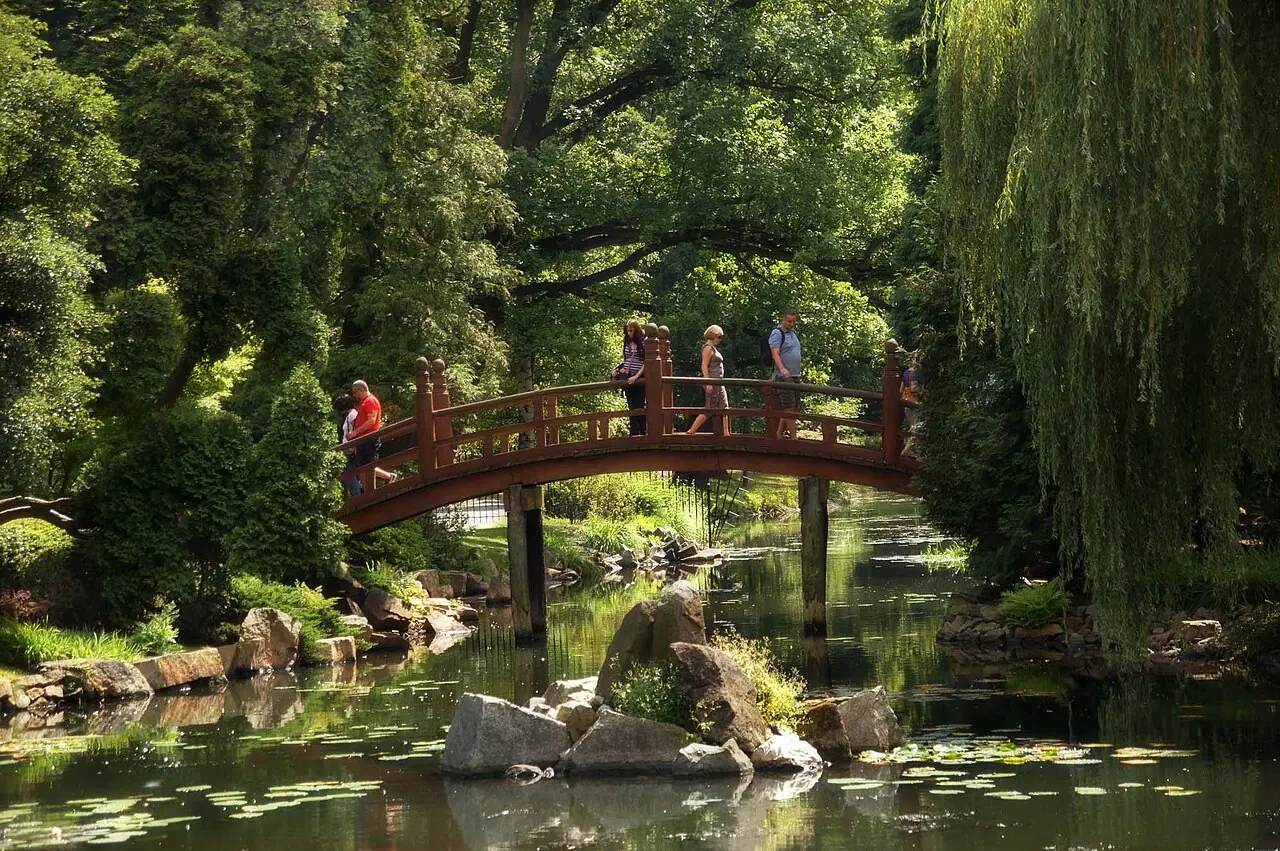
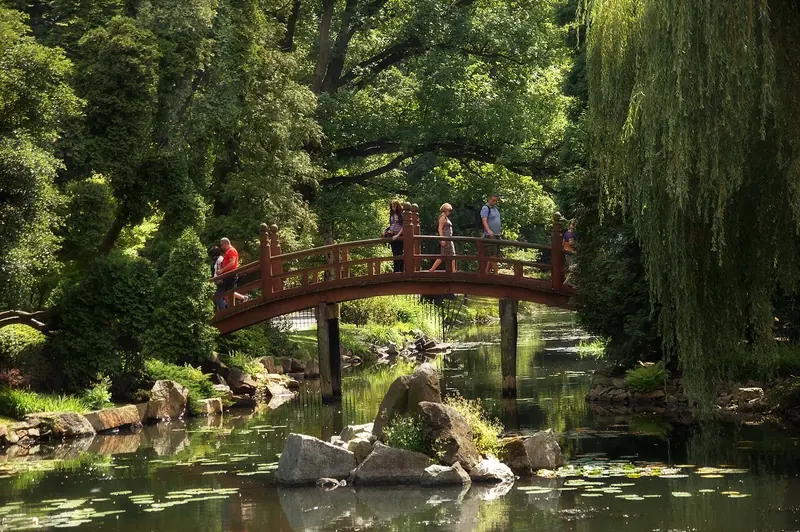
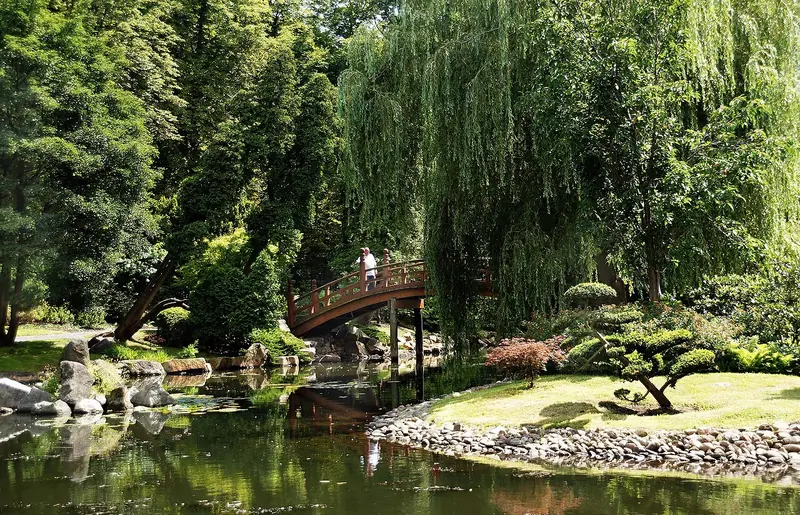
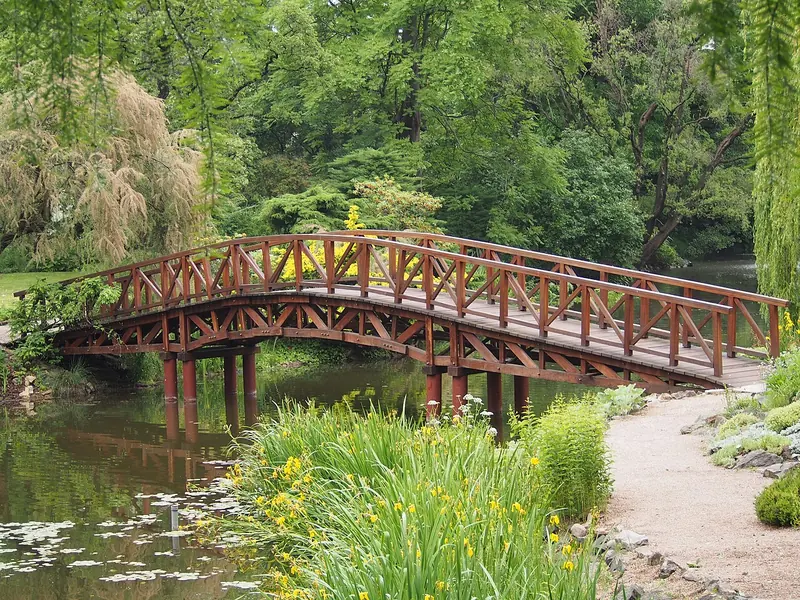
The arched Taiko Bashi, or drum bridge, leads to the Azumaya tea pavilion. This part of the garden echoes gardens made for the tea ceremony. The stone lanterns and hand-washing basins you pass on the way are old Japanese pieces from the 18th and 19th centuries; some of the granite lanterns were a gift from the government of Japan.

Yumedono Bashi bridge and koi pondPhoto Barbara Maliszewska, CC BY-SA 3.0 pl, Wikimedia Commons5
Attraction

Yumedono Bashi bridge and koi pond

The straight Yumedono Bashi bridge crosses a pond full of koi carp, in Japan a symbol of happiness, courage and long life. During the restoration the shoreline was shaped like the Japanese word for "friendship". Look for the water level mark from July 1997: the garden stood under water for three weeks and lost about 70% of its new plants. The oldest trees here are oaks about 200 years old, and in May and June some 40 kinds of rhododendron are in bloom.

Wooden church of St John of NepomukPhoto Maciek16180, CC BY 3.0, Wikimedia Commons6
Building / monument

Wooden church of St John of Nepomuk

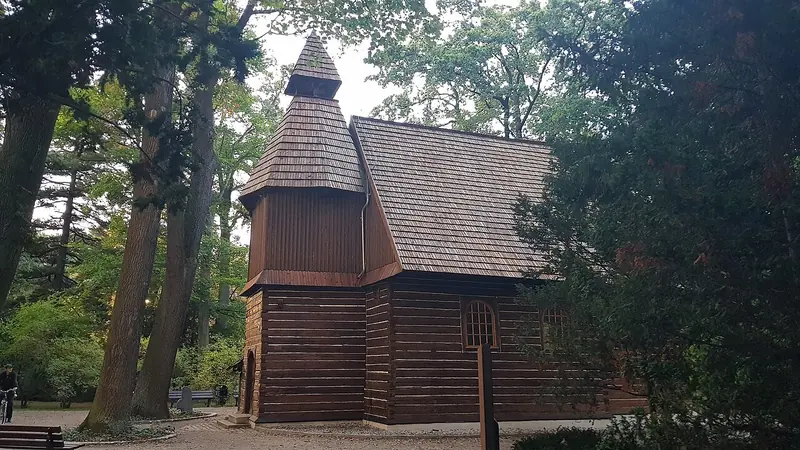
This wooden church is over 400 years old and has travelled around Silesia. Carpenters in Stare Koźle built it at the turn of the 16th and 17th centuries; in the 18th century it was moved to Kędzierzyn, and in 1913 to Wrocław for the Centennial Exhibition. Next to it stands a stone cross brought in the 1970s from Muchobór Wielki; nobody knows who put it up or why.

All points (12)

Grouped as in the map legend. A star marks recommended points.

Attraction 7
Diana monument ★This is where you start, at the edge of Szczytnicki Park. It is one of the largest parks in Wrocław, about 100 hectares; in 1783 Prince Friedrich Ludwig zu Hohenlohe-Ingelfingen laid out one of the first English-style parks on the continent here. The first statue of the goddess of the hunt with two hounds stood in the park from 1898 and disappeared in 1945. The people of Wrocław raised 290,000 zloty to recreate her, and the copy was unveiled in 2015.
Pergola and multimedia fountain ★The Pergola was designed by Hans Poelzig for the Centennial Exhibition: a half ellipse of 750 concrete columns, 640 metres long and covered with vines, around a pond dug in February 1913. In 2009 the largest fountain in Poland opened on the pond: almost 300 jets, hundreds of underwater lamps and a geyser in the middle that shoots water 40 metres high. Shows with music run in season from spring to autumn, and they are most beautiful in the evening.
Taiko Bashi bridge and Azumaya pavilion ★The arched Taiko Bashi, or drum bridge, leads to the Azumaya tea pavilion. This part of the garden echoes gardens made for the tea ceremony. The stone lanterns and hand-washing basins you pass on the way are old Japanese pieces from the 18th and 19th centuries; some of the granite lanterns were a gift from the government of Japan.
Yumedono Bashi bridge and koi pond ★The straight Yumedono Bashi bridge crosses a pond full of koi carp, in Japan a symbol of happiness, courage and long life. During the restoration the shoreline was shaped like the Japanese word for "friendship". Look for the water level mark from July 1997: the garden stood under water for three weeks and lost about 70% of its new plants. The oldest trees here are oaks about 200 years old, and in May and June some 40 kinds of rhododendron are in bloom.
Iglica (the Spire)The steel Spire was put up in July 1948 for the Recovered Territories Exhibition, designed by Stanisław Hempel. It was 106 metres tall; today it is 90.3. At the top turned an umbrella of mirrors meant to reflect searchlights at night, but on 20 July a thunderstorm knocked some of them down. In October two students, climbers from Kraków, removed the damaged top: the climb up took them more than a day.
Japanese Garden: gateThe Japanese Garden was created from 1909 to 1913 for the Centennial Exhibition, on the initiative of Count Fritz von Hochberg, to a design by the Japanese gardener Mankichi Arai. After the exhibition most of the Japanese details were taken away. In 1996 and 1997 gardeners from Wrocław and Nagoya restored its Japanese character and named it Hakkoen, the white and red garden. Two months after the opening the great flood of 1997 put it under water; it reopened in 1999. Entry is paid, and the garden is open from April to October.
Cascades and Machiai waiting pavilionThe path along the pond leads from the gentle cascade called female, Onna-daki, to the wild male one, Otoko-daki, and on to the Machiai waiting pavilion. Listen to how the sound of the water changes: a Japanese garden is designed for slow walking and contemplation, and every bend in the path opens a new view.
Building / monument 3
Centennial Hall ★The hall was built from 1911 to 1913 to a design by Max Berg, for the centenary of the Prussian king's call to fight Napoleon. Its dome is 67 metres across and the hall 42 metres high: when it was built, it was the widest reinforced concrete roof in the world. Since 2006 the hall has been on the UNESCO World Heritage list. It hosts concerts and events, and a visitor centre exhibition tells the story of the building.
Wooden church of St John of Nepomuk ★This wooden church is over 400 years old and has travelled around Silesia. Carpenters in Stare Koźle built it at the turn of the 16th and 17th centuries; in the 18th century it was moved to Kędzierzyn, and in 1913 to Wrocław for the Centennial Exhibition. Next to it stands a stone cross brought in the 1970s from Muchobór Wielki; nobody knows who put it up or why.
Four Domes PavilionThe pavilion was designed by Hans Poelzig and built in half a year, from August 1912 to February 1913, for the Centennial Exhibition. Its 56 rooms then showed the history of the wars against Napoleon. In 1948 it housed the history display of the Recovered Territories Exhibition, seen by a million people. Today it is a museum of contemporary art, and together with the Centennial Hall it belongs to the complex on the UNESCO list.
Toilets / tickets / parking 2
Public toilet
Public toilet
Szczytnicki ParkGet Turi