Photo Andrzej Otrębski, CC BY-SA 4.0, Wikimedia Commons
Spa townCiechocinek, Kuyavia-Pomerania

Ciechocinek with children: what to see, map and route

Ciechocinek: graduation towers and Spa Park. In the Turi app, the same map shows your position, guides you from point to point and lets you tick off the places you’ve visited.

14points to see
7on the recommended route
approx. 3 h 30 minvisiting with children

Before you go

approx. 3 h 30 minat an easy pace, with breaks
2toilets on the map
nonebring your own food
The walk starts at the railway station, a few steps from the Grzybek fountain; since December 2025 trains run to Ciechocinek again. The full route takes in the saltworks on the edge of the Spa Park, while the recommended one goes straight through the Graduation Tower Park to the towers. The parks and paths by the towers are open, while the upper terraces of the towers, the museum and some attractions may charge a fee. If you are already in town, Turi will guide you from the nearest point.
  • At home, open the place in Turi and tap “Save for offline”: the map, descriptions and photos will work without signal.
  • Visit the farthest points first, while you still have energy.
  • Tick things off as you go, and by the exit you’ll know what’s left.

Ciechocinek in the Turi app

Live position, a route from point to point, descriptions to read and listen to. Free, no account, and in English, German and Ukrainian too.

Get it for Android

Map of the place

The same map as in the app. Tap a point to see its photo and description; in Turi you’ll see yourselves on it too.

Map: Ciechocinek
1recommended, in route orderother pointsWCtoilets, food, tickets

Map: OpenStreetMap (ODbL) and BDOT10k GUGiK, checked against aerial photos. Descriptions and photos: Turi and Wikimedia Commons. Something not right? Report it in the app at that point.

Worth seeing

Ciechocinek is a spa town built around salt. On this walk you follow the whole journey of the brine: from the Grzybek fountain over the brine spring, through three wooden graduation towers, the largest such complex in Europe, to the saltworks, which has used the same method for almost 200 years. On the way you will see the wooden pump room, the concert shell and the Summer Theatre in Ciechocinek's Swiss style, the flower clock and the Spa Park. The towers and saltworks are a Monument of History.

Railway stationPhoto Andrzej Otrębski, CC BY-SA 4.0, Wikimedia Commons1
Building / monument

Railway station

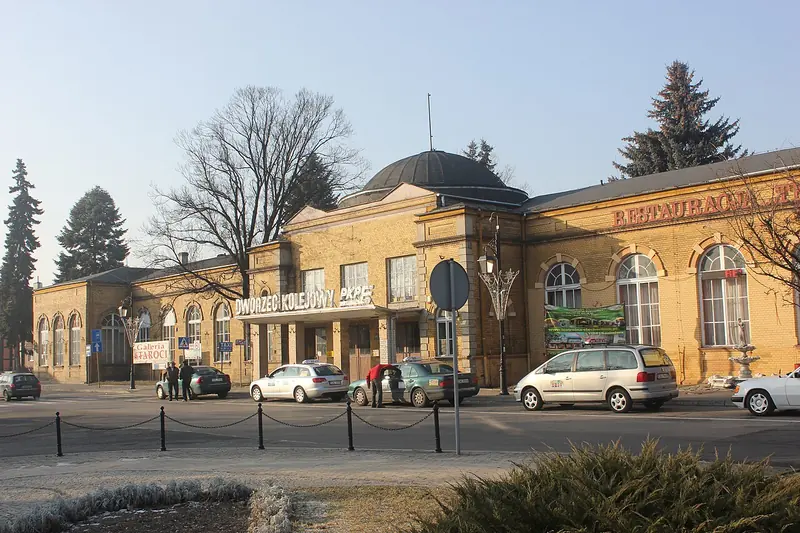
This is where you start. The railway reached the spa in 1867. The brick station designed by Czesław Domaniewski was built in 1901 and 1902, with luxurious waiting rooms divided by class. At the end of the war the Germans burned it, and the rebuilding from 1950 changed its appearance. Trains stopped running here in 2011 and only came back on 14 December 2025, after a fourteen-year break.

Grzybek Fountain, spring no. 11Photo JJJ2002, CC BY 4.0, Wikimedia Commons2
Attraction

Grzybek Fountain, spring no. 11

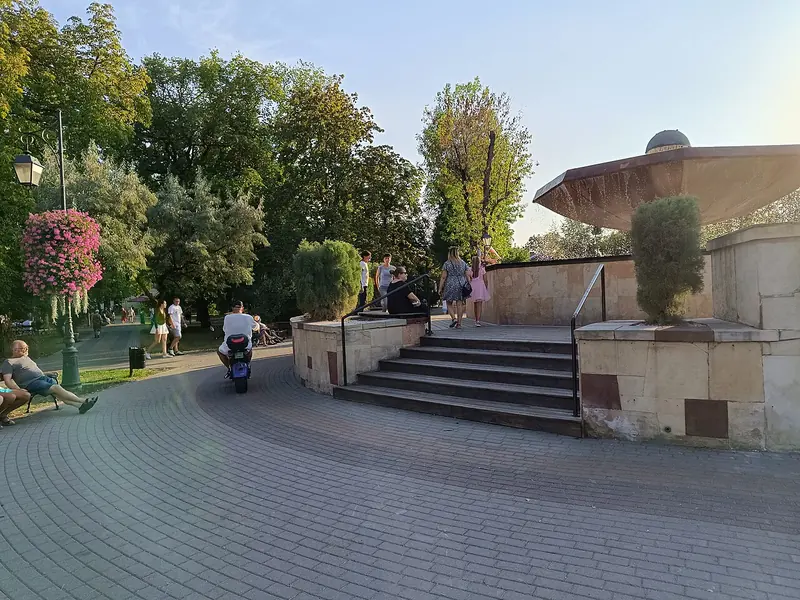
This is where Ciechocinek salt starts. The Grzybek, or Mushroom, is built over brine spring no. 11, drilled about 415 metres deep. The brine shoots up and runs down over the rim of the bowl, and the fine spray fills the air, so breathing here feels like being by the sea. From this spring the brine flows through pipes to the graduation towers: the first of the three stages of salt making you will see on this walk.

Mineral water pump roomPhoto MichalPL, CC BY-SA 4.0, Wikimedia Commons3
Building / monument

Mineral water pump room

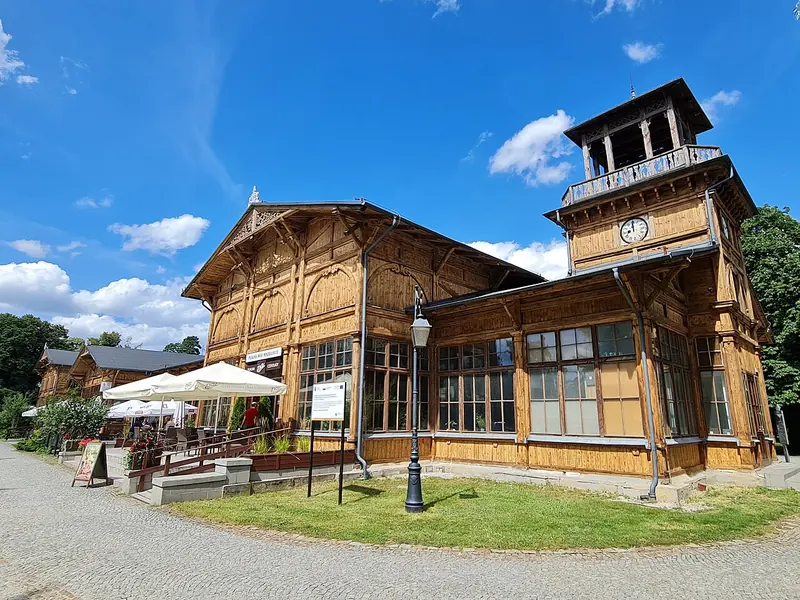
The wooden pump room was built in 1880 and 1881 to a design by Edward Cichocki. Its decorative fretwork boards are the so-called Swiss style, which has been the hallmark of Ciechocinek ever since: you will see it again in the concert shell and the Summer Theatre. The building has a frame of wooden posts clad with boards and a small tower on the east side. Today it houses a concert hall and a café.

Flower clockPhoto Avi1111 dr. avishai teicher, CC BY-SA 3.0, Wikimedia Commons4
Plants

Flower clock

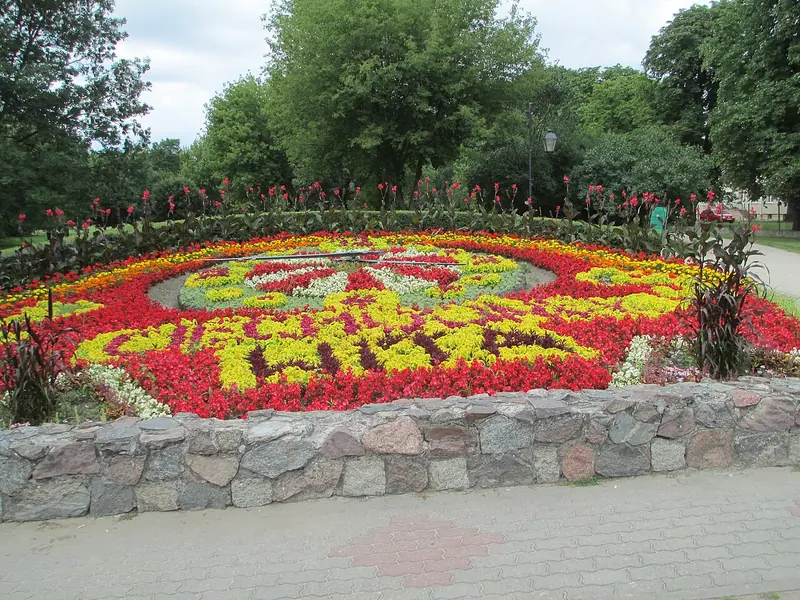
At the entrance to the Graduation Tower Park you are greeted by a flower clock whose face is a flowerbed. It was designed by Zygmunt Hellwig. The Graduation Tower Park dates back to 1875 and got its present shape in 1907 and 1908, to a concept by Franciszek Szanior. From here it stretches all the way to the towers.

Graduation tower no. IPhoto Andrzej Otrębski, CC BY-SA 4.0, Wikimedia Commons5
Attraction

Graduation tower no. I

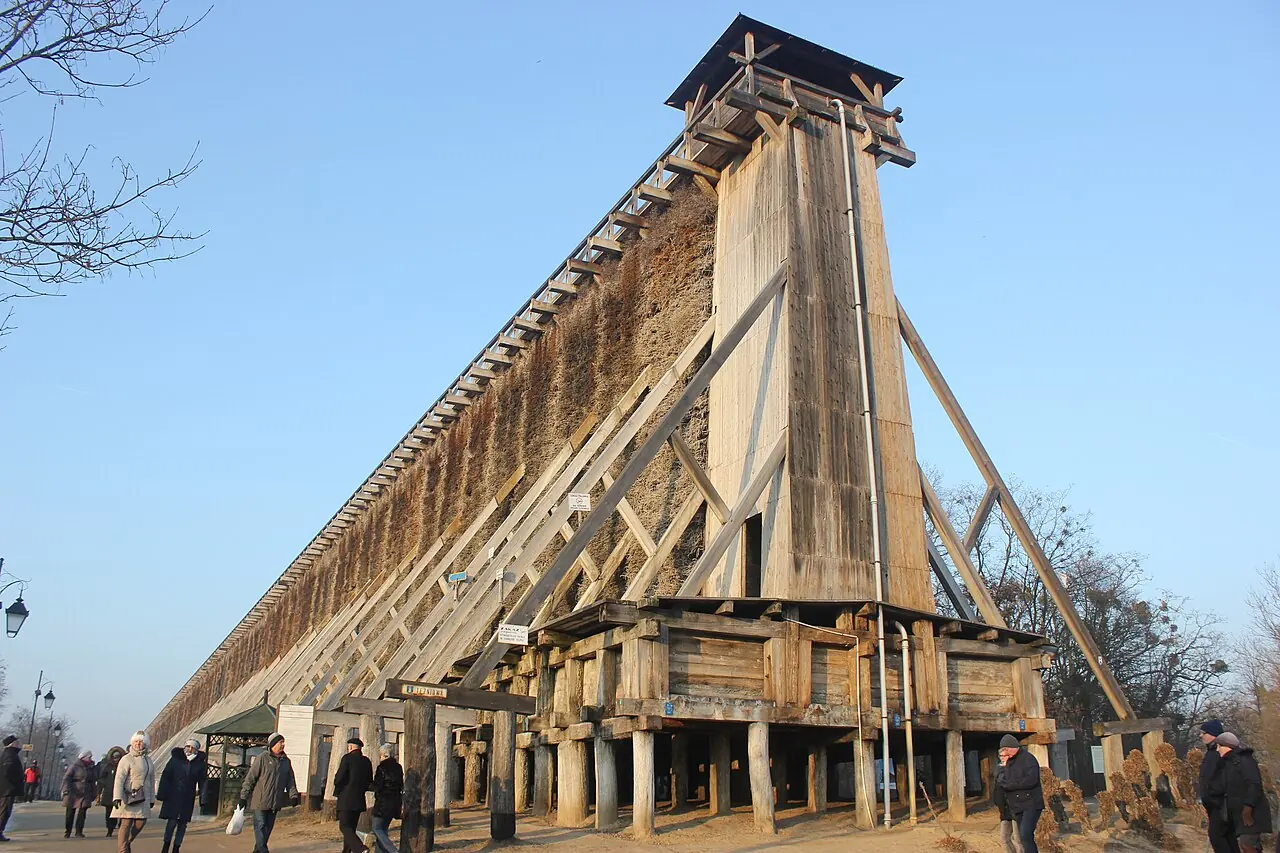
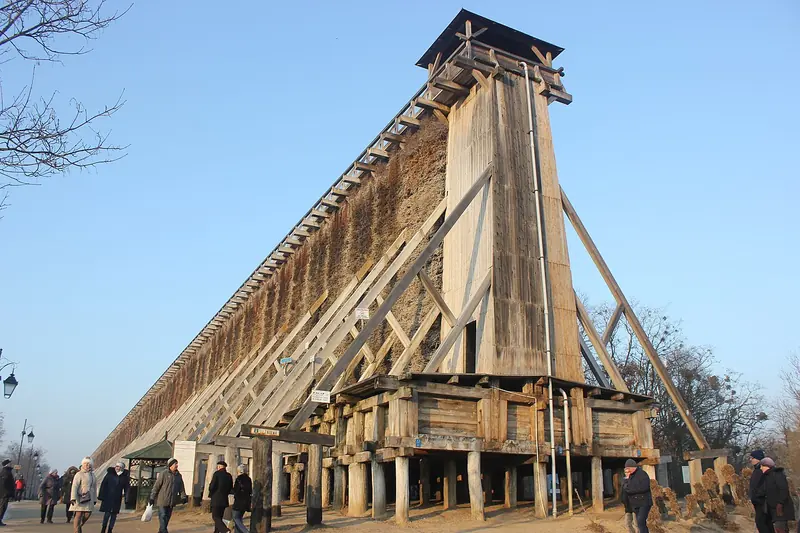
Towers I and II were built in the 1820s to a design by Jakub Graff, brought in from Saxony. Tower no. I is 648 metres long and almost 16 metres high. It stands on about 7,000 oak piles driven into the ground, and its walls are filled with blackthorn branches. The brine trickles down the twigs and evaporates in the wind and sun, leaving iodine, bromine and salt in the air: the towers create a natural open-air inhalation area. Their modernisation was completed in 2023.

Graduation tower no. IIPhoto Mona, CC BY-SA 4.0, Wikimedia Commons6
Attraction

Graduation tower no. II

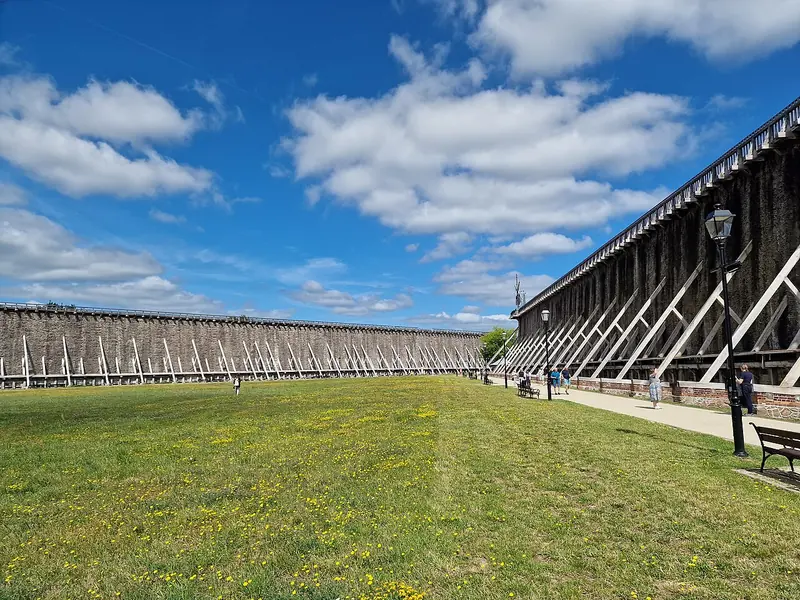
Tower no. II is the longest: it is 719 metres long and runs parallel to the first one. The brine does not flow over all the towers at once but passes through them one after another, getting stronger each time. On this tower it is at its most concentrated, and then it flows through pipes to the saltworks. So the towers are not just an inhalation area but a working salt factory: the second stage of production, done here the same way for almost 200 years.

Graduation tower no. IIIPhoto Henryk Bielamowicz, CC BY-SA 4.0, Wikimedia Commons7
Attraction

Graduation tower no. III

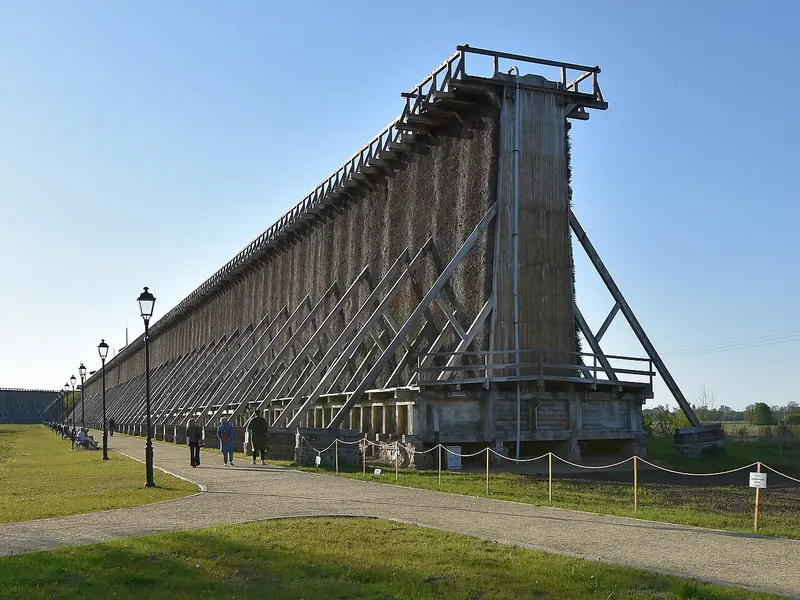
The shortest tower, 333 metres long, was added in 1859 at an angle to the first two. It closes the space between them from the north, so together the three form a horseshoe about 1.7 kilometres long: the largest group of wooden graduation towers in Europe. Next to it lies the Ciechocinek nature reserve, where plants known from the seaside, such as glasswort and sea aster, grow on the salty ground. Since 2017 the towers have been a Monument of History, and in August 2026 an application was signed to put the complex on the UNESCO list.

All points (16)

Grouped as in the map legend. A star marks recommended points.

Building / monument 5
Railway station ★This is where you start. The railway reached the spa in 1867. The brick station designed by Czesław Domaniewski was built in 1901 and 1902, with luxurious waiting rooms divided by class. At the end of the war the Germans burned it, and the rebuilding from 1950 changed its appearance. Trains stopped running here in 2011 and only came back on 14 December 2025, after a fourteen-year break.
Mineral water pump room ★The wooden pump room was built in 1880 and 1881 to a design by Edward Cichocki. Its decorative fretwork boards are the so-called Swiss style, which has been the hallmark of Ciechocinek ever since: you will see it again in the concert shell and the Summer Theatre. The building has a frame of wooden posts clad with boards and a small tower on the east side. Today it houses a concert hall and a café.
Summer TheatreThe wooden Summer Theatre has stood here since 1891; it was enlarged in 1901 and restored in 1998. It is another example of the Ciechocinek Swiss style: lace-like fretwork boards on the gables and around the entrance. Spa guests came here for plays and concerts during the season.
Concert shellThe wooden concert shell was put up in the middle of the park in 1909, designed by Paweł Fedders in the Zakopane style. The curved vault over the stage reflects sound towards the audience, so an orchestra could play without amplifiers. In summer it hosts concerts and festivals, opera and operetta among them.
SaltworksThis is where the brine ends its journey: in the saltworks the water is boiled off and salt remains. The saltworks was built from 1824 to 1830 on the initiative of Konstanty Leon Wolicki, and full production started in 1832, delayed by the November Uprising. Of the four boiling houses one survived, and inside it a suspended railway from 1905 that carried salt to the drying room and the store. Next door is the Museum of the Saltworks and Spa Treatment; check the opening hours before you visit.
Attraction 7
Grzybek Fountain, spring no. 11 ★This is where Ciechocinek salt starts. The Grzybek, or Mushroom, is built over brine spring no. 11, drilled about 415 metres deep. The brine shoots up and runs down over the rim of the bowl, and the fine spray fills the air, so breathing here feels like being by the sea. From this spring the brine flows through pipes to the graduation towers: the first of the three stages of salt making you will see on this walk.
Graduation tower no. I ★Towers I and II were built in the 1820s to a design by Jakub Graff, brought in from Saxony. Tower no. I is 648 metres long and almost 16 metres high. It stands on about 7,000 oak piles driven into the ground, and its walls are filled with blackthorn branches. The brine trickles down the twigs and evaporates in the wind and sun, leaving iodine, bromine and salt in the air: the towers create a natural open-air inhalation area. Their modernisation was completed in 2023.
Graduation tower no. II ★Tower no. II is the longest: it is 719 metres long and runs parallel to the first one. The brine does not flow over all the towers at once but passes through them one after another, getting stronger each time. On this tower it is at its most concentrated, and then it flows through pipes to the saltworks. So the towers are not just an inhalation area but a working salt factory: the second stage of production, done here the same way for almost 200 years.
Graduation tower no. III ★The shortest tower, 333 metres long, was added in 1859 at an angle to the first two. It closes the space between them from the north, so together the three form a horseshoe about 1.7 kilometres long: the largest group of wooden graduation towers in Europe. Next to it lies the Ciechocinek nature reserve, where plants known from the seaside, such as glasswort and sea aster, grow on the salty ground. Since 2017 the towers have been a Monument of History, and in August 2026 an application was signed to put the complex on the UNESCO list.
Hansel and Gretel FountainThe fountain with figures of Hansel and Gretel, from the Brothers Grimm fairy tale, is one of the ornaments of the old Spa Park and is a listed monument. A good spot for a short rest before you head towards the graduation towers.
Stanisław Staszic monumentIn the middle of the Graduation Tower Park stands a monument to Stanisław Staszic. This scholar and statesman of the Kingdom of Poland promoted mining and industry, and on his initiative a mining school was founded in Kielce, where Jakub Graff, later the designer of the Ciechocinek towers, taught. Behind the monument you can already see the first of them.
Jakub Graff monument and spring no. 17This monument honours Jakub Graff, professor at the Mining Academy in Kielce, who designed the Ciechocinek graduation towers. Next to it stands the wooden housing of brine intake no. 17. Old buildings for pumping and transporting brine also survive between the towers. Steam engines and windmills once pushed the brine; today electric pumps do it, but everything else works as it did in the 19th century. Deeper inside the horseshoe, behind a fence, stand the ruins of a modernist brine swimming pool from 1932, closed in 2001; since 2025 it has belonged to the regional government, which has announced plans to rebuild it.
Plants 2
Flower clock ★At the entrance to the Graduation Tower Park you are greeted by a flower clock whose face is a flowerbed. It was designed by Zygmunt Hellwig. The Graduation Tower Park dates back to 1875 and got its present shape in 1907 and 1908, to a concept by Franciszek Szanior. From here it stretches all the way to the towers.
Spa ParkThe Spa Park was laid out in 1872 to 1875 as a landscape park designed by Hipolit Cybulski. It is the largest park in Ciechocinek. Besides maples, oaks, lindens and spruces, trees from other continents grow here: Kentucky coffeetree, ginkgo, Caucasian wingnut and tulip tree. A pedunculate oak 22 metres tall is a protected natural monument. Through the park you will reach the saltworks, and then head back towards the graduation towers.
Toilets / tickets / parking 2
Public toilet
Public toilet
CiechocinekGet Turi