Old Town and Pier in Kołobrzeg. In the Turi app, the same map shows your position, guides you from point to point and lets you tick off the places you’ve visited.
free entrymuseums and towers have separate tickets
The walk starts at the tourist information in the town hall and ends on the pier, about half an hour’s walk from the start. If you are already in the centre or by the sea, Turi will guide you from the nearest point. The route is flat. Walking around the town is free; tickets are needed, among others, for the Museum of Polish Arms and the lighthouse. There are toilets by the basilica, by the lighthouse and by the pier.
At home, open the place in Turi and tap “Save for offline”: the map, descriptions and photos will work without signal.
Visit the farthest points first, while you still have energy.
Tick things off as you go, and by the exit you’ll know what’s left.
Kołobrzeg Old Town in the Turi app
Live position, a route from point to point, descriptions to read and listen to. Free, no account, in 12 languages.
The same map as in the app. Tap a point to see its photo and description; in Turi you’ll see yourselves on it too.
1recommended, in route orderother pointsWCtoilets, food, tickets
Map: OpenStreetMap (ODbL). Descriptions and photos: Turi and Wikimedia Commons. Something not right? Report it in the app at that point.
Worth seeing
Kołobrzeg is one of the oldest towns in Pomerania: it grew up on salt making, got a bishopric in the year 1000, and today it is a spa town right by the sea. The walk starts at the neo-Gothic town hall, leads to the Gothic basilica with a font from 1355, to the oldest house and a medieval tower, and then down to the sea. It ends at the lighthouse on an old fort, the monument to Poland’s wedding to the sea and on the pier.
Photo NeonFor, CC BY-SA 4.0, Wikimedia Commons1
Building / monument
Town hall
The town hall looks like a small castle with turrets and battlements, although it was built in 1829-1832 to a design by Karl Friedrich Schinkel. It stands on the cellars of the medieval town hall, destroyed in 1807 during the siege of the town. In 1945 it survived the bombing of the town centre. Set among the pillars on the north-east side is a 16th-century pillory, the Adebar Column, with a mask that legend links to the town reeve Jakub Adebar.
Photo Eleanor Rigby 13, CC BY-SA 3.0 pl, Wikimedia Commons2
Building / monument
St Mary’s Basilica
A Gothic collegiate church where the first mass was said on the building site in 1321. At the end of the 15th century its two towers were joined into one massive block that you can see from far away. Inside is the oldest metal font in Western Pomerania, cast in 1355 by Jan Alart and resting on four lions, and a wooden chandelier from 1523. The church was destroyed in 1945, and rebuilding began in 1957. The monument in front of the entrance recalls that as early as the year 1000 Bolesław the Brave founded a bishopric in Kołobrzeg.
Photo Polar123, CC BY-SA 3.0 pl, Wikimedia Commons3
Building / monument
Schliffen House and the Museum of Polish Arms
The oldest surviving house in Kołobrzeg, a 15th-century Gothic town house that probably belonged to the wealthy Schliffen merchant family. It was destroyed in 1945 and carefully rebuilt. Since 1963 it has been part of the Museum of Polish Arms, and next door, at number 5 Gierczak Street, is the museum’s main exhibition about the history of Polish arms and soldiers.
Photo PiotrMig, CC BY-SA 4.0, Wikimedia Commons4
Building / monument
Lont Tower
This 14th-century tower is the only part of the medieval walls that survived in one piece: first the town’s rebuilding into a bastioned fortress, then the demolition of the fortress at the end of the 19th century, and in 1945 the fighting for the town. After the war, because of a mistranslation of its German name, it was called the Powder Tower, although the real powder tower stood elsewhere, by Katedralna and Rzeczna streets.
Photo Aw58, CC BY 3.0, Wikimedia Commons5
Attraction
Lighthouse
A light for ships was lit in Kołobrzeg as early as 1666, in the turret of the harbour office. The brick lighthouse from 1909 was blown up by German sappers in March 1945, because it was an excellent landmark for Polish gunners. The new one was built in 1945 on the main platform of Fort Ujście from 1770-1774. The tower is 26 metres tall and its light can be seen from almost 30 kilometres. You can climb it.
Photo M Z Wojalski, CC BY 3.0, Wikimedia Commons6
Attraction
Monument to Poland’s Wedding to the Sea
On 18 March 1945 the Polish soldiers who had taken Kołobrzeg solemnly renewed Poland’s wedding to the sea here, first celebrated in Puck in 1920. The monument in the shape of a huge flag held by soldiers was designed by Wiktor Tołkin, with mosaics by Władysław Jackiewicz. It was unveiled in 1963 before a crowd of 30,000 people, in the park by the seaside promenade, about 300 metres from the site of the ceremony itself.
Photo Junx, CC BY-SA 4.0, Wikimedia Commons7
Attraction
Pier
The first wooden T-shaped jetty, about a hundred metres long, was built here in 1881 by the Strandschloss sanatorium, and the war destroyed it. Today’s reinforced concrete pier opened on 19 June 1971. It is 220 metres long, the walkway is about 4.5 metres above the water, and excursion boats leave from its two-level head. In the evening the pier is lit up.
All points (12)
Grouped as in the map legend. A star marks recommended points.
Building / monument 5
Town hall ★The town hall looks like a small castle with turrets and battlements, although it was built in 1829-1832 to a design by Karl Friedrich Schinkel. It stands on the cellars of the medieval town hall, destroyed in 1807 during the siege of the town. In 1945 it survived the bombing of the town centre. Set among the pillars on the north-east side is a 16th-century pillory, the Adebar Column, with a mask that legend links to the town reeve Jakub Adebar.
St Mary’s Basilica ★A Gothic collegiate church where the first mass was said on the building site in 1321. At the end of the 15th century its two towers were joined into one massive block that you can see from far away. Inside is the oldest metal font in Western Pomerania, cast in 1355 by Jan Alart and resting on four lions, and a wooden chandelier from 1523. The church was destroyed in 1945, and rebuilding began in 1957. The monument in front of the entrance recalls that as early as the year 1000 Bolesław the Brave founded a bishopric in Kołobrzeg.
Schliffen House and the Museum of Polish Arms ★The oldest surviving house in Kołobrzeg, a 15th-century Gothic town house that probably belonged to the wealthy Schliffen merchant family. It was destroyed in 1945 and carefully rebuilt. Since 1963 it has been part of the Museum of Polish Arms, and next door, at number 5 Gierczak Street, is the museum’s main exhibition about the history of Polish arms and soldiers.
Lont Tower ★This 14th-century tower is the only part of the medieval walls that survived in one piece: first the town’s rebuilding into a bastioned fortress, then the demolition of the fortress at the end of the 19th century, and in 1945 the fighting for the town. After the war, because of a mistranslation of its German name, it was called the Powder Tower, although the real powder tower stood elsewhere, by Katedralna and Rzeczna streets.
Braunschweig Palace, Town MuseumAn early 19th-century palace in the Empire style, from the time when Kołobrzeg was still a Prussian fortress. Since 1985 it has housed the museum branch devoted to the history of the town, which had a bishopric as early as the year 1000, grew up on salt making and from the 14th century belonged to the Hanseatic League.
Attraction 3
Lighthouse ★A light for ships was lit in Kołobrzeg as early as 1666, in the turret of the harbour office. The brick lighthouse from 1909 was blown up by German sappers in March 1945, because it was an excellent landmark for Polish gunners. The new one was built in 1945 on the main platform of Fort Ujście from 1770-1774. The tower is 26 metres tall and its light can be seen from almost 30 kilometres. You can climb it.
Monument to Poland’s Wedding to the Sea ★On 18 March 1945 the Polish soldiers who had taken Kołobrzeg solemnly renewed Poland’s wedding to the sea here, first celebrated in Puck in 1920. The monument in the shape of a huge flag held by soldiers was designed by Wiktor Tołkin, with mosaics by Władysław Jackiewicz. It was unveiled in 1963 before a crowd of 30,000 people, in the park by the seaside promenade, about 300 metres from the site of the ceremony itself.
Pier ★The first wooden T-shaped jetty, about a hundred metres long, was built here in 1881 by the Strandschloss sanatorium, and the war destroyed it. Today’s reinforced concrete pier opened on 19 June 1971. It is 220 metres long, the walkway is about 4.5 metres above the water, and excursion boats leave from its two-level head. In the evening the pier is lit up.
Toilets / tickets / parking 4
Tourist information in the town hallThe walk starts at the tourist information in the town hall. The route goes round the Old Town with the basilica, the oldest house and a medieval tower, leads along the port to the lighthouse on an old fort, and ends on the pier in the spa district.

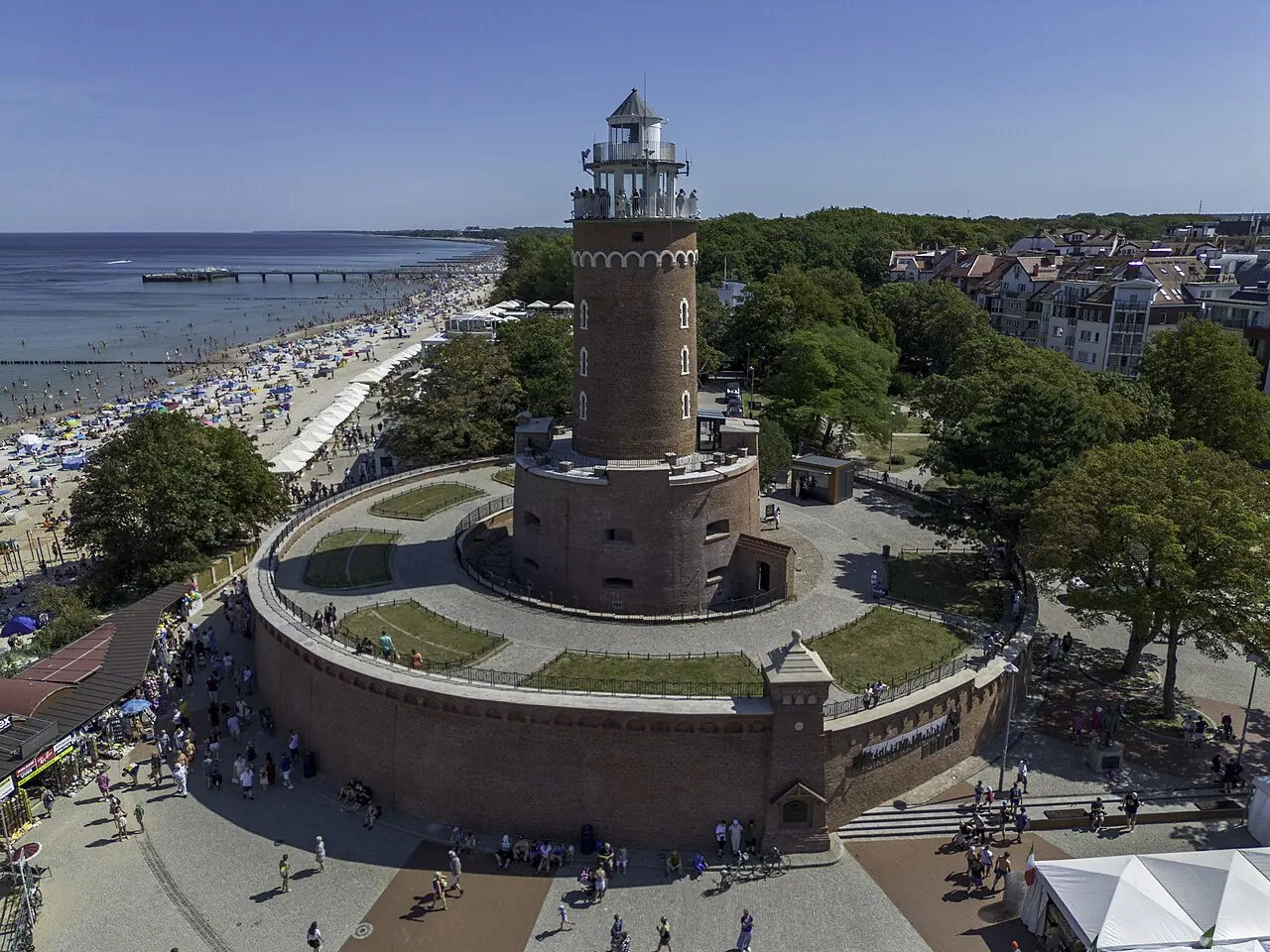 Photo Kapitel, CC BY-SA 4.0, Wikimedia Commons

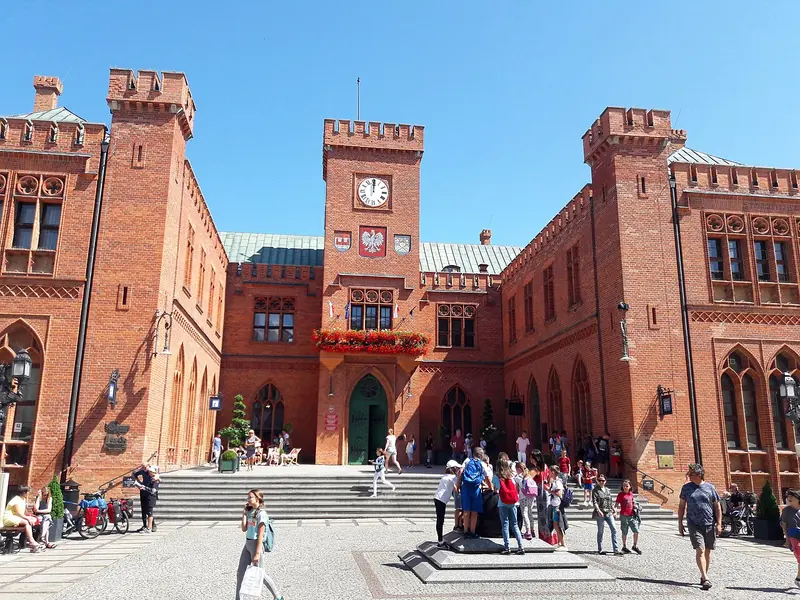 Photo NeonFor, CC BY-SA 4.0, Wikimedia Commons1
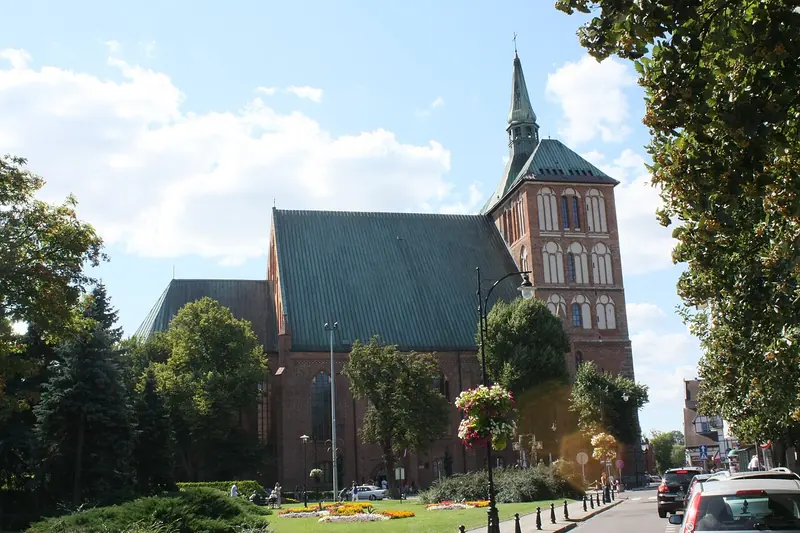 Photo Eleanor Rigby 13, CC BY-SA 3.0 pl, Wikimedia Commons
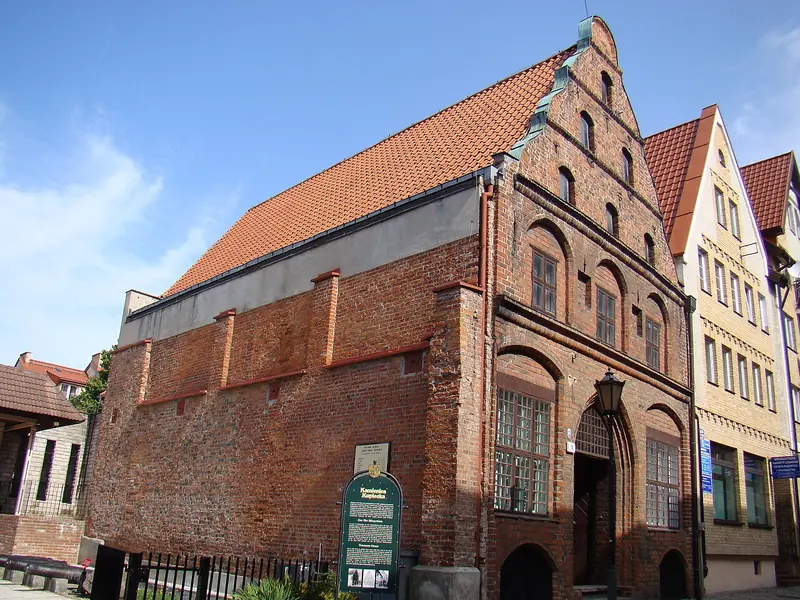 Photo Polar123, CC BY-SA 3.0 pl, Wikimedia Commons
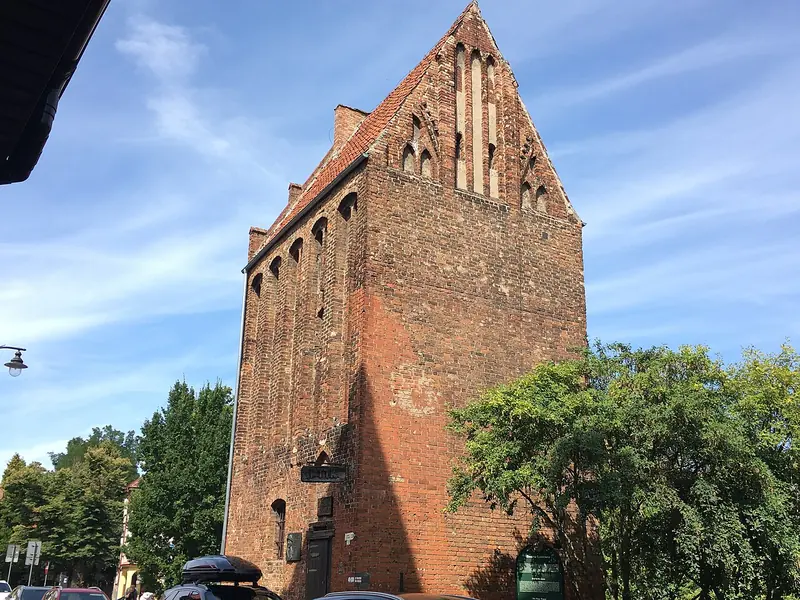 Photo PiotrMig, CC BY-SA 4.0, Wikimedia Commons
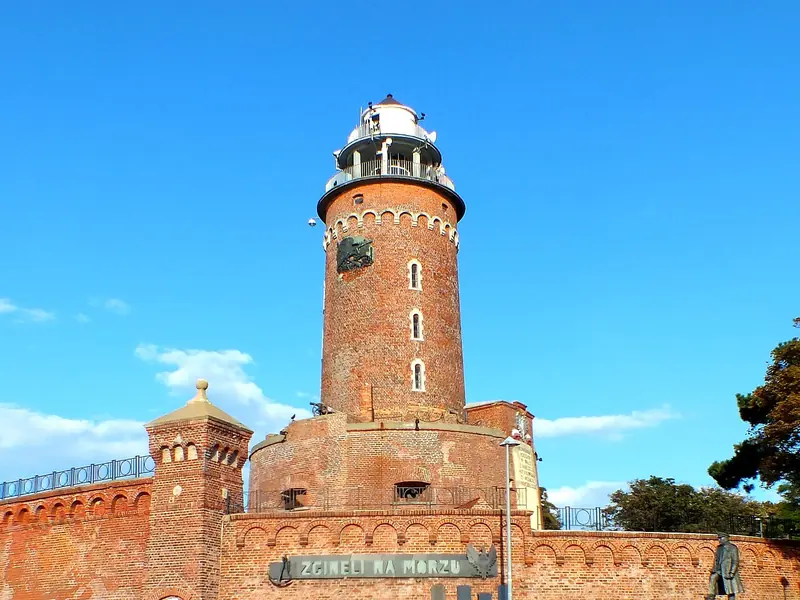 Photo Aw58, CC BY 3.0, Wikimedia Commons
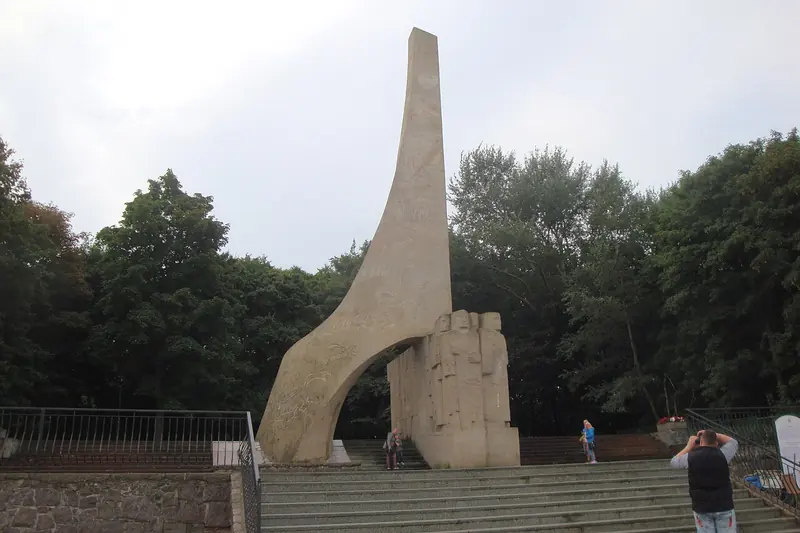 Photo M Z Wojalski, CC BY 3.0, Wikimedia Commons
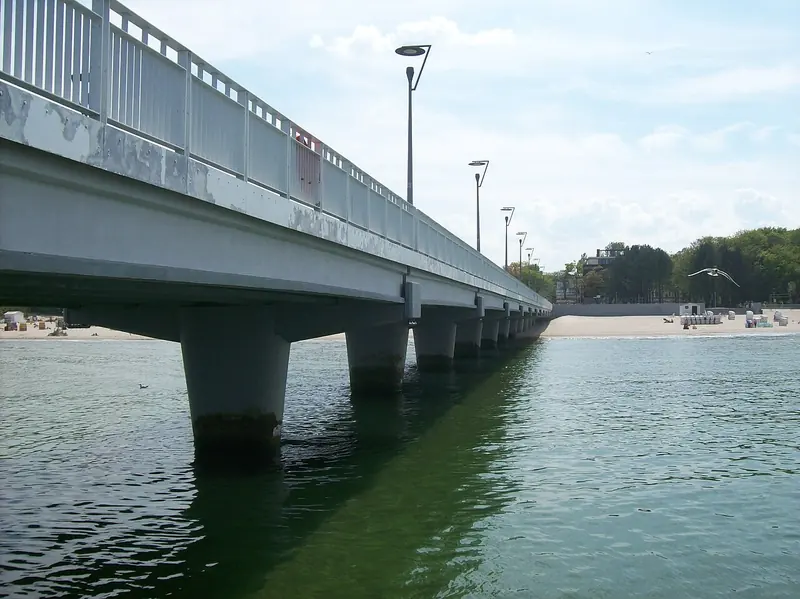 Photo Junx, CC BY-SA 4.0, Wikimedia Commons
 Photo Szczecinolog, CC BY-SA 4.0, Wikimedia Commons
 Photo Andrzej Otrębski, CC BY-SA 4.0, Wikimedia Commons
 Photo Diego Delso, CC BY-SA 3.0, Wikimedia Commons