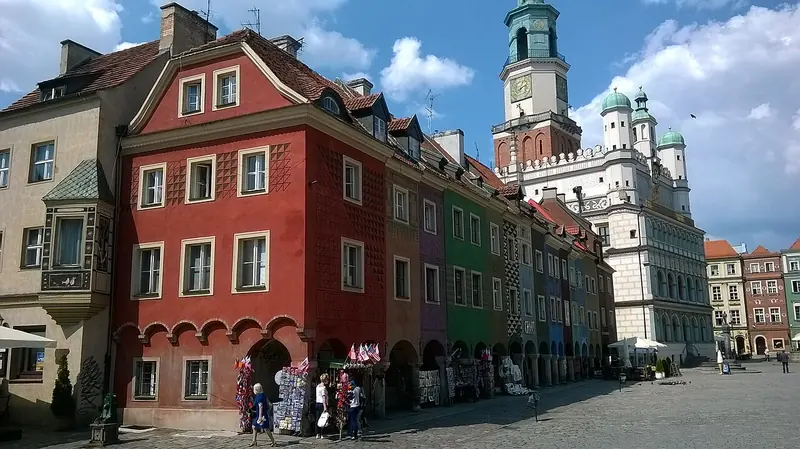
Photo Szczecinolog, CC BY-SA 4.0, Wikimedia Commons
Old townSzczecin, West Pomerania

Szczecin Old Town: what to see, map and route

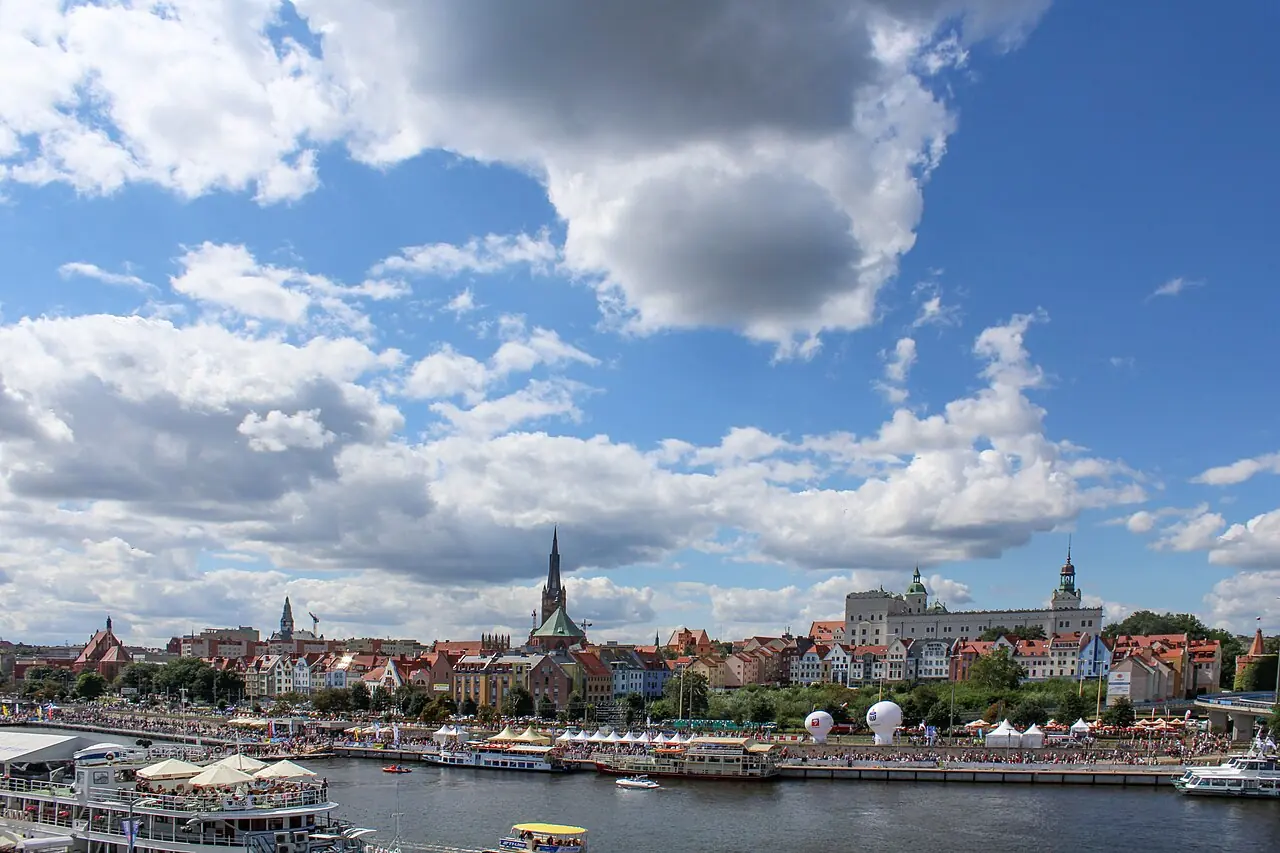
Old Town and Chrobry Embankment in Szczecin. In the Turi app, the same map shows your position, guides you from point to point and lets you tick off the places you’ve visited.

13points to see
9on the recommended route
approx. 3 h 30 minvisiting

Before you go

approx. 3 h 30 minat an easy pace, with breaks
4toilets on the map
free entrymuseums and towers have separate tickets
The walk starts at the tourist information in the Pomeranian Dukes’ Castle and ends on the Chrobry Embankment, about a 10-minute walk from the start. If you are already in the centre, Turi will guide you from the nearest point. The route has a few gentle climbs, and steps lead down from the embankment to the river. Walking around the city is free. Tickets are needed, among others, for the exhibitions in the castle, the cathedral’s viewing terrace, the Museum of the History of Szczecin in the town hall and the National Museum on the embankment. There are toilets by the cathedral, on the Chrobry Embankment and by the Harbour Gate.
  • At home, open the place in Turi and tap “Save for offline”: the map, descriptions and photos will work without signal.
  • Visit the farthest points first, while you still have energy.
  • Tick things off as you go, and by the exit you’ll know what’s left.

Szczecin Old Town in the Turi app

Live position, a route from point to point, descriptions to read and listen to. Free, no account, in 12 languages.

Get it for Android

Map of the place

The same map as in the app. Tap a point to see its photo and description; in Turi you’ll see yourselves on it too.

Map: Szczecin Old Town
1recommended, in route orderother pointsWCtoilets, food, tickets

Map: OpenStreetMap (ODbL). Descriptions and photos: Turi and Wikimedia Commons. Something not right? Report it in the app at that point.

Worth seeing

Szczecin is a city on the Oder, with a port and green islands just across the river. The walk starts at the Pomeranian Dukes’ Castle, goes down to a Gothic tower and the Hay Market with its town hall, leads to St James’s Cathedral with a viewing terrace on the tower and through the baroque gates that Prussia built in place of the old walls. On the way you pass the glass philharmonic hall, and at the end the Chrobry Embankment offers a view of the river.

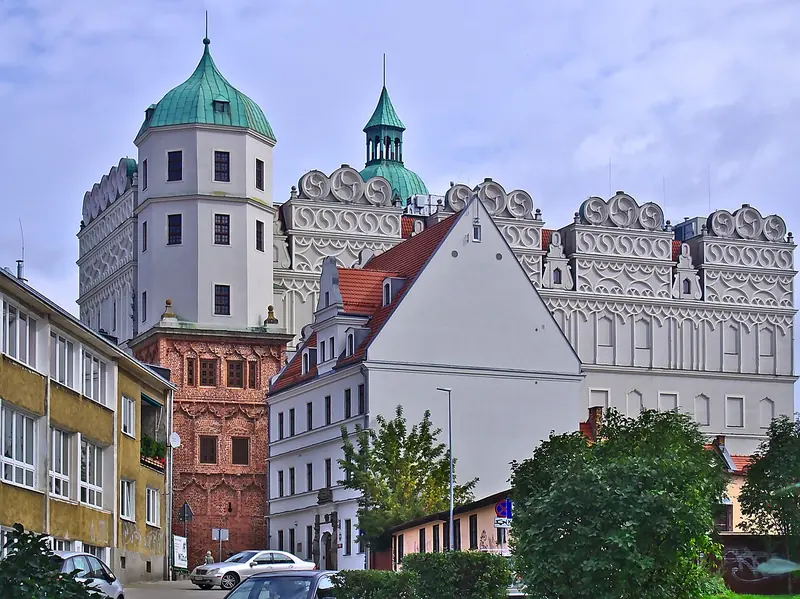
Pomeranian Dukes’ CastlePhoto Dorota Kowalik, CC BY 3.0, Wikimedia Commons1
Building / monument

Pomeranian Dukes’ Castle

The seat of the Griffin dynasty, the dukes of Pomerania, on a hill above the Oder. A stone house stood here in 1346, and the castle got its Renaissance look in 1573-1582 under Duke John Frederick. Concerts are held in the courtyard, inside there is a museum, a cinema and the Opera at the Castle, and the crypt holds the sarcophagi of the Pomeranian dukes.

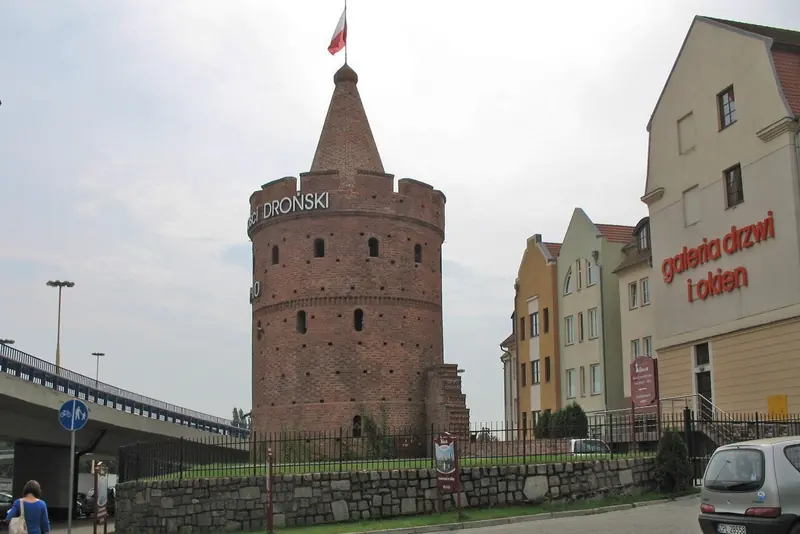
Maiden TowerPhoto Babrze, CC BY-SA 3.0, Wikimedia Commons2
Building / monument

Maiden Tower

A 14th-century Gothic tower, the last remnant of the city walls along the Oder. Its name comes from the Maiden Gate that led to the Cistercian convent, and its other name, the Tower of Seven Cloaks, is linked to the tailors’ guild that paid for its upkeep. A legend, however, tells of seven cloaks sewn for Duke Bogislaw X. The tower is one of the symbols of Szczecin.

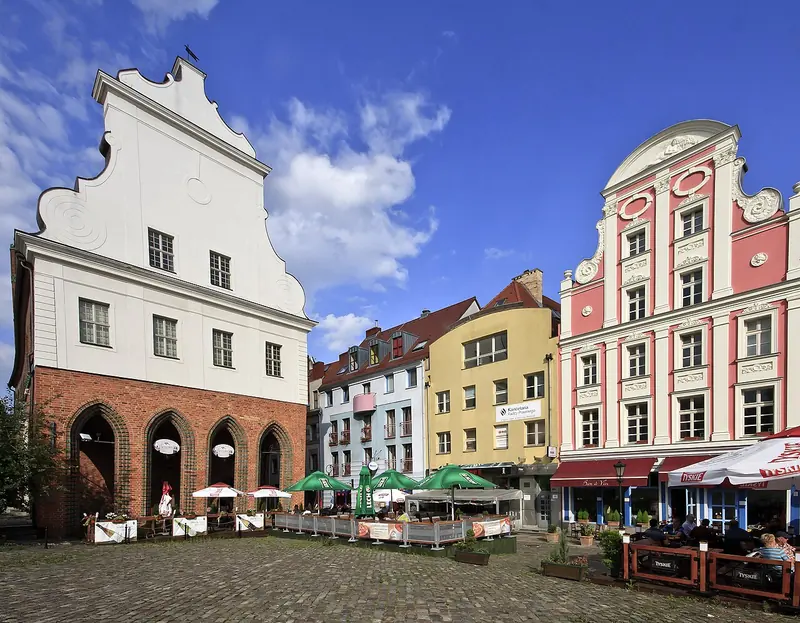
Old Town Hall and Hay MarketPhoto This image was produced by me, David Castor (…, CC0, Wikimedia Commons3
Building / monument

Old Town Hall and Hay Market

A 15th-century Gothic town hall on the Hay Market. In 1570 it hosted the peace congress that ended the war between Sweden and Denmark. Look for the green and black glazed bricks on the gable. Destroyed in the war and rebuilt in 1972-1975, it now houses the Museum of the History of Szczecin, with a restaurant in the Gothic cellar.

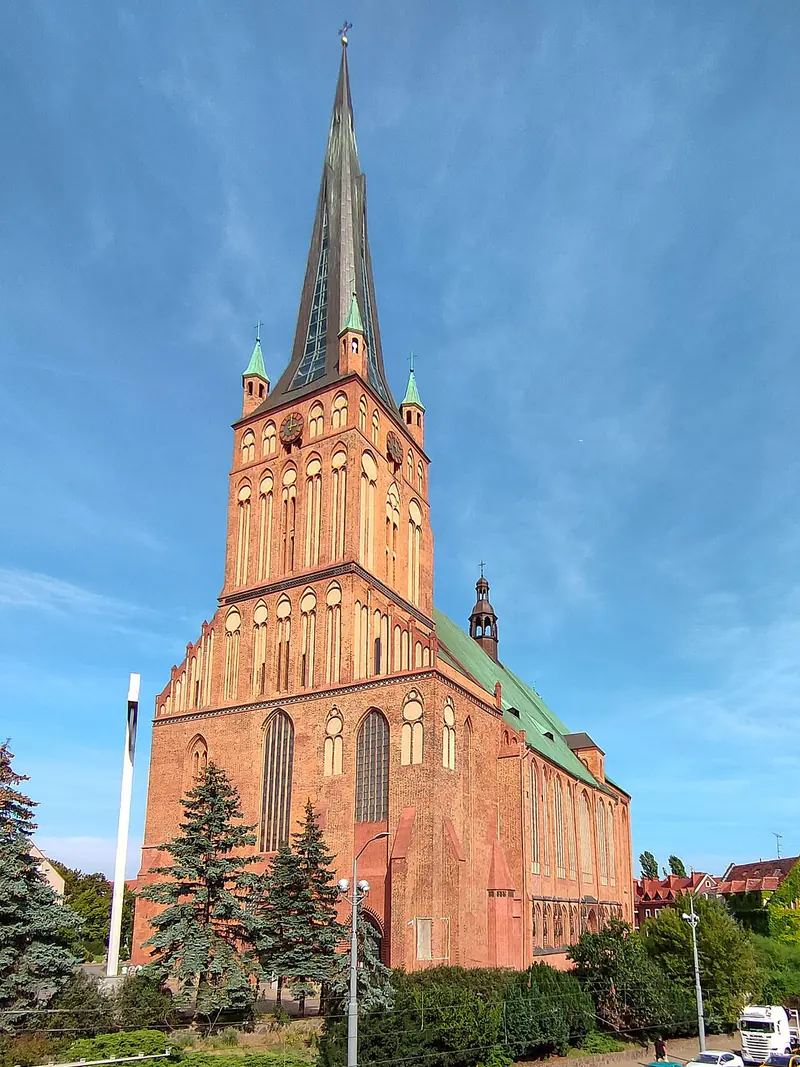
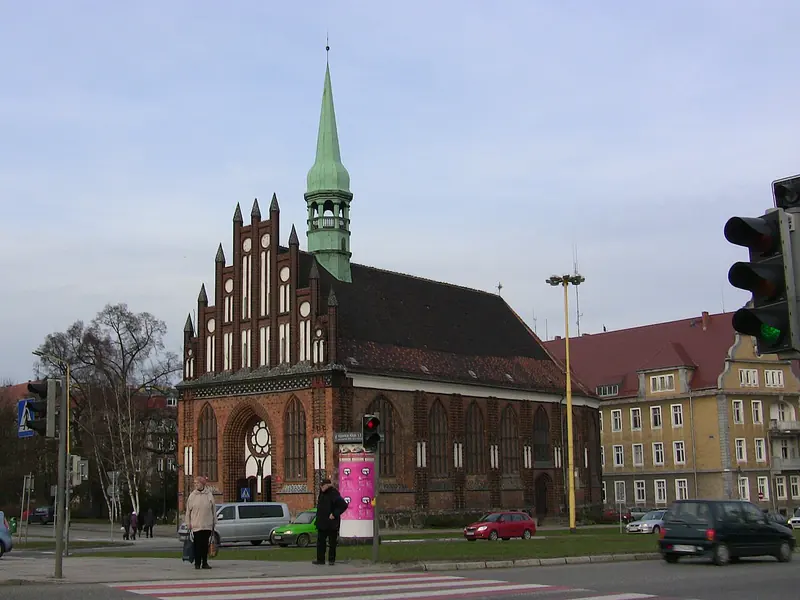
St James’s CathedralPhoto Szczecinolog, CC BY-SA 4.0, Wikimedia Commons4
Building / monument

St James’s Cathedral

A Gothic brick cathedral built in the 14th and 15th centuries, partly by master builder Hinrich Brunsberg. At 110 metres it is the second tallest church in Poland, after the basilica in Licheń. The tower burned down in the war and its spire was rebuilt. A lift takes you up to the viewing terrace on the tower all year round.

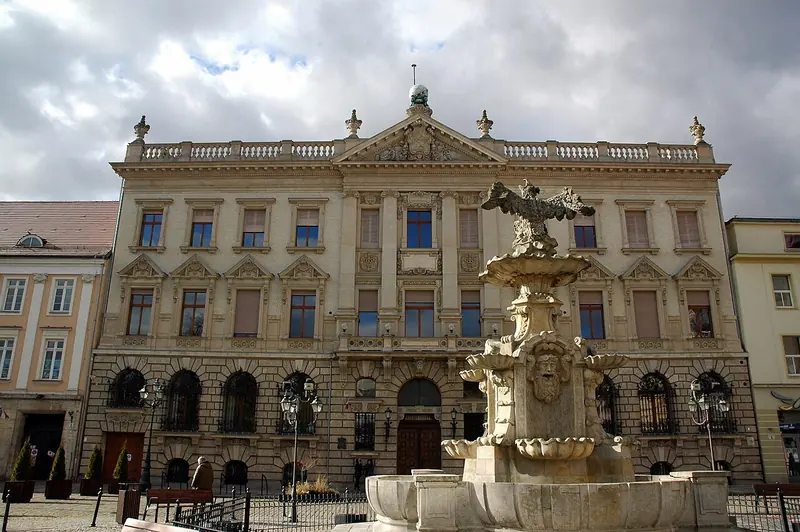
White Eagle Square and the Globe PalacePhoto Photographs by Radosław Drożdżewski (User:Zwiadowca21), CC BY 4.0, Wikimedia Commons5
Attraction

White Eagle Square and the Globe Palace

The baroque fountain of 1729-1732 is the oldest surviving fountain in the city and the first part of Szczecin’s water supply. During the war it was buried under gravel and sand, so it survived as a mound. Next to it stands the Globe Palace: the future Empress Maria Feodorovna was born in the earlier palace on this site in 1759. Today’s building with a globe on the roof dates from 1890-1891.

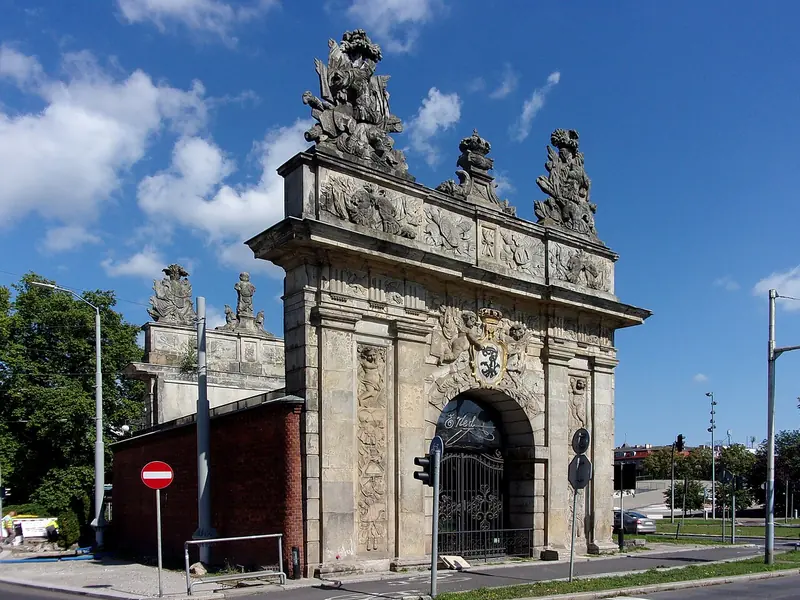
King’s GatePhoto Szczecinolog, CC BY-SA 4.0, Wikimedia Commons6
Building / monument

King’s Gate

The second of the city’s baroque gates, built in 1725-1728 after Prussia took Szczecin. On the gables stand Mars with a sword and shield and Hercules with a club and a lion skin, and above the passage there is the Prussian eagle among armour, shields and banners, as on a Roman triumphal arch.

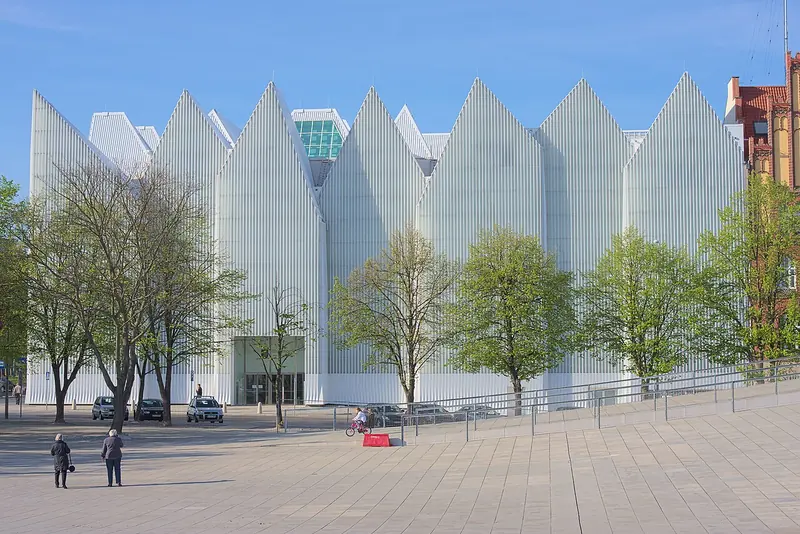
Philharmonic and Przełomy Dialogue CentrePhoto DrKssn, CC BY-SA 3.0, Wikimedia Commons7
Building / monument

Philharmonic and Przełomy Dialogue Centre

The white glass philharmonic hall with its sharp gables was built in 2011-2014 on the site of the pre-war Konzerthaus and has won many architecture awards. Opposite, under Solidarity Square, is the Przełomy Dialogue Centre: an underground museum about the history of Szczecin after 1945 and the protests of December 1970, when 16 people were killed here.

Church of Saints Peter and PaulPhoto trolvag, CC BY-SA 3.0, Wikimedia Commons8
Building / monument

Church of Saints Peter and Paul

The oldest place of worship in the city: the first wooden church was built here in 1124, when Otto of Bamberg came to Szczecin on his mission. The brick church dates from the 13th century and the present nave from the 15th. On the outer walls look for the mascarons, stone faces said to show people of medieval Szczecin.

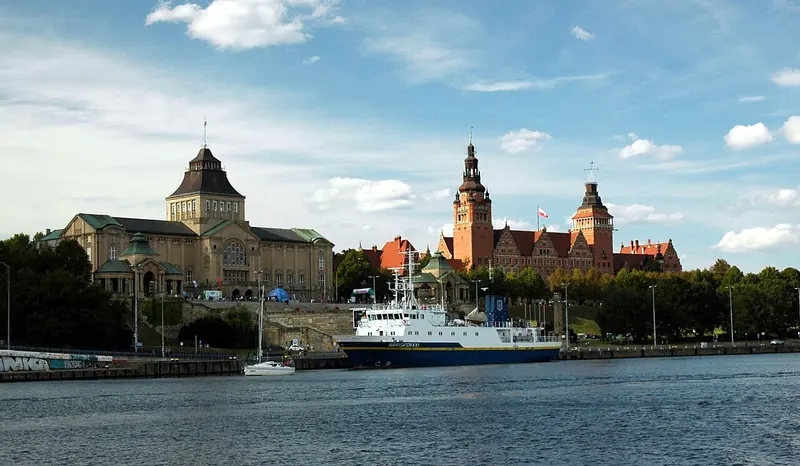
Chrobry EmbankmentPhoto Photographs by Radosław Drożdżewski (User:Zwiadowca21), CC BY-SA 4.0, Wikimedia Commons9
Attraction

Chrobry Embankment

A half-kilometre viewing terrace above the Oder, built in 1902-1921 on the site of old fortifications. Above it stand the buildings of the National Museum, the Contemporary Theatre and the Voivodeship Office, and in the middle a sculpture of Hercules fighting a centaur. From the steps and the lighthouse-like lamp towers you can see the river, the port and the islands on the other side of the Oder.

All points (18)

Grouped as in the map legend. A star marks recommended points.

Building / monument 10
Pomeranian Dukes’ Castle ★The seat of the Griffin dynasty, the dukes of Pomerania, on a hill above the Oder. A stone house stood here in 1346, and the castle got its Renaissance look in 1573-1582 under Duke John Frederick. Concerts are held in the courtyard, inside there is a museum, a cinema and the Opera at the Castle, and the crypt holds the sarcophagi of the Pomeranian dukes.
Maiden Tower ★A 14th-century Gothic tower, the last remnant of the city walls along the Oder. Its name comes from the Maiden Gate that led to the Cistercian convent, and its other name, the Tower of Seven Cloaks, is linked to the tailors’ guild that paid for its upkeep. A legend, however, tells of seven cloaks sewn for Duke Bogislaw X. The tower is one of the symbols of Szczecin.
Old Town Hall and Hay Market ★A 15th-century Gothic town hall on the Hay Market. In 1570 it hosted the peace congress that ended the war between Sweden and Denmark. Look for the green and black glazed bricks on the gable. Destroyed in the war and rebuilt in 1972-1975, it now houses the Museum of the History of Szczecin, with a restaurant in the Gothic cellar.
St James’s Cathedral ★A Gothic brick cathedral built in the 14th and 15th centuries, partly by master builder Hinrich Brunsberg. At 110 metres it is the second tallest church in Poland, after the basilica in Licheń. The tower burned down in the war and its spire was rebuilt. A lift takes you up to the viewing terrace on the tower all year round.
King’s Gate ★The second of the city’s baroque gates, built in 1725-1728 after Prussia took Szczecin. On the gables stand Mars with a sword and shield and Hercules with a club and a lion skin, and above the passage there is the Prussian eagle among armour, shields and banners, as on a Roman triumphal arch.
Philharmonic and Przełomy Dialogue Centre ★The white glass philharmonic hall with its sharp gables was built in 2011-2014 on the site of the pre-war Konzerthaus and has won many architecture awards. Opposite, under Solidarity Square, is the Przełomy Dialogue Centre: an underground museum about the history of Szczecin after 1945 and the protests of December 1970, when 16 people were killed here.
Church of Saints Peter and Paul ★The oldest place of worship in the city: the first wooden church was built here in 1124, when Otto of Bamberg came to Szczecin on his mission. The brick church dates from the 13th century and the present nave from the 15th. On the outer walls look for the mascarons, stone faces said to show people of medieval Szczecin.
Loitz HouseThe late Gothic house of the Loitz banking family, built in 1539-1547. The family ran the largest bank in the city, but when Elector Joachim II of Brandenburg did not repay his loans, they went bankrupt and fled to the Vistula delta. Later there was a confectioner’s shop here, and today it is an art school. Look at the slanted windows of the stair tower.
Harbour GateA baroque gate of 1725-1727, formerly called the Berlin Gate because the road to Berlin started here. The Latin inscription recalls that King Frederick William I of Prussia bought Szczecin from the Swedes for two million thalers. Above it you can see a panorama of the city and the god of the Oder. During the war the decorated gables were hidden in Arkona Forest and found again in 1957.
Palace of the Pomeranian EstatesA baroque building of 1726-1729, built for the assembly of the Pomeranian estates. Above the entrance is the coat of arms of Pomerania, and higher up that of the King of Prussia with statues of Prudence and Justice: the order of the arms was meant to show who was in charge. Today it is a branch of the National Museum with a gallery of old art.
Attraction 3
White Eagle Square and the Globe Palace ★The baroque fountain of 1729-1732 is the oldest surviving fountain in the city and the first part of Szczecin’s water supply. During the war it was buried under gravel and sand, so it survived as a mound. Next to it stands the Globe Palace: the future Empress Maria Feodorovna was born in the earlier palace on this site in 1759. Today’s building with a globe on the roof dates from 1890-1891.
Chrobry Embankment ★A half-kilometre viewing terrace above the Oder, built in 1902-1921 on the site of old fortifications. Above it stand the buildings of the National Museum, the Contemporary Theatre and the Voivodeship Office, and in the middle a sculpture of Hercules fighting a centaur. From the steps and the lighthouse-like lamp towers you can see the river, the port and the islands on the other side of the Oder.
Colleoni MonumentAn equestrian statue of the Venetian commander Bartolomeo Colleoni, a copy of Andrea del Verrocchio’s Renaissance monument. The copy was made in 1909 for the city museum. In 1948 it was taken to Warsaw, where it stood in the courtyard of the Academy of Fine Arts, and it returned to Szczecin in 2002. It was unveiled by a descendant of the condottiere.
Toilets / tickets / parking 5
Tourist information at the CastleThe walk starts at the culture and tourist information centre right next to the Pomeranian Dukes’ Castle. The route goes round the area below the castle and the Hay Market, leads to the cathedral and through the baroque city gates, and ends on the Chrobry Embankment with a view of the Oder and the port.
Public toilet
Public toilet
Public toilet
Public toilet
Szczecin Old TownGet Turi