Photo Łukasz Śmigasiewicz, CC BY-SA 3.0 pl, Wikimedia Commons
CastlePodzamcze, Silesia
Ogrodzieniec Castle with children: what to see, map and route
Ogrodzieniec Castle in Podzamcze. In the Turi app, the same map shows your position, guides you from point to point and lets you tick off the places you’ve visited.
The walk starts at the ticket office by the castle gate on Zamkowa Street in Podzamcze. The castle is open all year, and the hours change with the seasons; you can buy tickets at the ticket office or online. The route through the ruins is one-way, with winding stairs and uneven stones, so wear comfortable shoes. The stronghold on Birów Hill has separate tickets. From November to February the castle is lit up after dark. If you are already inside, Turi will guide you from the nearest point.
At home, open the place in Turi and tap “Save for offline”: the map, descriptions and photos will work without signal.
Visit the farthest points first, while you still have energy.
Tick things off as you go, and by the exit you’ll know what’s left.
Ogrodzieniec Castle in the Turi app
Live position, a route from point to point, descriptions to read and listen to. Free, no account, and in English, German and Ukrainian too.
The same map as in the app. Tap a point to see its photo and description; in Turi you’ll see yourselves on it too.
1recommended, in route orderother pointsWCtoilets, food, tickets
Map: OpenStreetMap (ODbL) and BDOT10k GUGiK, checked against aerial photos. Descriptions and photos: Turi and Wikimedia Commons. Something not right? Report it in the app at that point.
Worth seeing
The largest and best-known ruins on the Trail of the Eagles' Nests, on the highest point of the Kraków-Częstochowa Upland. Seweryn Boner turned the medieval fortress into a Renaissance residence in the 16th century, and the Swedish Deluge and a fire in 1702 left it in ruins. The walk leads through the outer bailey, the gate and the upper castle, then to the Okiennik rock, a sanctuary on a rock and the rebuilt stronghold on Birów Hill.
Photo Michał Panek, CC BY 2.5, Wikimedia Commons1
Attraction
Outer bailey and Warszycki's Torment
You are in the outer bailey, a large yard at the foot of the ruins. The white rocks around you are limestone outcrops, and some of them were built into the defensive walls. To the left of the path stands a group of rocks called the Camel, the Drake or the Sphinx, and to the right the Bear and the Two Sisters. That group hides a grotto known as Warszycki's Torment, and next to it, in the old guardhouse, there is an exhibition about old punishments. Stanisław Warszycki, castellan of Kraków, rebuilt the castle after the Swedish Deluge and was known for his cruelty. Legend says his soul wanders the ruins at night as a huge black dog dragging a chain. The ruins have appeared in the series Janosik, in Andrzej Wajda's Revenge and in Netflix's The Witcher, where the battle of Sodden was filmed here.
Photo Joanna.Reich, CC BY-SA 3.0 pl, Wikimedia Commons2
Building / monument
Gate tower and the Lord's Courtyard
Through the gate tower you enter the Lord's Courtyard, where the route through the ruins begins and ends. The castle stands on Castle Hill, the highest point of the Kraków-Częstochowa Upland, 515.5 metres above sea level. King Casimir the Great built a stone fortress in place of a wooden stronghold, and in 1387 Władysław Jagiełło granted it to Włodek of Charbinowice. Between 1530 and 1545 the Kraków banker Seweryn Boner turned the Gothic castle into a Renaissance residence; you will see a Latin plaque with his name along the route. By the courtyard there is a smoke kitchen without a chimney, with a well and the kitchen boy's room.
Photo Jakub Hałun, CC BY-SA 3.0, Wikimedia Commons3
Building / monument
Upper castle and the Sideboard Tower
Winding stairs take you up into the upper castle: to Boner's bedchamber, the library and the sideboard hall, and from there into the Sideboard Tower, the only tower open to visitors, with a view over the whole area. One level down are the knights' chambers, and further on the Hen's Foot, with stairs cut into the rock; on its lowest level fragments of Renaissance frescoes with lilies have survived. The route also leads through the Fowler's Yard, a service courtyard with rebuilt wooden galleries, and onto the terrace of the Tower of the Condemned. In 1655 the Swedes were stationed in the castle for almost two years, and in 1702 half of the castle burned down. The last residents moved out around 1810, and between 1949 and 1973 the ruins were secured as a permanent ruin.
Photo Jerzy Opioła, CC BY-SA 4.0, Wikimedia Commons4
Attraction
Okiennik, the Window Rock
Okiennik is a rock with a gap like a window, one of many limestone outcrops around the castle. The limestone of the Jura rocks formed more than 150 million years ago on the floor of a warm sea, and over thousands of years rain and frost washed away its softer parts. In the 1880s the writer Adolf Dygasiński was probably the first to call the Ogrodzieniec ruins an eagle's nest. That is where the name of the Trail of the Eagles' Nests comes from, linking the castles of the Jura from Kraków to Częstochowa. After Aleksander Janowski's visit in 1906 the Polish Sightseeing Society was founded, and the outline of the ruins went onto its badge.
Photo geo573, CC BY 3.0, Wikimedia Commons5
Building / monument
Sanctuary of Our Lady of the Rock
On 14 October 1818 an image of the Virgin Mary appeared on this limestone rock to one of the villagers of Podzamcze, and since then it has been called the Rock of Our Lady. A painting from the castle chapel was carried here in a solemn procession, and the villagers lit a light by it every day. Water from a nearby spring was believed to heal, but the spring eventually dried up. Today's chapel, designed by Marek Tondera, was built in 2000. Inside hangs a cross made in secret in the 1950s at the Wiek cement works.
All points (8)
Grouped as in the map legend. A star marks recommended points.
Attraction 3
Outer bailey and Warszycki's Torment ★You are in the outer bailey, a large yard at the foot of the ruins. The white rocks around you are limestone outcrops, and some of them were built into the defensive walls. To the left of the path stands a group of rocks called the Camel, the Drake or the Sphinx, and to the right the Bear and the Two Sisters. That group hides a grotto known as Warszycki's Torment, and next to it, in the old guardhouse, there is an exhibition about old punishments. Stanisław Warszycki, castellan of Kraków, rebuilt the castle after the Swedish Deluge and was known for his cruelty. Legend says his soul wanders the ruins at night as a huge black dog dragging a chain. The ruins have appeared in the series Janosik, in Andrzej Wajda's Revenge and in Netflix's The Witcher, where the battle of Sodden was filmed here.
Okiennik, the Window Rock ★Okiennik is a rock with a gap like a window, one of many limestone outcrops around the castle. The limestone of the Jura rocks formed more than 150 million years ago on the floor of a warm sea, and over thousands of years rain and frost washed away its softer parts. In the 1880s the writer Adolf Dygasiński was probably the first to call the Ogrodzieniec ruins an eagle's nest. That is where the name of the Trail of the Eagles' Nests comes from, linking the castles of the Jura from Kraków to Częstochowa. After Aleksander Janowski's visit in 1906 the Polish Sightseeing Society was founded, and the outline of the ruins went onto its badge.
Stronghold on Birów HillBirów is a rocky, treeless hill with a view over the whole area, with Ogrodzieniec Castle in front. People lived here as early as the end of the Neolithic and in the Bronze Age, and archaeologists have also found traces of the Lusatian culture. At the end of the 13th century a wooden stronghold stood here, burned in the first half of the 14th century during the wars of Władysław the Elbow-high with the Czechs. In 2007-2008 the stronghold was rebuilt and opened to visitors, with a separate entry fee. Dozens of climbing routes have been set up on the rocks around it.
Building / monument 3
Gate tower and the Lord's Courtyard ★Through the gate tower you enter the Lord's Courtyard, where the route through the ruins begins and ends. The castle stands on Castle Hill, the highest point of the Kraków-Częstochowa Upland, 515.5 metres above sea level. King Casimir the Great built a stone fortress in place of a wooden stronghold, and in 1387 Władysław Jagiełło granted it to Włodek of Charbinowice. Between 1530 and 1545 the Kraków banker Seweryn Boner turned the Gothic castle into a Renaissance residence; you will see a Latin plaque with his name along the route. By the courtyard there is a smoke kitchen without a chimney, with a well and the kitchen boy's room.
Upper castle and the Sideboard Tower ★Winding stairs take you up into the upper castle: to Boner's bedchamber, the library and the sideboard hall, and from there into the Sideboard Tower, the only tower open to visitors, with a view over the whole area. One level down are the knights' chambers, and further on the Hen's Foot, with stairs cut into the rock; on its lowest level fragments of Renaissance frescoes with lilies have survived. The route also leads through the Fowler's Yard, a service courtyard with rebuilt wooden galleries, and onto the terrace of the Tower of the Condemned. In 1655 the Swedes were stationed in the castle for almost two years, and in 1702 half of the castle burned down. The last residents moved out around 1810, and between 1949 and 1973 the ruins were secured as a permanent ruin.
Sanctuary of Our Lady of the Rock ★On 14 October 1818 an image of the Virgin Mary appeared on this limestone rock to one of the villagers of Podzamcze, and since then it has been called the Rock of Our Lady. A painting from the castle chapel was carried here in a solemn procession, and the villagers lit a light by it every day. Water from a nearby spring was believed to heal, but the spring eventually dried up. Today's chapel, designed by Marek Tondera, was built in 2000. Inside hangs a cross made in secret in the 1950s at the Wiek cement works.

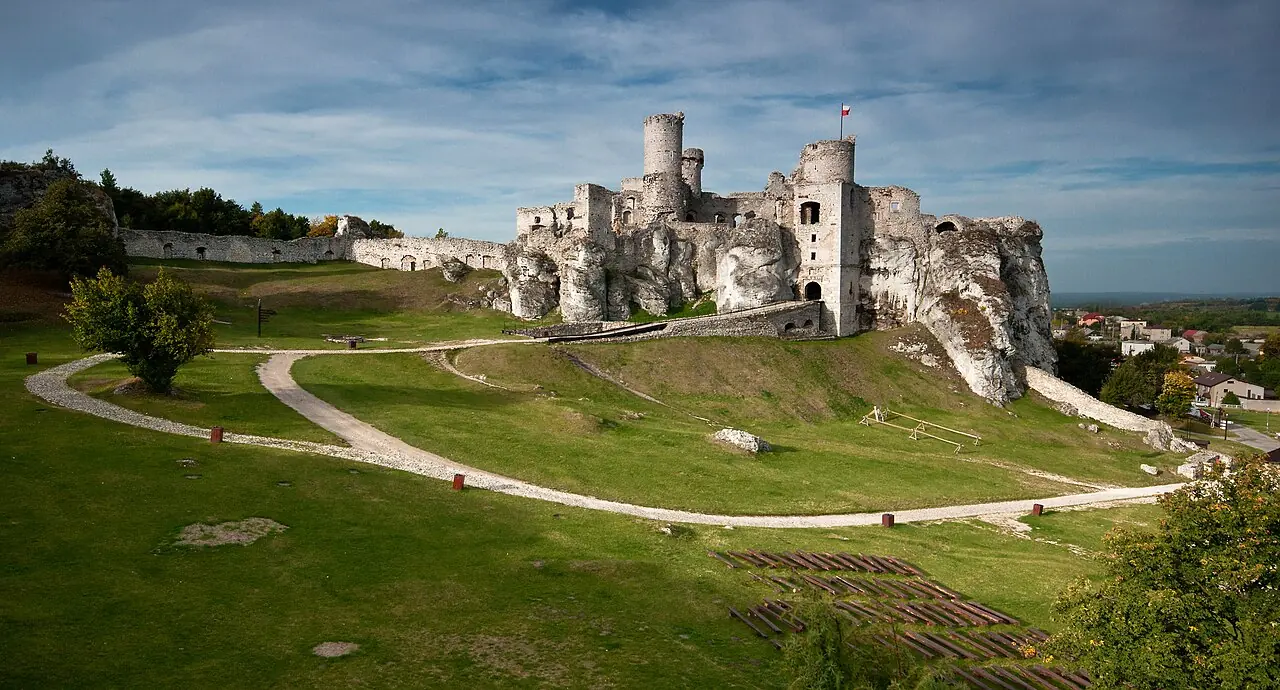 Photo Łukasz Śmigasiewicz, CC BY-SA 3.0 pl, Wikimedia Commons

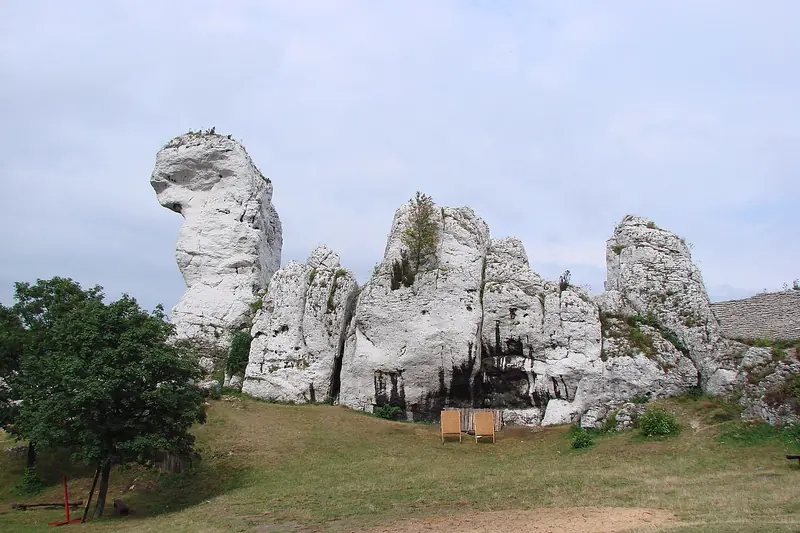 Photo Michał Panek, CC BY 2.5, Wikimedia Commons1
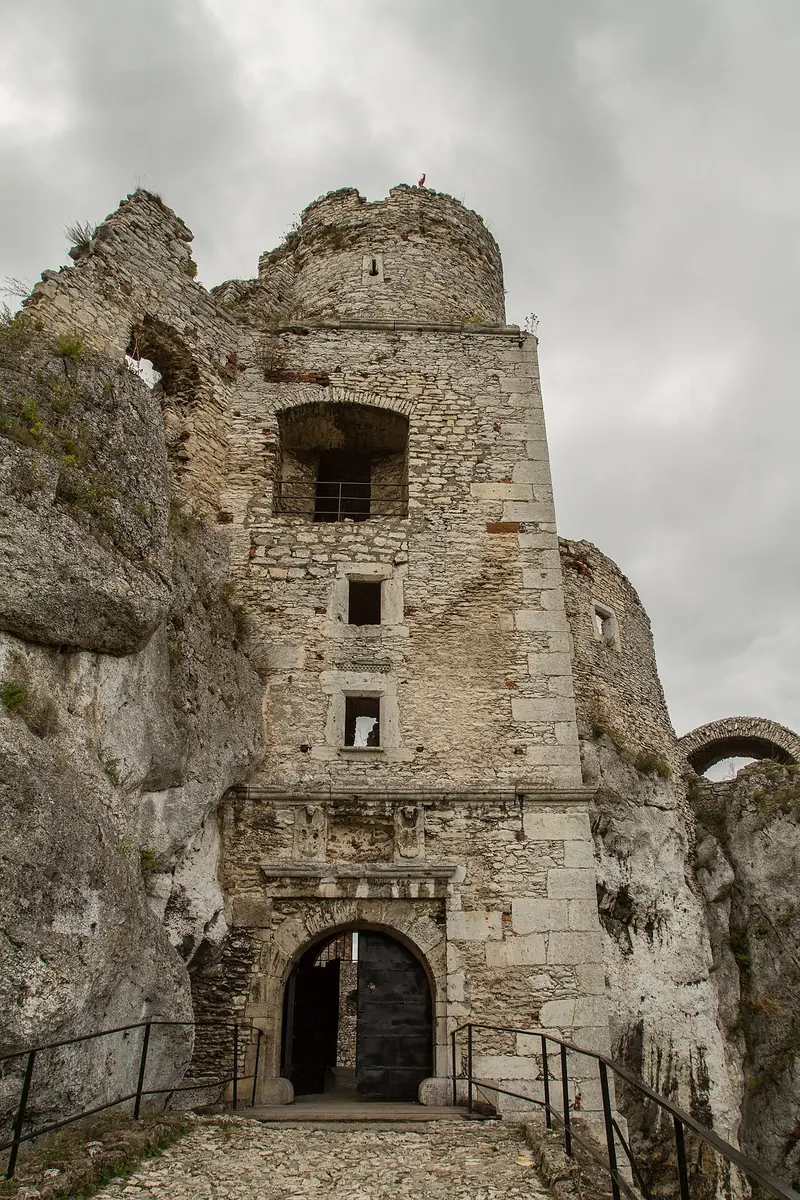 Photo Joanna.Reich, CC BY-SA 3.0 pl, Wikimedia Commons
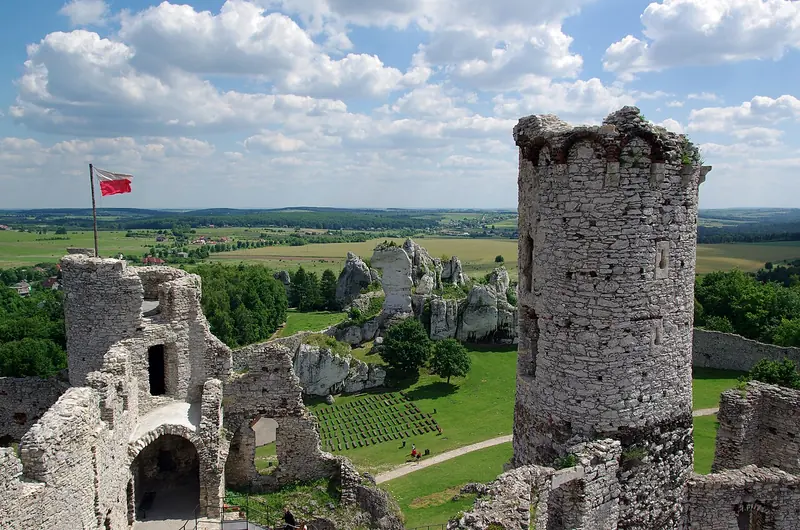 Photo Jakub Hałun, CC BY-SA 3.0, Wikimedia Commons
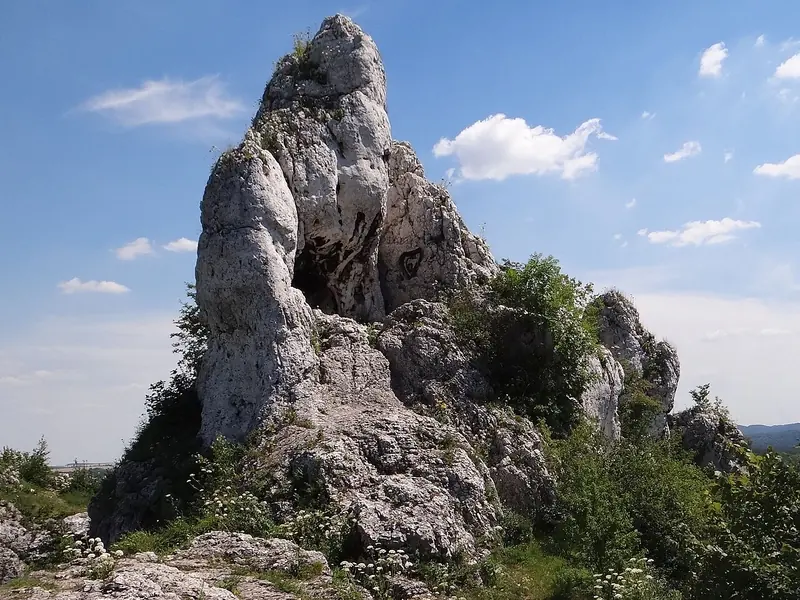 Photo Jerzy Opioła, CC BY-SA 4.0, Wikimedia Commons
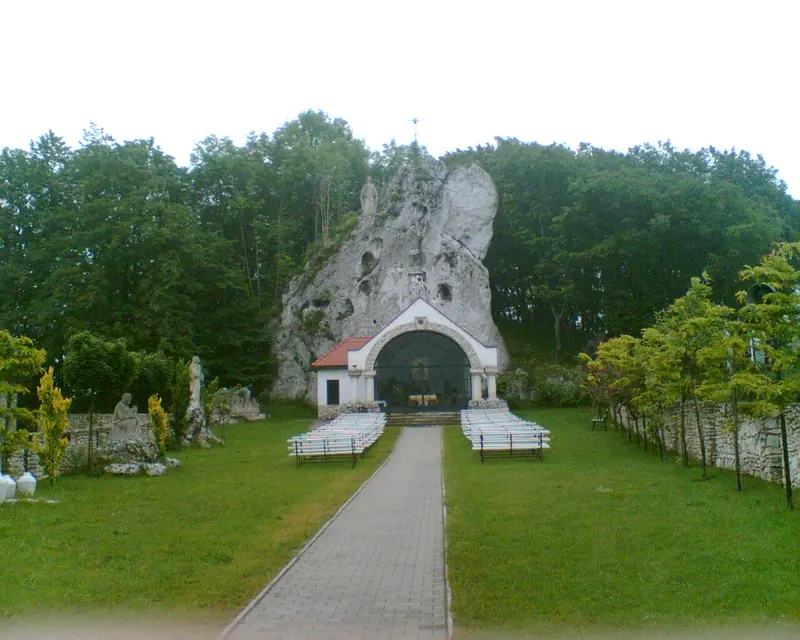 Photo geo573, CC BY 3.0, Wikimedia Commons
 Photo Abraham, CC BY-SA 4.0, Wikimedia Commons
 Photo Krzysztof Bulla, CC BY-SA 4.0, Wikimedia Commons
 Photo Igor123121, CC BY 4.0, Wikimedia Commons