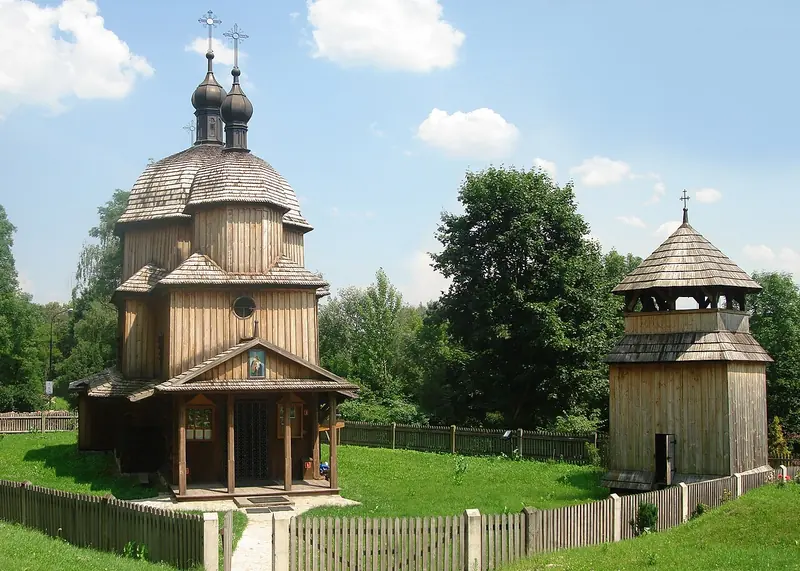
Photo Alians PL, CC BY-SA 3.0 pl, Wikimedia Commons
Old townLublin, Lublin region

Lublin Old Town with children: what to see, map and route

Old Town and Castle in Lublin. In the Turi app, the same map shows your position, guides you from point to point and lets you tick off the places you’ve visited.

15points to see
11on the recommended route
approx. 2 h 30 minvisiting with children

Before you go

approx. 2 h 30 minwith breaks, at a family pace
3toilets on the map
free entrymuseums and towers have separate tickets
The walk starts on Litewski Square and ends at the castle, about 1.5 km further on. If you are already in the Old Town, Turi will guide you from the nearest point. At noon the Lublin bugle call is played from the balcony of the New Town Hall. The Old Town streets are cobbled and steep in places, but a pushchair can manage almost the whole route, apart from the climbs up the Trinitarian Tower and the donjon. Walking around the city is free. Tickets are needed for the museum in the Kraków Gate, the Trinitarian Tower, the Lublin Underground Route, the acoustic sacristy, the castle museum, the Holy Trinity Chapel and the donjon, among others. There are toilets by Litewski Square and by the steps to the castle, among other places.
  • At home, open the place in Turi and tap “Save for offline”: the map, descriptions and photos will work without signal.
  • Visit the furthest points first, while the kids still have energy.
  • Tick things off as you go, and by the exit you’ll know what’s left.

Lublin Old Town in the Turi app

Live position, a route from point to point, descriptions to read and listen to. Free, no account, and in English, German and Ukrainian too.

Get it for Android

Map of the place

The same map as in the app. Tap a point to see its photo and description; in Turi you’ll see yourselves on it too.

Map: Lublin Old Town
1recommended, in route orderother pointsWCtoilets, food, tickets

Map: OpenStreetMap (ODbL). Descriptions and photos: Turi and Wikimedia Commons. Something not right? Report it in the app at that point.

Worth seeing

Lublin is a city of gates, legends and one great union. The walk starts on Litewski Square with its multimedia fountain and follows the promenade to the Kraków Gate, where the Old Town begins. You will touch (or not) the Stone of Misfortune, climb the tower with the tin cockerel, try out the whispering sacristy in the cathedral and hear the story of the devils who judged the judges. The route ends at the castle, where paintings six hundred years old await in the chapel.

Litewski Square and the multimedia fountainPhoto Piotr Doroszewski, CC BY-SA 4.0, Wikimedia Commons1
Attraction

Litewski Square and the multimedia fountain

The largest square in the centre of Lublin was laid out in the 19th century as a parade ground where the army drilled. Today its main attraction is the multimedia fountain. On summer evenings there are shows here: the water dances to music and colourful images are projected onto a screen of water. Around the square stand former palaces that now house universities and offices.

Kraków GatePhoto Alians PL, CC BY-SA 3.0 pl, Wikimedia Commons2
Building / monument

Kraków Gate

The symbol of Lublin and the most famous way into the Old Town. The gate was built in the 14th century together with the town walls, after the Tatars attacked the town. This was the way out towards Kraków, then the capital. Notice the layers: Gothic brick and stone at the bottom, an octagonal tower above, and a Baroque cupola with a clock at the very top. Inside is the Museum of the History of the City of Lublin, and from the top floor you can see the Old Town from above.

Stone of MisfortunePhoto Merete25, CC BY-SA 4.0, Wikimedia Commons3
Attraction

Stone of Misfortune

On the street corner lies an unremarkable boulder that the people of Lublin prefer not to touch. According to legend it once served the executioner, and when an innocent man was beheaded on it, the axe chipped the stone and ever since it has brought bad luck to anyone who disturbs it. There is also a tale of a baker who built it into his oven and burnt all his bread. Do you dare to touch it?

Trinitarian TowerPhoto Scotch Mist, CC BY-SA 4.0, Wikimedia Commons4
Building / monument

Trinitarian Tower

The tallest historic building in Lublin. The tower is both a belfry and a gateway leading to the square in front of the cathedral. At a height of 40 metres there is a viewing terrace from which you can see the whole Old Town and the castle. On the very top sits a tin cockerel. Legend says it guards the town and warns the people of danger. Inside the tower is a museum of church art.

CathedralPhoto Marcin Kuna, CC BY-SA 3.0 pl, Wikimedia Commons5
Building / monument

Cathedral

One of the first Baroque churches in Poland. It was built by the Jesuits, and work began in 1586. Inside, the walls and vaults are covered with paintings that imitate sculptures and columns. The greatest curiosity is the acoustic sacristy: if one person stands in a corner and whispers to the wall, another will hear it clearly in the opposite corner, although people standing in the middle will hear nothing.

Dominican BasilicaPhoto LLEW, CC BY-SA 3.0 pl, Wikimedia Commons6
Building / monument

Dominican Basilica

The church was founded in 1342 by King Casimir the Great. For centuries relics of the Holy Cross were kept here, drawing pilgrims from all over the Commonwealth. People believed it was the relics that saved the town from a great fire. Wealthy families added chapels around the main nave, each one different. From behind the monastery there is a view over the valley and the newer districts of Lublin.

Crown Tribunal and the Underground RoutePhoto Marcin Białek, CC BY-SA 4.0, Wikimedia Commons7
Building / monument

Crown Tribunal and the Underground Route

In the middle of the square stands the former town hall, which from 1578 housed the Crown Tribunal, the highest court for the nobility. Legend tells that when the judges wronged a poor widow, devils appeared in the courtroom at night and passed a just verdict, and one of them rested his hand on the table and burnt a mark into it. The table with the devil's paw can be seen in the castle museum. The Lublin Underground Route starts in the Tribunal's cellars: about 300 metres of corridors beneath the townhouses.

Po Farze SquarePhoto Strumyczek, CC BY-SA 4.0, Wikimedia Commons8
Attraction

Po Farze Square

For almost 600 years the most important church in Lublin, the parish church of St Michael, stood on this spot. Legend has it that Duke Leszek the Black fell asleep here under an oak and dreamt of the Archangel Michael handing him a sword. The duke won his battle and built a church in gratitude. In the 19th century the church was in danger of collapse and was pulled down. Today you can see the uncovered foundations and a model showing what it looked like. The square has a fine view of the castle.

Grodzka GatePhoto AnnaBanasiak, CC BY-SA 4.0, Wikimedia Commons9
Building / monument

Grodzka Gate

This gate joined two worlds. On one side lay the Christian Old Town, on the other a large Jewish quarter, which is why it was also called the Jewish Gate. The first gate was built here in 1342, and its present form was given in 1785 by the architect of King Stanisław August. The quarter beyond the gate no longer exists, it was demolished during the Second World War. Its story is told by the NN Theatre, which is based in the gate.

Lublin CastlePhoto Bartek z Polski, CC0, Wikimedia Commons10
Building / monument

Lublin Castle

The white castle with its turrets looks like something from a fairy tale, but its history is a serious one. A castle of the Polish kings stood here, and in 1569 the union with Lithuania was concluded in Lublin. The present building was put up in the 19th century as a prison and served as one for more than a hundred years. Today it houses the National Museum. A round 13th-century tower, called the donjon, survives from the old castle. You can climb to the top and see the Old Town laid out below. In the museum, look for the table with the devil's paw.

Holy Trinity ChapelPhoto Adam Jones from Kelowna, BC, Canada, CC BY-SA 2.0, Wikimedia Commons11
Building / monument

Holy Trinity Chapel

Lublin's greatest treasure is hidden in the castle courtyard. From outside the Gothic chapel looks modest, but inside the walls and vault are covered with colourful paintings. They were commissioned by King Władysław Jagiełło and completed in 1418 by painters from Ruthenia led by Master Andrew. The result is something very rare: a western, Gothic church decorated in the eastern, Byzantine manner. In one of the paintings King Jagiełło himself is kneeling.

All points (19)

Grouped as in the map legend. A star marks recommended points.

Attraction 4
Litewski Square and the multimedia fountain ★The largest square in the centre of Lublin was laid out in the 19th century as a parade ground where the army drilled. Today its main attraction is the multimedia fountain. On summer evenings there are shows here: the water dances to music and colourful images are projected onto a screen of water. Around the square stand former palaces that now house universities and offices.
Stone of Misfortune ★On the street corner lies an unremarkable boulder that the people of Lublin prefer not to touch. According to legend it once served the executioner, and when an innocent man was beheaded on it, the axe chipped the stone and ever since it has brought bad luck to anyone who disturbs it. There is also a tale of a baker who built it into his oven and burnt all his bread. Do you dare to touch it?
Po Farze Square ★For almost 600 years the most important church in Lublin, the parish church of St Michael, stood on this spot. Legend has it that Duke Leszek the Black fell asleep here under an oak and dreamt of the Archangel Michael handing him a sword. The duke won his battle and built a church in gratitude. In the 19th century the church was in danger of collapse and was pulled down. Today you can see the uncovered foundations and a model showing what it looked like. The square has a fine view of the castle.
Union of Lublin MonumentThis slender obelisk recalls one of the most important events in Polish history. In 1569, in Lublin, Poland and Lithuania joined into one great state, the Polish-Lithuanian Commonwealth. The monument was unveiled in 1826 on the spot where the nobility camped during that parliament. This is where the square's name comes from. On the golden relief two figures clasp hands: they are Poland and Lithuania.
Building / monument 11
Kraków Gate ★The symbol of Lublin and the most famous way into the Old Town. The gate was built in the 14th century together with the town walls, after the Tatars attacked the town. This was the way out towards Kraków, then the capital. Notice the layers: Gothic brick and stone at the bottom, an octagonal tower above, and a Baroque cupola with a clock at the very top. Inside is the Museum of the History of the City of Lublin, and from the top floor you can see the Old Town from above.
Trinitarian Tower ★The tallest historic building in Lublin. The tower is both a belfry and a gateway leading to the square in front of the cathedral. At a height of 40 metres there is a viewing terrace from which you can see the whole Old Town and the castle. On the very top sits a tin cockerel. Legend says it guards the town and warns the people of danger. Inside the tower is a museum of church art.
Cathedral ★One of the first Baroque churches in Poland. It was built by the Jesuits, and work began in 1586. Inside, the walls and vaults are covered with paintings that imitate sculptures and columns. The greatest curiosity is the acoustic sacristy: if one person stands in a corner and whispers to the wall, another will hear it clearly in the opposite corner, although people standing in the middle will hear nothing.
Dominican Basilica ★The church was founded in 1342 by King Casimir the Great. For centuries relics of the Holy Cross were kept here, drawing pilgrims from all over the Commonwealth. People believed it was the relics that saved the town from a great fire. Wealthy families added chapels around the main nave, each one different. From behind the monastery there is a view over the valley and the newer districts of Lublin.
Crown Tribunal and the Underground Route ★In the middle of the square stands the former town hall, which from 1578 housed the Crown Tribunal, the highest court for the nobility. Legend tells that when the judges wronged a poor widow, devils appeared in the courtroom at night and passed a just verdict, and one of them rested his hand on the table and burnt a mark into it. The table with the devil's paw can be seen in the castle museum. The Lublin Underground Route starts in the Tribunal's cellars: about 300 metres of corridors beneath the townhouses.
Grodzka Gate ★This gate joined two worlds. On one side lay the Christian Old Town, on the other a large Jewish quarter, which is why it was also called the Jewish Gate. The first gate was built here in 1342, and its present form was given in 1785 by the architect of King Stanisław August. The quarter beyond the gate no longer exists, it was demolished during the Second World War. Its story is told by the NN Theatre, which is based in the gate.
Lublin Castle ★The white castle with its turrets looks like something from a fairy tale, but its history is a serious one. A castle of the Polish kings stood here, and in 1569 the union with Lithuania was concluded in Lublin. The present building was put up in the 19th century as a prison and served as one for more than a hundred years. Today it houses the National Museum. A round 13th-century tower, called the donjon, survives from the old castle. You can climb to the top and see the Old Town laid out below. In the museum, look for the table with the devil's paw.
Holy Trinity Chapel ★Lublin's greatest treasure is hidden in the castle courtyard. From outside the Gothic chapel looks modest, but inside the walls and vault are covered with colourful paintings. They were commissioned by King Władysław Jagiełło and completed in 1418 by painters from Ruthenia led by Master Andrew. The result is something very rare: a western, Gothic church decorated in the eastern, Byzantine manner. In one of the paintings King Jagiełło himself is kneeling.
New Town HallThe pale building with a turret is the New Town Hall, built in 1827 and 1828. The former town hall stands on the Old Town square, but when Lublin grew the authorities moved here. Every day at noon a bugler plays the Lublin bugle call from the balcony. It is worth timing the walk to hear it. The square in front of the town hall is named after King Władysław the Elbow-high, who granted Lublin its town charter in 1317.
Old TheatreThe oldest surviving theatre in Poland after the one in Kraków. It opened in 1822. Plays and operas were staged here, in the 20th century it was a cinema, and then the building stood empty and decaying for many years. After restoration it once again hosts performances, concerts and talks.
Fish GateThe small gate between the townhouses dates from the 15th century. It led to the Fish Market, where trade once flourished. It was not a defensive gate but a passage belonging to the owners of the neighbouring houses. The one you see was rebuilt in 1954.
Toilets / tickets / parking 4
Public toilet
Public toilet
Public toilet
Entrance to Litewski SquareLitewski Square is the easiest place to start the walk: buses and trolleybuses stop beside it, and the Krakowskie Przedmieście promenade leads from here straight to the Kraków Gate. The tourist information office is at 1/3 Jezuicka Street, just beyond the gate.
Lublin Old TownGet Turi