Wilanów Palace and Gardens. In the Turi app, the same map shows your position, guides you from point to point and lets you tick off the places you’ve visited.
The walk starts at the gate on the palace forecourt. Entry to the park by the palace is paid: you can buy tickets in the ticket office on the forecourt, on Stanisława Kostki Potockiego Street, and from ticket machines, and the palace needs a separate ticket. If you are already in the gardens, Turi will guide you from the nearest point. The gardens lie on two levels linked by stairs. The route does not include Morysin across the lake: it is a nature reserve outside the park fence.
At home, open the place in Turi and tap “Save for offline”: the map, descriptions and photos will work without signal.
Visit the farthest points first, while you still have energy.
Tick things off as you go, and by the exit you’ll know what’s left.
Wilanów in the Turi app
Live position, a route from point to point, descriptions to read and listen to. Free, no account, and in English, German and Ukrainian too.
The same map as in the app. Tap a point to see its photo and description; in Turi you’ll see yourselves on it too.
1recommended, in route orderother pointsWCtoilets, food, tickets
Map: OpenStreetMap (ODbL) and BDOT10k GUGiK, checked against aerial photos. Descriptions and photos: Turi and Wikimedia Commons. Something not right? Report it in the app at that point.
Worth seeing
Wilanów is the summer residence of King John III Sobieski: a Baroque palace from the end of the 17th century and gardens that later owners expanded over almost 350 years. On one walk you will see the Baroque garden on two terraces above the lake, the rose garden, the romantic English park with the Chinese Gazebo and the landscape park by the Służewiecki Stream. In 1805 Stanisław Kostka Potocki opened one of the first public museums in the Polish lands in the palace.
Photo Diego Delso, CC BY-SA 3.0, Wikimedia Commons1
Attraction
Forecourt and main gate
This is where you start. The forecourt with its four squares of trees framed the road to the palace: in King John III's time the main avenue ran all the way to the church in Służew, and near the palace a 400-metre canal ran alongside it. The three avenues meeting in front of the gate form a so-called goose foot, a motif known from Versailles, added here only at the end of the 18th century. Beyond the monumental gate lies the oval courtyard.
Photo Adrian Grycuk, CC BY-SA 3.0 pl, Wikimedia Commons2
Attraction
Potocki Mausoleum
This Gothic Revival canopy over a stone sarcophagus is the symbolic tomb of Stanisław Kostka Potocki and his wife Aleksandra, put up in 1836 by their son Aleksander to a design by Henryk Marconi. On the sarcophagus, the work of Jakub Tatarkiewicz, the couple lie as if asleep. At the corners sit four lions holding the coats of arms of the Potocki and Lubomirski families, carved by Konstanty Hegel. It was Stanisław Kostka Potocki who opened a museum to the public in Wilanów.
Photo PiotrMig, CC BY 4.0, Wikimedia Commons3
Building / monument
Pumping Station
This lakeside building looks like a medieval stronghold, but it was used to pump water to the park fountains. It was built in the 1850s for August and Aleksandra Potocki to a design by Henryk Marconi. A 12-horsepower steam engine pushed water through ceramic pipes to four fountains. Next to it stands a flood post: a reminder that water used to flood the lower garden before embankments were built in the 20th century.
Photo Geociekawostki, CC BY-SA 3.0 pl, Wikimedia Commons4
Plants
Lower terrace and lake view
The lower terrace of the Baroque garden ends at Wilanów Lake. Clipped walls of trees, called bosquets, form avenues in the shape of a St Andrew's cross. In King John III's time there were rectangular ponds here, which were even given names: Tomasz and Kazimierzek. Across the lake lay the royal game park, turned into Morysin park in the early 19th century and now a nature reserve.
Photo Krysiul, CC BY-SA 3.0 pl, Wikimedia Commons5
Attraction
Retaining wall, stairs and grotto
The two levels of the garden are divided by a brick retaining wall with corner bastions, built under the architect Augustyn Locci. They are linked by diverging stairs whose balustrade was decorated in 1745 with sculptures by Johann Chrisostomus Redler: the figures of children tell of the four stages of love, fear, the kiss, indifference and quarrel, and also of the seasons. Under the upper terrace is a grotto with cellars, closed to visitors.
Photo Gunther Ziegler, CC BY-SA 3.0 pl, Wikimedia Commons6
Plants
Baroque garden on the upper terrace
The grandest part of the garden, called the garden salon, lies right behind the palace on the main axis. Its parterres with box-hedge embroidery matched the rooms of the king and queen. Eight stone statues of gods stand in two groups: four female figures to the south refer to Queen Marysieńka, four male figures to the north to the king. On the axis you will see patterns in brick: they mark the spot of a fountain from John III's time, about 4.7 metres across.
Photo Wistula, CC BY 3.0, Wikimedia Commons7
Building / monument
Wilanów Palace
The summer residence of King John III Sobieski and Queen Marysieńka was built in 1681-1696 to a design by Augustyn Wincenty Locci. Its facades praise the Sobieski family and the king's victories. The side wings were added in the 1720s by Elżbieta Sieniawska. In 1805 Stanisław Kostka Potocki opened one of the first public museums in the Polish lands here. During the Second World War about 80% of the furnishings were looted; after restoration the palace opened to visitors in 1962.
Photo Chris Olszewski, CC BY-SA 4.0, Wikimedia Commons8
Plants
Rose Garden
This small garden enclosed by a low wall was laid out in the 1850s for Aleksandra and August Potocki to a design by Bolesław Paweł Podczaszyński. Its present layout was recreated from his drawing. It grows varieties descended from historic English and French roses known before 1867, and in summer bees buzz over the flowers. The garden's axis runs from the palace steps through the fountain with a boy and a swan to the statue of Victoria.
All points (18)
Grouped as in the map legend. A star marks recommended points.
Attraction 6
Forecourt and main gate ★This is where you start. The forecourt with its four squares of trees framed the road to the palace: in King John III's time the main avenue ran all the way to the church in Służew, and near the palace a 400-metre canal ran alongside it. The three avenues meeting in front of the gate form a so-called goose foot, a motif known from Versailles, added here only at the end of the 18th century. Beyond the monumental gate lies the oval courtyard.
Potocki Mausoleum ★This Gothic Revival canopy over a stone sarcophagus is the symbolic tomb of Stanisław Kostka Potocki and his wife Aleksandra, put up in 1836 by their son Aleksander to a design by Henryk Marconi. On the sarcophagus, the work of Jakub Tatarkiewicz, the couple lie as if asleep. At the corners sit four lions holding the coats of arms of the Potocki and Lubomirski families, carved by Konstanty Hegel. It was Stanisław Kostka Potocki who opened a museum to the public in Wilanów.
Retaining wall, stairs and grotto ★The two levels of the garden are divided by a brick retaining wall with corner bastions, built under the architect Augustyn Locci. They are linked by diverging stairs whose balustrade was decorated in 1745 with sculptures by Johann Chrisostomus Redler: the figures of children tell of the four stages of love, fear, the kiss, indifference and quarrel, and also of the seasons. Under the upper terrace is a grotto with cellars, closed to visitors.
Grove of AcademusThis quiet oval clearing in the northern part of the garden was laid out in the mid-19th century as a place to rest and reflect. Its name refers to the Athenian grove of the hero Academus, where Plato's Academy met. On one side the clearing is enclosed by the arc of a stone bench with terracotta statues of women carrying baskets and vases with garlands of flowers. The entrance is guarded by statues of the poets Jan Kochanowski and Franciszek Karpiński.
Chinese GazeboThe gazebo stands in the romantic English park that Stanisław Kostka Potocki laid out north of the palace in the early 19th century, making Wilanów Lake part of the design. It was built in 1806-1812. From here you can see the artificial island, a bay of the lake and the Roman Bridge on the far side, in Morysin. It is the only view link between the park and Morysin that survives today.
Służewiecki Stream and cascadeThe Służewiecki Stream flows through the southern part of the park and was an important source of water for the estate from the start. Szymon Bogumił Zug made it part of the Anglo-Chinese garden, and its swift current allowed him to build a picturesque cascade of granite boulders. It survives to this day, so you can still listen to the falling water. Dammed water from the stream once supplied the palace, the gardens and the canal on the main axis.
Building / monument 4
Pumping Station ★This lakeside building looks like a medieval stronghold, but it was used to pump water to the park fountains. It was built in the 1850s for August and Aleksandra Potocki to a design by Henryk Marconi. A 12-horsepower steam engine pushed water through ceramic pipes to four fountains. Next to it stands a flood post: a reminder that water used to flood the lower garden before embankments were built in the 20th century.
Wilanów Palace ★The summer residence of King John III Sobieski and Queen Marysieńka was built in 1681-1696 to a design by Augustyn Wincenty Locci. Its facades praise the Sobieski family and the king's victories. The side wings were added in the 1720s by Elżbieta Sieniawska. In 1805 Stanisław Kostka Potocki opened one of the first public museums in the Polish lands here. During the Second World War about 80% of the furnishings were looted; after restoration the palace opened to visitors in 1962.
Collegiate Church of St AnneThe church next to the palace was built in 1772-1775 to a design by Jan Kotelnicki, funded by August Aleksander Czartoryski, then the owner of Wilanów. In 1857-1870 Henryk Marconi rebuilt it in the Neo-Renaissance style for Aleksandra and August Potocki. The sculptures on the facade are by Bolesław Syrewicz, and the Stations of the Cross stand around the church. The crypt below holds the family vault of the Potocki and Branicki families.
Orangery and Orangery GardenThe orangery has stood here since the first half of the 18th century; it got its present neoclassical facade with a four-column portico in 1811, when Chrystian Piotr Aigner rebuilt it for Stanisław Kostka Potocki. Buildings like this sheltered citrus trees, pomegranates, laurels and myrtles in winter. The garden in front is the youngest part of the grounds: a modernist garden with a sunken lawn, designed in 1930 by Zygmunt Hellwig and recreated after the war in the 1960s.
Plants 5
Lower terrace and lake view ★The lower terrace of the Baroque garden ends at Wilanów Lake. Clipped walls of trees, called bosquets, form avenues in the shape of a St Andrew's cross. In King John III's time there were rectangular ponds here, which were even given names: Tomasz and Kazimierzek. Across the lake lay the royal game park, turned into Morysin park in the early 19th century and now a nature reserve.
Baroque garden on the upper terrace ★The grandest part of the garden, called the garden salon, lies right behind the palace on the main axis. Its parterres with box-hedge embroidery matched the rooms of the king and queen. Eight stone statues of gods stand in two groups: four female figures to the south refer to Queen Marysieńka, four male figures to the north to the king. On the axis you will see patterns in brick: they mark the spot of a fountain from John III's time, about 4.7 metres across.
Rose Garden ★This small garden enclosed by a low wall was laid out in the 1850s for Aleksandra and August Potocki to a design by Bolesław Paweł Podczaszyński. Its present layout was recreated from his drawing. It grows varieties descended from historic English and French roses known before 1867, and in summer bees buzz over the flowers. The garden's axis runs from the palace steps through the fountain with a boy and a swan to the statue of Victoria.
Pergola and North GardenA stone pergola with a gate leads into the gardens; it was added in 1852, when Franciszek Maria Lanci rebuilt the palace. Only half of it survives. Above the entrance is a Latin quotation from Horace, which can be translated as: consider the sweet forgetting of a life full of cares. Beyond it lies the Baroque North Garden with symmetrical beds and an embroidered parterre: low hedges laid out in a pattern like an oriental carpet. The garden is a reconstruction.
Anglo-Chinese ParkSouth of the palace, at the end of the 18th century Izabela Lubomirska had a landscape Anglo-Chinese garden laid out to a design by Szymon Bogumił Zug, and in the early 19th century Stanisław Kostka Potocki reshaped it into a naturalistic park. Bacchus Hill survives here; in the 1680s King John III built his orangery next to it. Splendid trees grow here planted on their own, among them a pedunculate oak that is a natural monument.

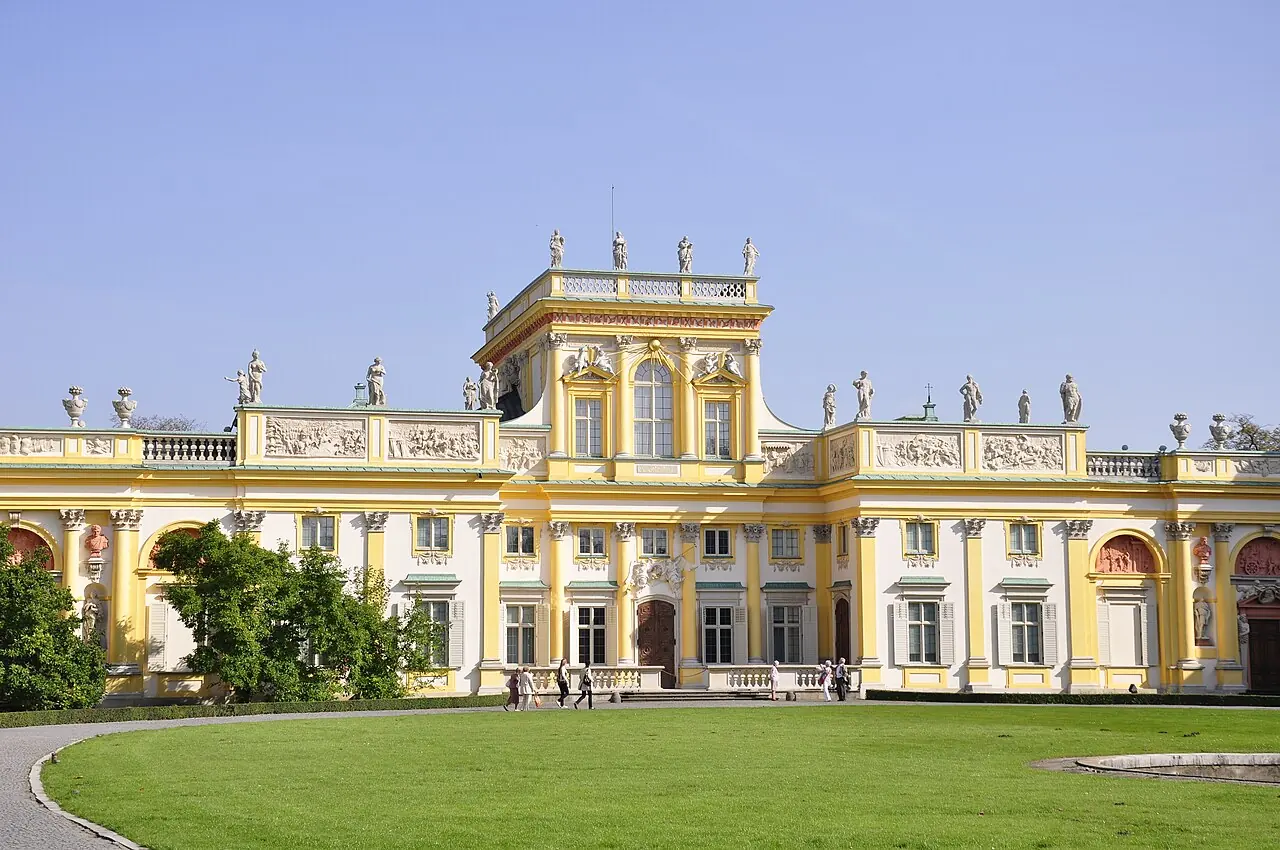 Photo Wistula, CC BY 3.0, Wikimedia Commons

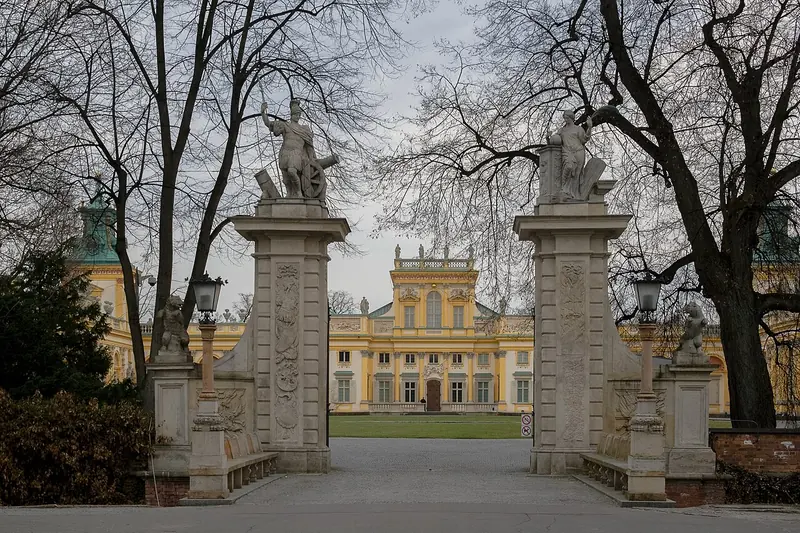 Photo Diego Delso, CC BY-SA 3.0, Wikimedia Commons1
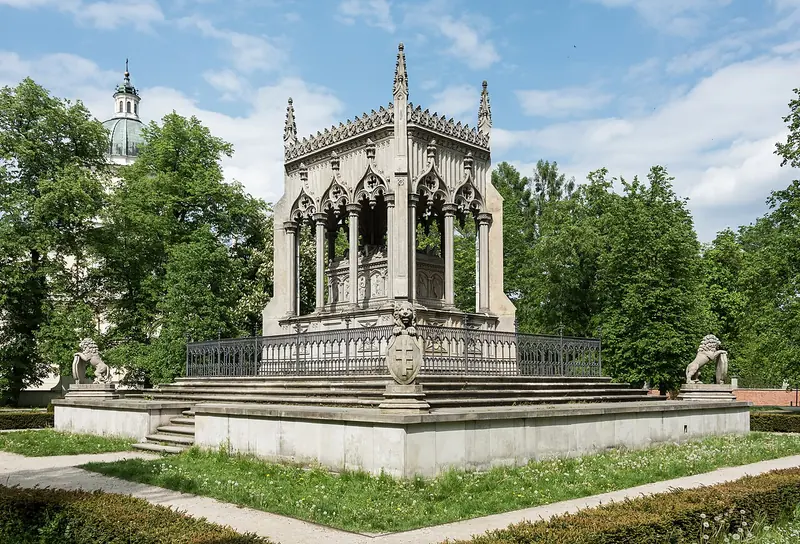 Photo Adrian Grycuk, CC BY-SA 3.0 pl, Wikimedia Commons
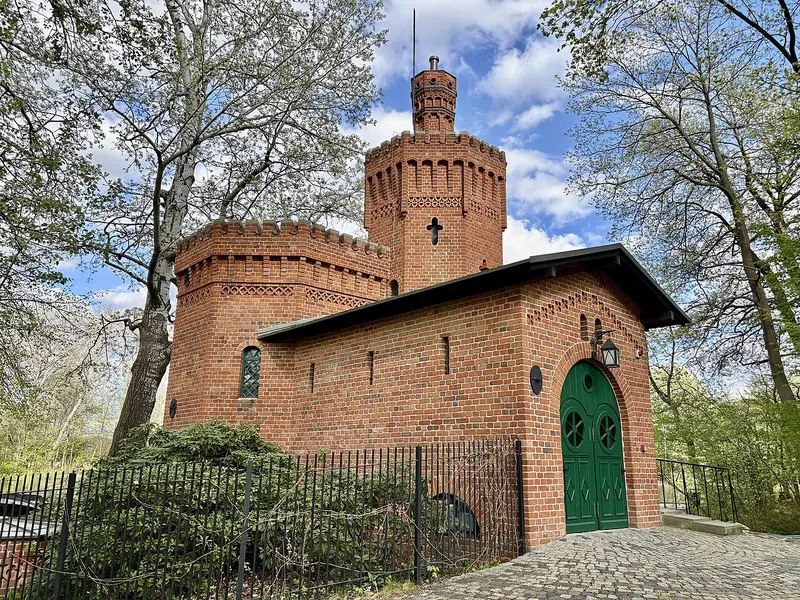 Photo PiotrMig, CC BY 4.0, Wikimedia Commons
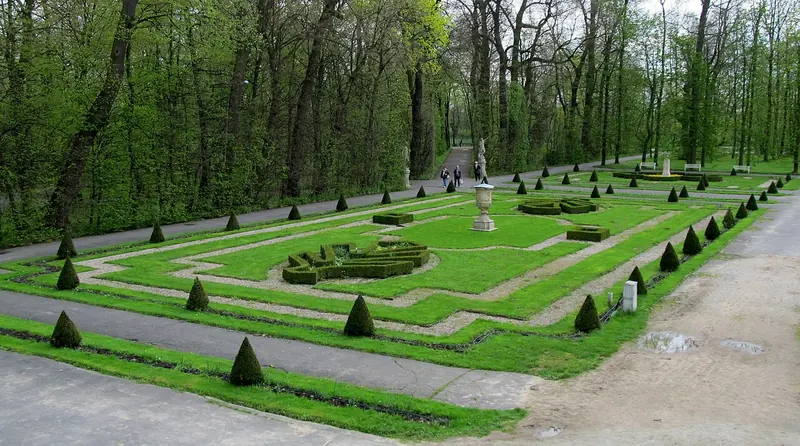 Photo Geociekawostki, CC BY-SA 3.0 pl, Wikimedia Commons
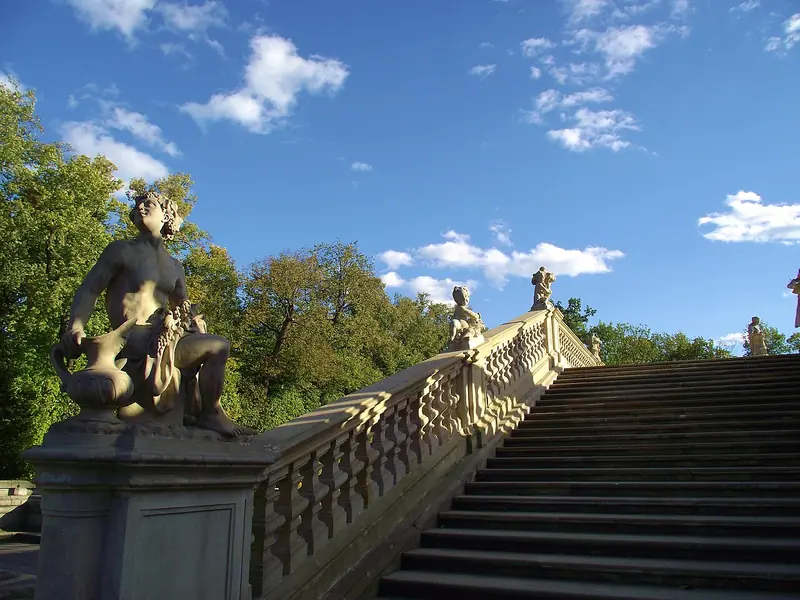 Photo Krysiul, CC BY-SA 3.0 pl, Wikimedia Commons
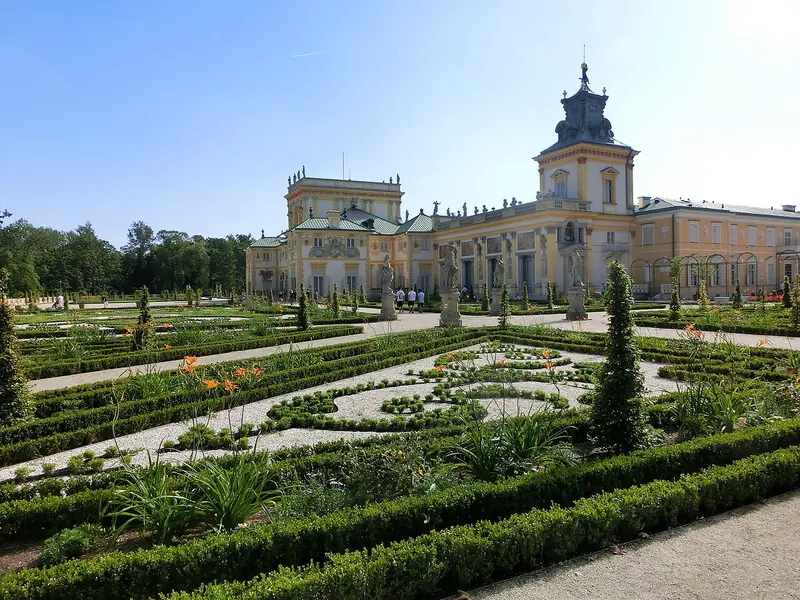 Photo Gunther Ziegler, CC BY-SA 3.0 pl, Wikimedia Commons
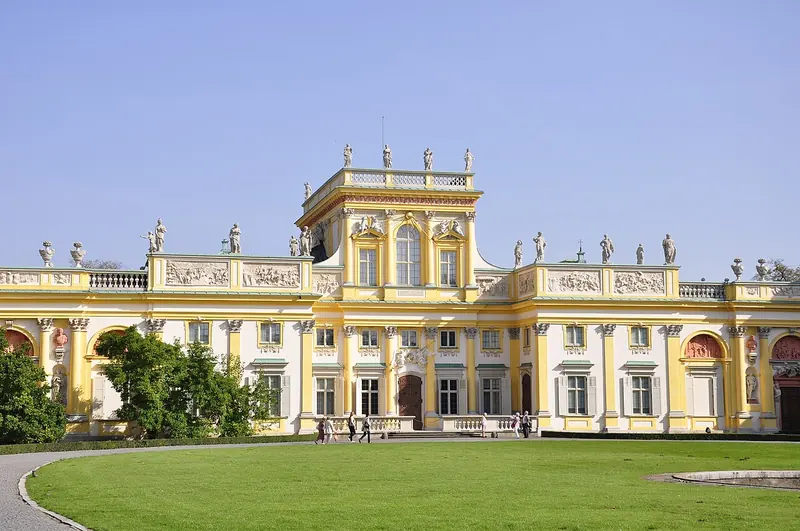 Photo Wistula, CC BY 3.0, Wikimedia Commons
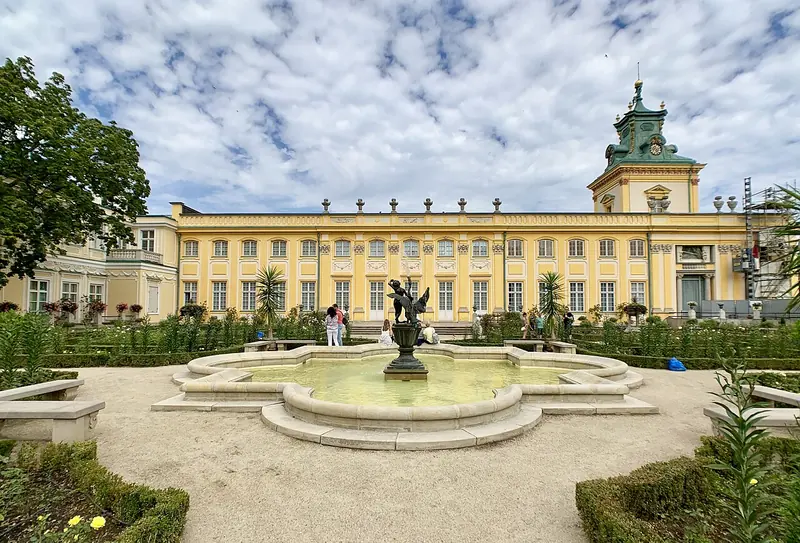 Photo Chris Olszewski, CC BY-SA 4.0, Wikimedia Commons
 Photo DMatieu, CC BY-SA 4.0, Wikimedia Commons
 Photo Adrian Grycuk, CC BY 3.0 pl, Wikimedia Commons
 Photo Przemek P, CC BY-SA 3.0, Wikimedia Commons