Photo Scotch Mist, CC BY-SA 4.0, Wikimedia Commons
Old townBiałystok, Podlasie
Białystok city centre: what to see, map and route
Białystok city centre and Branicki Palace. In the Turi app, the same map shows your position, guides you from point to point and lets you tick off the places you’ve visited.
free entrymuseums and towers have separate tickets
The walk starts at the tourist information on Kościuszko Market Square and ends at St Roch’s Basilica, about a 15-minute walk from the start. If you are already in the centre, Turi will guide you from the nearest point. The route is flat and easy for pushchairs; only the way to St Roch’s Church climbs a hill. Walking around the city, the palace courtyards and the garden are free. Tickets are needed, among others, for the Podlasie Museum in the town hall and for performances at the opera. There are toilets in the park by the palace, in Planty Park and by the opera house.
At home, open the place in Turi and tap “Save for offline”: the map, descriptions and photos will work without signal.
Visit the farthest points first, while you still have energy.
Tick things off as you go, and by the exit you’ll know what’s left.
Białystok city centre in the Turi app
Live position, a route from point to point, descriptions to read and listen to. Free, no account, in 12 languages.
The same map as in the app. Tap a point to see its photo and description; in Turi you’ll see yourselves on it too.
1recommended, in route orderother pointsWCtoilets, food, tickets
Map: OpenStreetMap (ODbL). Descriptions and photos: Turi and Wikimedia Commons. Something not right? Report it in the app at that point.
Worth seeing
For centuries Białystok was a city of many cultures: Poles, Jews, Russians, Belarusians and Germans lived here, and Ludwik Zamenhof invented Esperanto here. The walk starts on Kościuszko Market Square and leads to the cathedral, which is two churches in one, and to the Branicki Palace, known as the Versailles of Podlasie, with its recreated baroque garden. Then it goes through Planty Park back to the market square and the town hall, passes the Great Synagogue memorial and the Orthodox cathedral, and ends at the modernist St Roch’s Basilica on the hill.
Photo BogTar200917, CC BY-SA 4.0, Wikimedia Commons1
Building / monument
Cathedral of the Assumption
Two churches in one. The small old church of 1617-1625 is the oldest surviving monument in Białystok, with a rococo interior from the time of the Branicki family. At the end of the 19th century the tsarist authorities did not allow a new church and only permitted an extension of the old one. So in 1900-1905 a huge neo-Gothic church with 72.5-metre towers was built onto it.
Photo Scotch Mist, CC BY-SA 4.0, Wikimedia Commons2
Building / monument
Great Gate
The main entrance to the Branicki residence, a gate with a clock tower. It is crowned by a griffin, the Branicki family coat of arms, which returned to it in 2006 after 200 years. From here you can see the whole axis of the complex: the courtyards, the palace and the garden behind it.
Photo Scotch Mist, CC BY-SA 4.0, Wikimedia Commons3
Building / monument
Branicki Palace
One of the best-preserved 18th-century magnate residences in Poland, known as the Versailles of Podlasie. It began as the 16th-century castle of the Wiesiołowski family, which Tylman van Gameren rebuilt as a baroque palace, and Hetman Jan Klemens Branicki, with architect Jakub Fontana, turned it into a magnificent residence. Between the courtyards stand sculptures of Hercules fighting the dragon and the hydra. Destroyed in 1944 and rebuilt in 1946-1960, it is now the seat of the Medical University.
Photo Danuta Ruminowicz, CC BY-SA 3.0 pl, Wikimedia Commons4
Plants
Branicki Palace French garden
A baroque garden with patterned parterres, avenues and sculptures. In the 19th century the tsarist authorities took away the trees, shrubs and dozens of sculptures, some as far as St Petersburg, and the nude statues were removed because the palace housed a school for young ladies and they were thought improper. The garden was recreated from 18th-century plans, with the work finished in 2012.
Photo Gumisza, CC BY-SA 3.0, Wikimedia Commons5
Plants
Planty Park
A park laid out in 1908-1910 and rebuilt in a modernist style in the 1930s. A wide promenade runs through the middle, with a long pool and fountains. In the eastern part stands the Washerwomen sculpture by Stanisław Horno-Popławski. It is a favourite place for walks in Białystok.
Photo Jolanta Dyr, CC BY-SA 3.0, Wikimedia Commons6
Building / monument
Town hall on Kościuszko Market Square
A late baroque town hall of 1745-1761, funded by Jan Klemens Branicki. A curiosity: it was never the seat of the city authorities. Inside there were stalls and a market hall, and firefighters watched for fires from the tower. The tower was taken down during the war and reconstructed in 1954-1958. Today it houses the Podlasie Museum with a gallery of Polish painting.
Photo Adam Jones from Kelowna, BC, Canada, CC BY-SA 2.0, Wikimedia Commons7
Attraction
Great Synagogue Memorial
Before the war almost half of Białystok’s inhabitants were Jews. The Great Synagogue, with a dome about 10 metres across, was built here in 1909-1913. On 27 June 1941, the day they entered the city, the Germans drove hundreds of Jews into it and set the building on fire. The memorial of 1995 has the shape of the skeleton of the synagogue’s destroyed dome.
Photo Dąb Wielki, CC BY-SA 3.0 pl, Wikimedia Commons8
Building / monument
St Nicholas Orthodox Cathedral
An Orthodox cathedral built in 1843-1846 in the classicist style, on the site of an earlier Uniate church. Since 1951 it has been the cathedral of the Białystok and Gdańsk diocese, and since 1992 it has kept the relics of St Gabriel of Zabłudów. The cathedral is a reminder that Białystok has been a city of many faiths for centuries.
Photo Qkiel, CC BY-SA 4.0, Wikimedia Commons9
Building / monument
St Roch’s Basilica
A church built as a monument to Poland’s regained independence, on a hill that once held a cemetery with St Roch’s chapel. Oskar Sosnowski’s design won a competition in 1927, and the construction was paid for almost entirely by the faithful. It is built on an octagonal plan, and its 78-metre tower is crowned by a three-metre statue of the Virgin Mary. It is one of the most interesting modernist churches in Poland.
All points (17)
Grouped as in the map legend. A star marks recommended points.
Building / monument 7
Cathedral of the Assumption ★Two churches in one. The small old church of 1617-1625 is the oldest surviving monument in Białystok, with a rococo interior from the time of the Branicki family. At the end of the 19th century the tsarist authorities did not allow a new church and only permitted an extension of the old one. So in 1900-1905 a huge neo-Gothic church with 72.5-metre towers was built onto it.
Great Gate ★The main entrance to the Branicki residence, a gate with a clock tower. It is crowned by a griffin, the Branicki family coat of arms, which returned to it in 2006 after 200 years. From here you can see the whole axis of the complex: the courtyards, the palace and the garden behind it.
Branicki Palace ★One of the best-preserved 18th-century magnate residences in Poland, known as the Versailles of Podlasie. It began as the 16th-century castle of the Wiesiołowski family, which Tylman van Gameren rebuilt as a baroque palace, and Hetman Jan Klemens Branicki, with architect Jakub Fontana, turned it into a magnificent residence. Between the courtyards stand sculptures of Hercules fighting the dragon and the hydra. Destroyed in 1944 and rebuilt in 1946-1960, it is now the seat of the Medical University.
Town hall on Kościuszko Market Square ★A late baroque town hall of 1745-1761, funded by Jan Klemens Branicki. A curiosity: it was never the seat of the city authorities. Inside there were stalls and a market hall, and firefighters watched for fires from the tower. The tower was taken down during the war and reconstructed in 1954-1958. Today it houses the Podlasie Museum with a gallery of Polish painting.
St Nicholas Orthodox Cathedral ★An Orthodox cathedral built in 1843-1846 in the classicist style, on the site of an earlier Uniate church. Since 1951 it has been the cathedral of the Białystok and Gdańsk diocese, and since 1992 it has kept the relics of St Gabriel of Zabłudów. The cathedral is a reminder that Białystok has been a city of many faiths for centuries.
St Roch’s Basilica ★A church built as a monument to Poland’s regained independence, on a hill that once held a cemetery with St Roch’s chapel. Oskar Sosnowski’s design won a competition in 1927, and the construction was paid for almost entirely by the faithful. It is built on an octagonal plan, and its 78-metre tower is crowned by a three-metre statue of the Virgin Mary. It is one of the most interesting modernist churches in Poland.
Podlasie Opera and PhilharmonicA modern building in Central Park, opened on 28 September 2012. It is the largest arts institution in north-eastern Poland, staging operas, operettas, musicals and symphony concerts. The orchestra itself is older: it started playing in 1954, for a long time without a hall of its own.
Plants 2
Branicki Palace French garden ★A baroque garden with patterned parterres, avenues and sculptures. In the 19th century the tsarist authorities took away the trees, shrubs and dozens of sculptures, some as far as St Petersburg, and the nude statues were removed because the palace housed a school for young ladies and they were thought improper. The garden was recreated from 18th-century plans, with the work finished in 2012.
Planty Park ★A park laid out in 1908-1910 and rebuilt in a modernist style in the 1930s. A wide promenade runs through the middle, with a long pool and fountains. In the eastern part stands the Washerwomen sculpture by Stanisław Horno-Popławski. It is a favourite place for walks in Białystok.
Attraction 3
Great Synagogue Memorial ★Before the war almost half of Białystok’s inhabitants were Jews. The Great Synagogue, with a dome about 10 metres across, was built here in 1909-1913. On 27 June 1941, the day they entered the city, the Germans drove hundreds of Jews into it and set the building on fire. The memorial of 1995 has the shape of the skeleton of the synagogue’s destroyed dome.
Kawelin the DogBiałystok’s favourite dog. Local artists put up the first dog statue in 1936 by the palace fence, opposite the parish church, and it disappeared in 1944. Today’s concrete replica has stood here since 2006. Where does the name come from? One story points to a porter at the Ritz hotel, another to a tsarist colonel, Mikołaj Kawelin.
Ludwik Zamenhof MonumentLudwik Zamenhof, the creator of Esperanto, was born in Białystok in 1859, a few hundred metres from here. He grew up in a city where people spoke Polish, Russian, Yiddish and German every day, and this gave him the idea of a common language for everyone. The Esperanto and many cultures trail starts here, and the Ludwik Zamenhof Centre in a house on Warszawska Street has an exhibition about the Białystok of his youth.
Toilets / tickets / parking 5
Tourist information by Kościuszko Market SquareThe walk starts at the tourist information at the eastern end of Kościuszko Market Square. The route leads to the cathedral and to the Branicki Palace with its garden, through Planty Park back to the market square and the town hall, and then along the traces of a city of many cultures to the Orthodox cathedral, the opera house and St Roch’s Church on the hill.

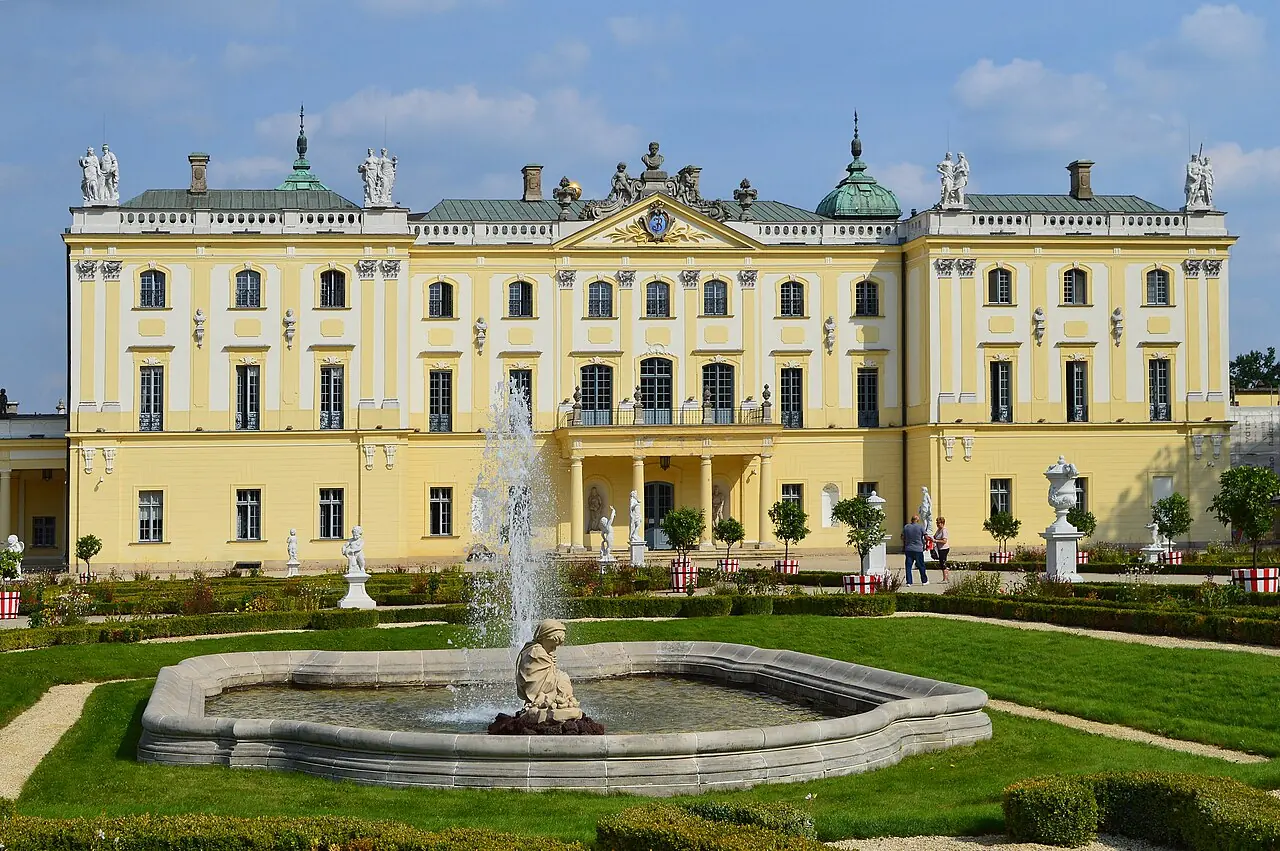 Photo Scotch Mist, CC BY-SA 4.0, Wikimedia Commons

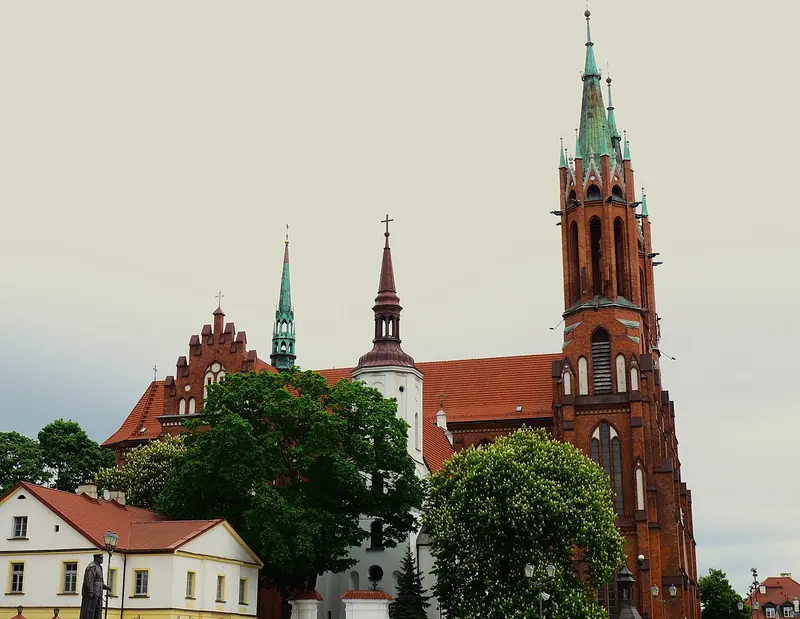 Photo BogTar200917, CC BY-SA 4.0, Wikimedia Commons1
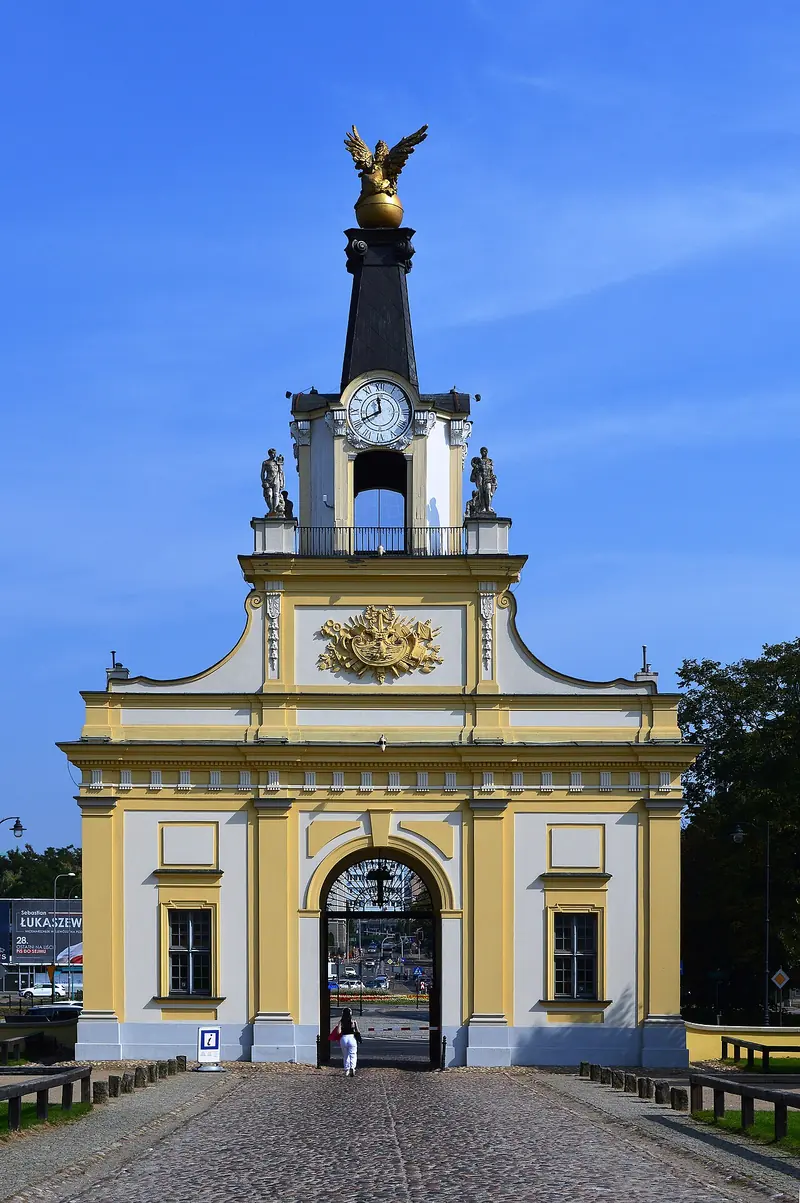 Photo Scotch Mist, CC BY-SA 4.0, Wikimedia Commons
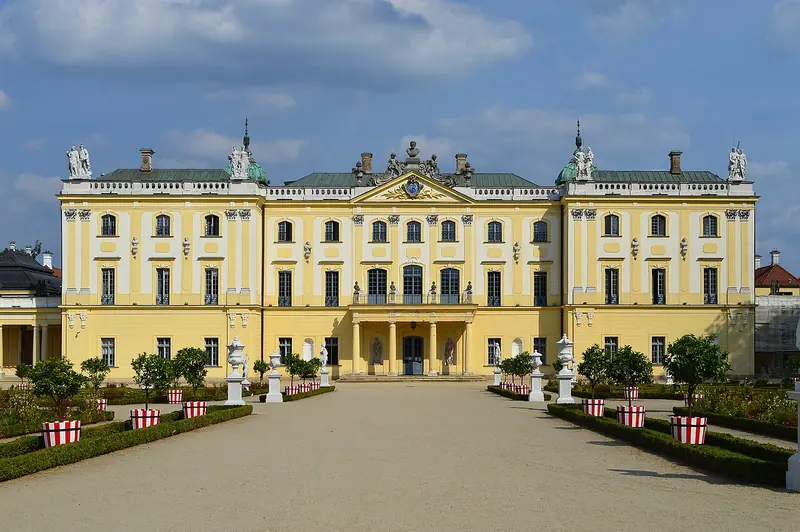 Photo Scotch Mist, CC BY-SA 4.0, Wikimedia Commons
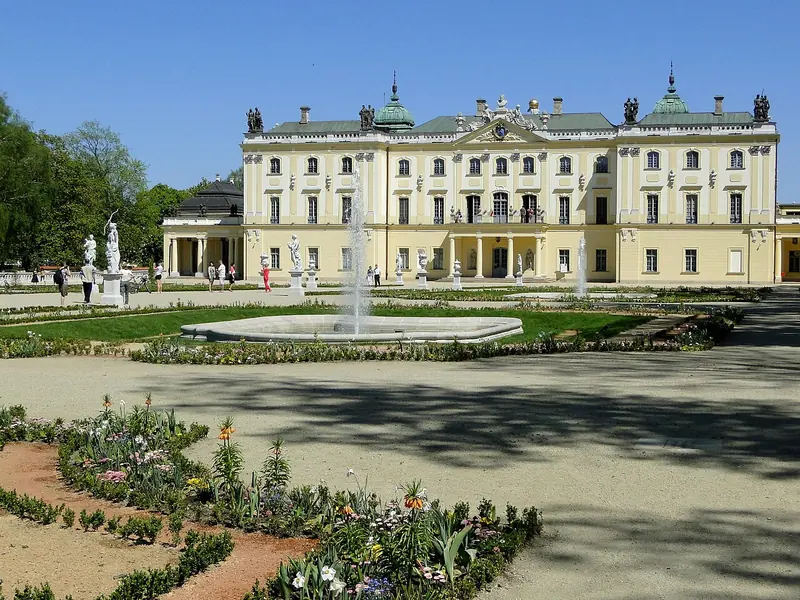 Photo Danuta Ruminowicz, CC BY-SA 3.0 pl, Wikimedia Commons
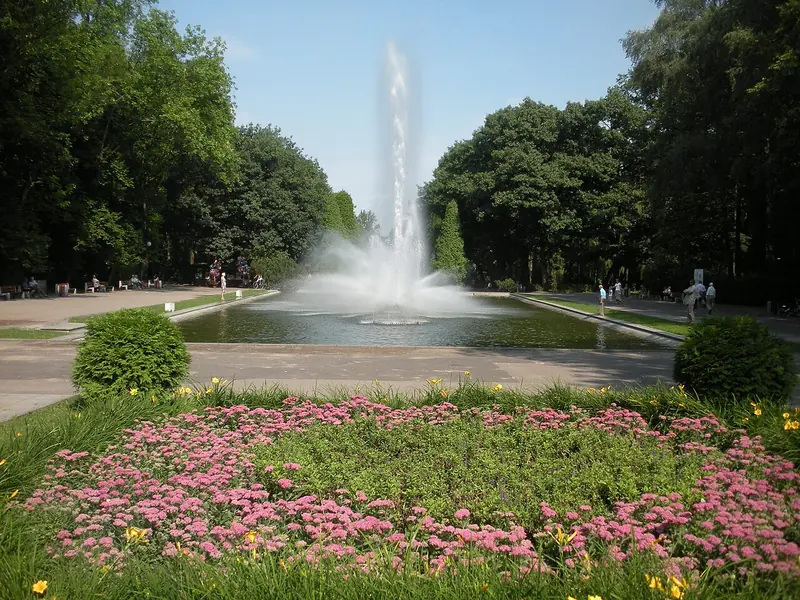 Photo Gumisza, CC BY-SA 3.0, Wikimedia Commons
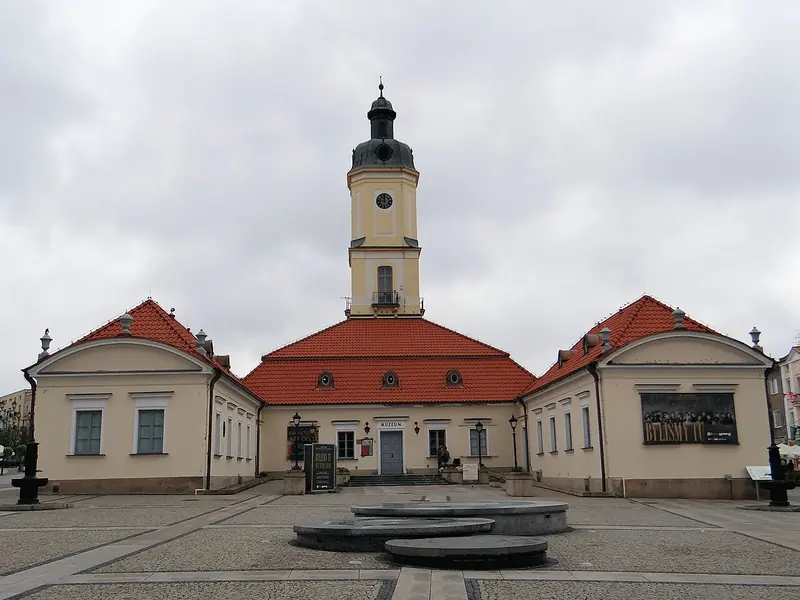 Photo Jolanta Dyr, CC BY-SA 3.0, Wikimedia Commons
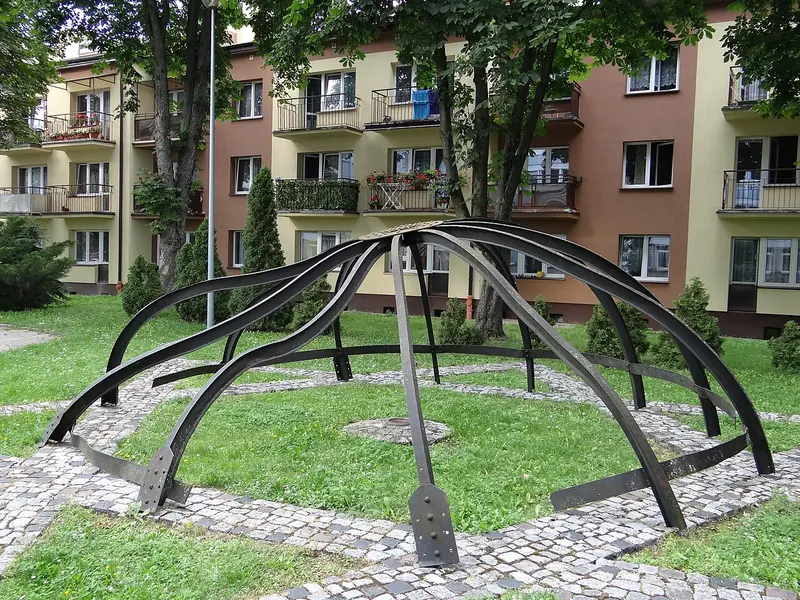 Photo Adam Jones from Kelowna, BC, Canada, CC BY-SA 2.0, Wikimedia Commons
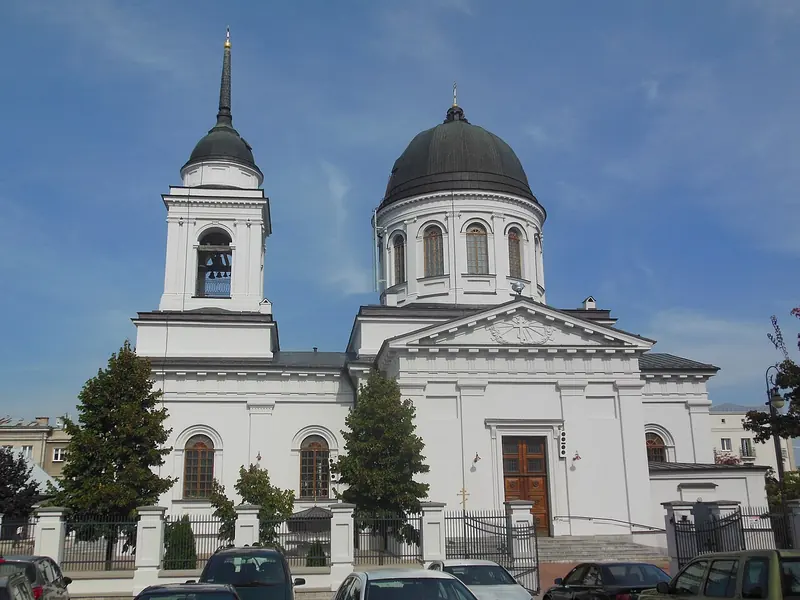 Photo Dąb Wielki, CC BY-SA 3.0 pl, Wikimedia Commons
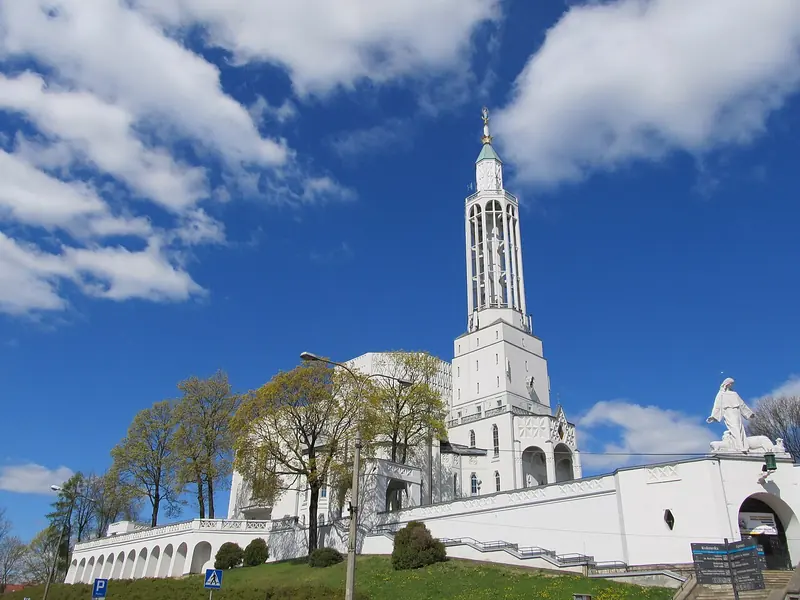 Photo Qkiel, CC BY-SA 4.0, Wikimedia Commons
 Photo Przemek P, CC BY-SA 3.0, Wikimedia Commons
 Photo Maksym Kozlenko, CC BY-SA 4.0, Wikimedia Commons
 Photo Adrian Grycuk, CC BY 3.0 pl, Wikimedia Commons